
- Providing world class service and value for employee benefit group plans since 1987

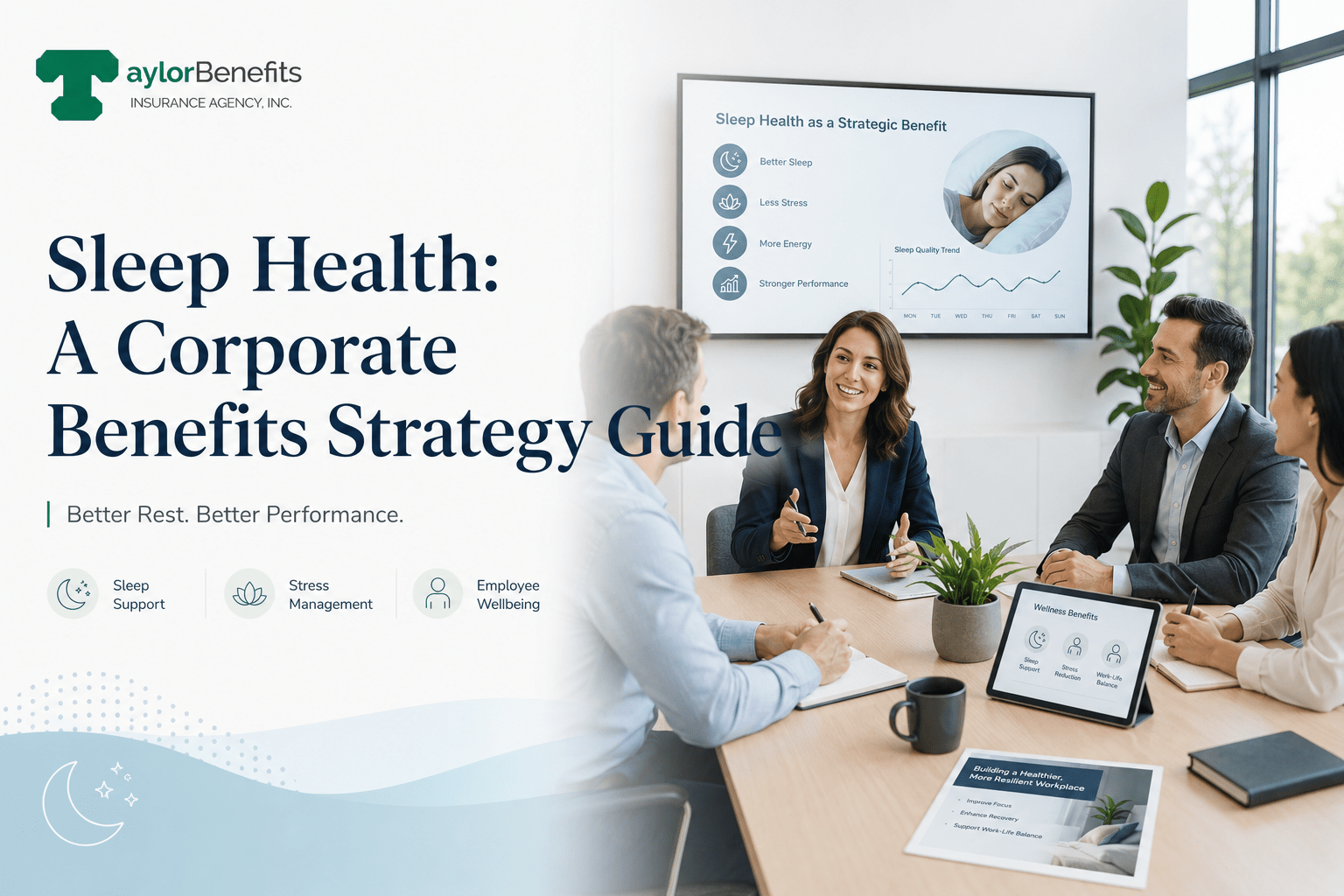
Sleep is the corporate wellness topic most employers have not yet seriously addressed, and the data suggests it should be moving up the priority list. The Centers for Disease Control estimates that more than one in three U.S. adults regularly fails to get adequate sleep. Major research on workplace impact has consistently shown that sleep-deprived workforces experience measurably worse productivity, higher accident rates, more mental health issues, and meaningfully higher healthcare claims costs than well-rested workforces. The economic cost of inadequate sleep to U.S. employers has been estimated in the tens of billions of dollars annually.
Despite this, sleep typically receives a passing mention in workplace wellness programs, a tip sheet about good sleep hygiene, perhaps a meditation app subscription with sleep content, rather than the systematic attention it warrants. The gap reflects the legacy structure of corporate wellness, which evolved around weight management, smoking cessation, and exercise long before sleep emerged as a distinct, addressable category.
That gap is increasingly visible to employers paying attention to workforce health trends. Sleep is now being treated by leading employers as a standalone benefits category, with dedicated programs, vendor partnerships, and integration with broader health and mental health benefits. This article covers the science behind the shift, what sleep-focused benefits actually look like, and how employers should build sleep into their benefits strategy.
The research on sleep and workplace outcomes is substantial enough that the case for employer attention is well-established. The patterns that matter most for benefits strategy:

The cumulative implication: sleep is not a soft wellness topic. It is a structural determinant of workforce health, productivity, safety, and healthcare costs that employer benefits programs can meaningfully affect.
The historical underemphasis on sleep reflects several factors that are now changing.
Wellness program legacy. Corporate wellness developed primarily around weight management, smoking cessation, exercise, and basic preventive care — categories with measurable biometric indicators. Sleep didn’t fit cleanly into this framework, and the wellness vendor market reflected that gap.
Lack of dedicated vendor solutions. Until recently, there were limited vendor solutions specifically targeting sleep health in workforce populations. General wellness platforms included sleep content as a minor component, but dedicated sleep-focused vendors were rare.
Diagnostic and treatment access barriers. Sleep disorders typically required sleep study evaluation through specialists with limited capacity. Employer wellness programs were not positioned to navigate clinical sleep medicine access.
Cultural attitudes. Workplace cultures have historically valorized long working hours and minimal sleep as signs of dedication. Employer-led emphasis on sleep ran against this cultural grain.
These factors are shifting. Dedicated sleep vendors have entered the market with workforce-focused offerings. Telehealth-based sleep medicine has expanded access. Cultural attitudes have evolved, particularly among younger workforces. And the evidence on sleep’s impact has made the business case more visible to benefits decision-makers.

Sleep benefits in 2026 span a range of program types, from broad educational components to specific clinical interventions. The categories employers can deploy:
The lowest-investment, broadest-reach category. Dedicated sleep programs — typically delivered through digital platforms — provide employees with structured education on sleep science, personalized sleep coaching, cognitive behavioral techniques for insomnia, and ongoing engagement support.
These programs are typically priced at $1 to $5 per employee per month and serve as a foundational sleep benefit appropriate for most employer populations. The clinical evidence for digital cognitive behavioral therapy for insomnia (CBT-I) — which is the methodology underlying many of these programs — is substantial, making this an evidence-based wellness category rather than a soft offering.
A more clinically engaged category. Programs that include sleep disorder screening — typically through brief validated questionnaires — and structured referral pathways for employees screening positive for likely sleep disorders connect identification with diagnosis.
For obstructive sleep apnea specifically, the screening-to-diagnosis pathway is well-established and increasingly delivered through home sleep studies that don’t require overnight stays in a clinical sleep lab. This approach makes sleep disorder identification substantially more accessible than it was when in-lab studies were the only diagnostic option.
For employers with self-funded or level-funded health plans, integrating sleep medicine specifically into care management programs delivers value beyond what generic wellness programs provide. This might include:
Some of the most impactful sleep benefits are not benefits in the traditional sense — they are workplace policies that affect sleep:
For employers serious about sleep health, the policy and cultural components are essential. Sleep benefits delivered alongside expectations of constant availability and minimal recovery time produce mixed signals that limit program effectiveness.
A smaller but growing category of voluntary benefits addresses sleep through products and services:
These voluntary components add modest value but should not be the primary sleep benefit — the educational, clinical, and policy components do more substantive work.

Sleep programs deliver value across the workforce, but certain populations show particularly strong ROI patterns.
Shift workers and irregular-schedule workforces. Workers in healthcare, manufacturing, transportation, hospitality, and other 24/7 operations face structural sleep challenges affecting both health and safety. Sleep benefits with shift-work-specific content deliver measurable improvements in individual outcomes and workplace safety metrics.
Workforces with elevated chronic disease prevalence. For populations with high rates of cardiovascular disease, type 2 diabetes, obesity, or hypertension, sleep is structural to chronic disease management. Integrating sleep into disease management programs delivers outcomes medication and lifestyle counseling alone cannot achieve.
Workforces with mental health priorities. For employers investing in mental health benefits, sleep is the cost-effective adjacent intervention. Sleep programs alongside mental health benefits produce better outcomes on both than either alone.
Physically demanding and safety-sensitive workforces. Where fatigue contributes to injury risk, sleep benefits function as workplace safety investments. Workers’ compensation outcomes, accident rates, and injury frequency can be measurably affected by structured sleep programs.
Knowledge workforces where cognitive performance is the product. Professional services, technology, financial services, and similar workforces have a particularly strong case for sleep investment. The productivity differential between well-rested and sleep-deprived knowledge workers is substantial.
For employers ready to address sleep more seriously, the practical implementation path involves several decisions.
Step 1: Assess the current state. What does the workforce sleep situation actually look like? Brief workforce surveys can capture self-reported sleep duration, sleep satisfaction, and perceived workplace impact of sleep issues. Claims data may surface sleep-related diagnoses (insomnia, sleep apnea), sleep medication prescribing patterns, and conditions where sleep is a contributing factor. This baseline informs program design and provides measurement reference.
Step 2: Decide on program scope. Will sleep benefits be a foundational educational component delivered to the entire workforce, a more clinically engaged program targeting screening and diagnosis, or an integrated component of broader chronic disease and mental health management? The right scope depends on workforce characteristics, claims patterns, and budget capacity.
Step 3: Select vendor partners. The sleep vendor market has matured significantly. Dedicated sleep program vendors offer broader and deeper sleep content than general wellness platforms with sleep modules. For employers prioritizing sleep, a dedicated vendor relationship typically delivers more value than relying on incidental sleep content within a broader wellness program.
Step 4: Integrate with adjacent benefits. Sleep doesn’t operate in isolation. Integration with mental health benefits, chronic disease management programs, EAP services, and primary care navigation makes sleep programs more effective and reinforces the message that sleep is a structural health component.
Step 5: Address the policy and cultural components. Run an honest assessment of whether workplace expectations and culture are aligned with sleep health priorities or in conflict with them. If after-hours email expectations, shift scheduling practices, or cultural valorization of overwork are undermining sleep, those should be addressed alongside the benefits program.
Step 6: Measure and iterate. Track sleep program engagement, self-reported sleep improvement, sleep-related claims and prescription patterns, and broader workforce outcomes including mental health utilization and chronic disease management. Use measurement to guide ongoing program refinement.

Sleep is the wellness category most likely to be substantially underweighted in current employer benefits programs. The science establishing sleep’s impact on workforce productivity, mental health, chronic disease risk, and accident rates is robust enough to justify deliberate investment, and the vendor market has matured enough to support effective implementation.
For employers who have invested heavily in mental health, chronic disease management, and broader wellness without addressing sleep, sleep is the structural intervention adjacent to all of those categories — and the one most likely to produce outsized improvements in the outcomes those investments are designed to affect.
The investment to address sleep is modest. The opportunity cost of continuing to underweight it — measured in productivity loss, safety incidents, chronic disease progression, and undiagnosed sleep disorders — is substantial.
Taylor Benefits Insurance Agency works with employers to evaluate and integrate sleep health programs into broader benefits strategies. If sleep has not yet received structured attention in your benefits program, contact our team for a conversation about how to address it.
Sleep education helps employees understand how rest affects their health, productivity, and ability to manage everyday responsibilities. By sharing practical information about sleep habits and recovery, employers can encourage positive lifestyle changes. Better sleep awareness may contribute to fewer fatigue related problems, improved workplace morale, and stronger employee engagement over time.

Todd Taylor oversees most of the marketing and client administration for the agency with help of an incredible team. Todd is a seasoned benefits insurance broker with over 35 years of industry experience. As the Founder and CEO of Taylor Benefits Insurance Agency, Inc., he provides strategic consultations and high-quality support to ensure his clients’ competitive position in the market.

We just started working with Taylor Benefits and could not be happier. Todd gave us quite the education as well as some time saving tools to help us manage our HR and save money too. We are looking forward to a long relationship!”
-Carol, Accounting Manager, recruitment marketing company, Campbell, CA
We’re ready to help! Call today: 800-903-6066