
- Providing world class service and value for employee benefit group plans since 1987

If your business is an Applicable Large Employer (ALE), it’s time to prepare for updated Affordable Care Act (ACA) reporting rules for 2026. The IRS has released new penalty structures and clarified some of the reporting processes tied to Form 1095-C, and failing to stay compliant could cost you thousands per employee.
This guide provides everything you need to know about 1095-C updates, new fines, and the steps to take before Q1 2026.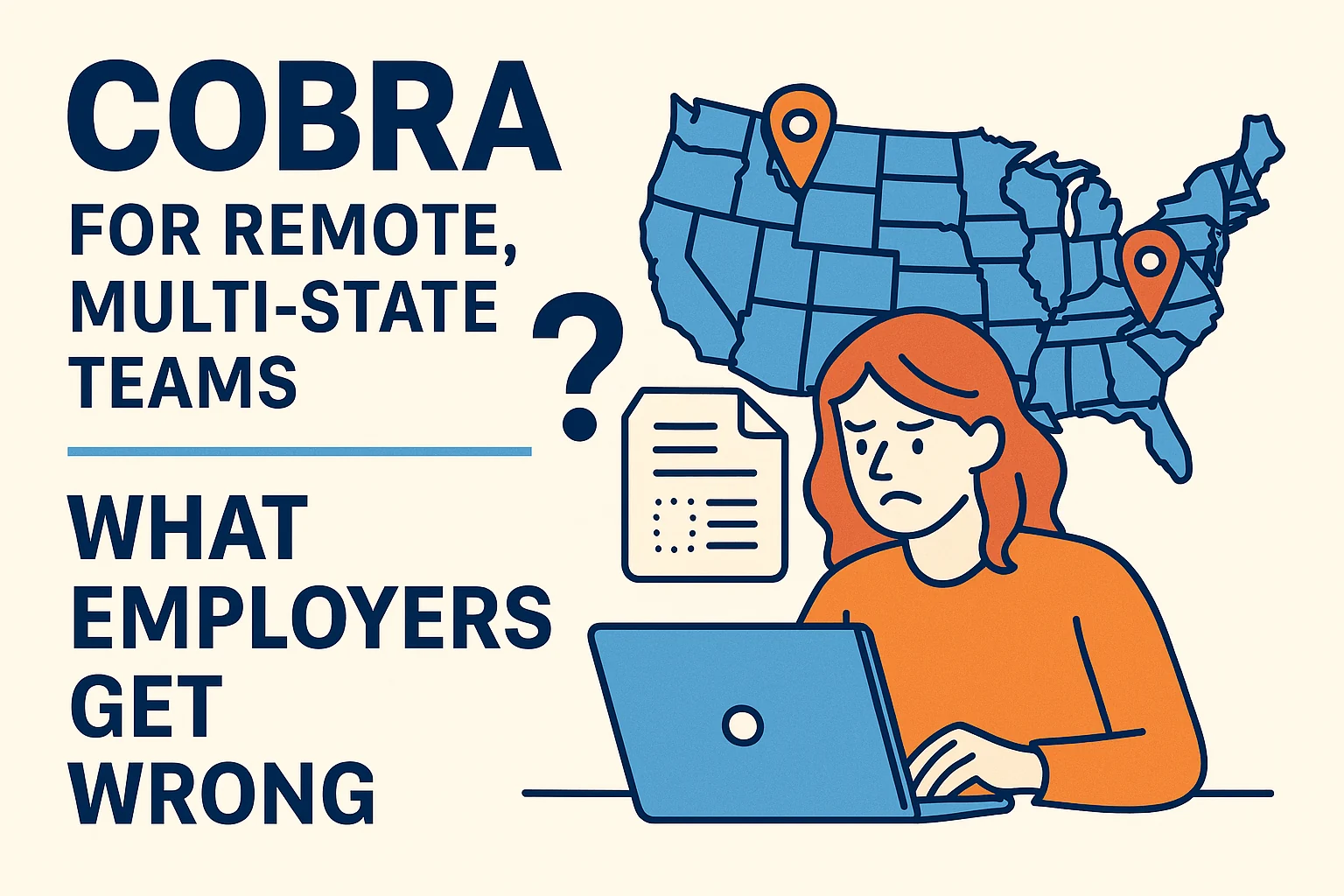
If your workforce is spread across multiple states, or even just outside your corporate headquarters, COBRA administration can quickly become one of the most misunderstood (and legally risky) parts of your benefits program. COBRA compliance isn’t just about mailing a packet and hoping for the best. It involves multi-jurisdictional timing rules, documentation standards, and tight operational execution. One missed deadline or outdated address, and you’re not just dealing with a paperwork issue—you’re staring down potential IRS penalties, lawsuits, or
Read Full Article Here
When it comes to group health insurance funding models, one question we hear from employers more often than ever is:
“Should we stick with our fully-insured plan or switch to a level-funded arrangement?”
The answer isn’t the same for every company — but understanding the mechanics, pros, cons, and timing of each option will help you make an informed decision. let's find out how level-funded health plans work, how they differ from
Read Full Article Here
Employers today are navigating a crowded world of healthcare savings options: HSAs (Health Savings Accounts), HRAs (Health Reimbursement Arrangements), and FSAs (Flexible Spending Accounts). All three provide tax advantages, but they function differently and are suited to different employer and employee needs. If you’ve ever wondered which one to offer—or whether you should offer more than one, this guide gives you a no-nonsense breakdown of how each works, who it benefits, and what it takes to manage each option
Read Full Article Here
Section 125 of the Internal Revenue Code allows employers to offer their employees a cafeteria plan—benefits that can be paid for with pre-tax dollars. But offering these plans isn't just a tax strategy—it comes with compliance obligations that vary slightly depending on federal and state regulations. If you're an employer, HR director, or CFO overseeing your organization's benefits plan, this guide is your go-to resource for understanding and maintaining Section 125 compliance across the U.S.

By Todd Taylor, a licensed benefits insurance broker with 35+ years advising SMBs and mid‑market employers. If you manage benefits for a small or mid‑sized company, you’ve probably stared at a spreadsheet full of acronyms—PPO, HMO, EPO, HDHP—wondering which one will keep employees happy and the renewal under control. This is the exact question employers ask us every single week. Below is the same decision framework we walk clients through—practical, numbers-aware, and grounded in what actually happens at renewal time.

Group limited indemnity health insurance is an alternative form of health insurance coverage that offers targeted benefits to help manage medical expenses. Unlike major medical plans, these policies are designed to provide a fixed dollar amount for specific healthcare services, making them a practical choice for those seeking additional financial protection. While they do not fulfill the minimum essential coverage requirements under the Affordable Care Act, they serve as a valuable supplement to help policyholders address out-of-pocket
Read Full Article HereIn today’s competitive tech market, small businesses need to balance employee benefits with financial sustainability. That was the challenge faced by CloudBright*, a 35-employee SaaS company based in Austin, Texas. With health insurance premiums rising every year and employee satisfaction starting to dip, they partnered with Taylor Benefits Insurance to find a smarter, more sustainable group health insurance strategy. Here is how we helped them find the best group health and employee benefits plan, so that all their
Read Full Article Here
Adult expansion group health coverage refers to healthcare coverage specifically designed for low-income adults who may not have traditionally qualified for Medicaid. Introduced as part of the Affordable Care Act, this program helps bridge the Medicaid coverage gap, ensuring more individuals have access to essential health services. It has become a vital safety net for millions, especially those with limited financial resources.
By extending Medicaid eligibility to cover more low-income adults, this program has
Read Full Article Here
For small business employers looking to offer health insurance, understanding small group health plan requirements is essential. These plans are specifically designed to provide medical coverage and employee benefits to small businesses with 1-50 full-time equivalent employees. Complying with federal law, such as the Affordable Care Act, and state-specific insurance laws ensures that these plans meet legal standards and provide essential health benefits.
Whether you're a small business owner in New York or North
Read Full Article Here
We just started working with Taylor Benefits and could not be happier. Todd gave us quite the education as well as some time saving tools to help us manage our HR and save money too. We are looking forward to a long relationship!”
-Carol, Accounting Manager, recruitment marketing company, Campbell, CA
We’re ready to help! Call today: 800-903-6066