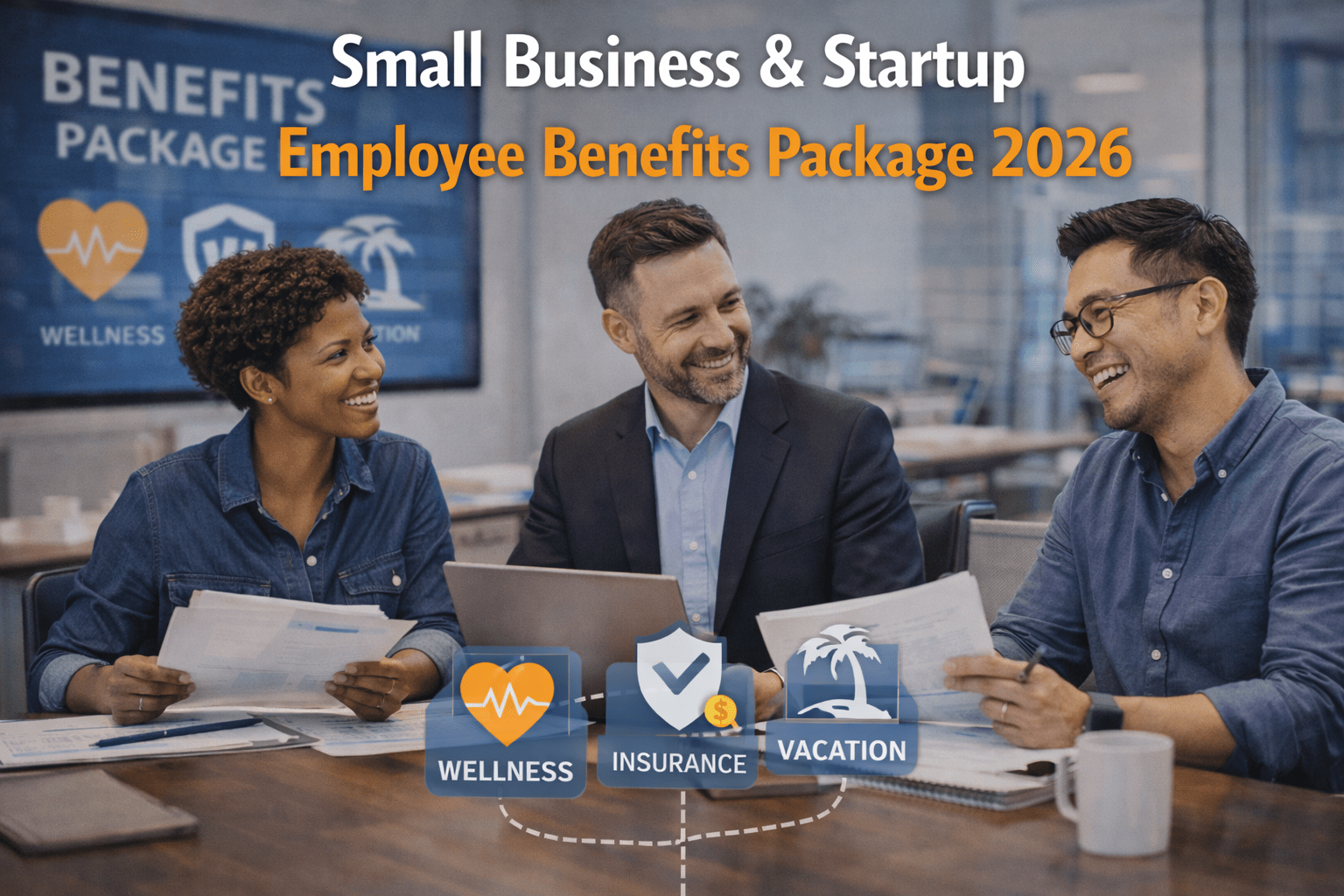
For small businesses and startups, employee benefits aren’t “nice to have” anymore — they’re a strategic advantage. The right benefits package helps you stand out in a crowded hiring market, retain high performers, and build the kind of culture people want to be part of. And when benefits are paired with a competitive salary, they can be the difference between a candidate choosing you or going with a bigger brand.
Benefits also signal something deeper: loyalty. When you invest in employees’ health, financial stability, and growth, you’re showing you’re serious about building a long-term team — not just filling roles.
At Taylor Benefits Insurance Agency, we help small and growing companies design benefit packages that balance budget, compliance, and employee expectations — without copying big-company plans that don’t fit your workforce.
Why Small Business Benefits Matter More Than Ever in 2026
Workplace expectations have changed. Employees still want strong health coverage and time off, but they also want support that reflects real life: mental health, flexibility, financial wellness, and professional development.
Total wellness benefits are a major trend because stress is widespread. With 2 in 5 employees experiencing stress, performance issues, and mental health conditions, many employers are going beyond traditional health plans to support the whole person. That can include mental health benefits, lifestyle education programs, biometric screenings, or employee assistance programs (EAPs).
This is especially relevant when recruiting younger workers. Gen Z consistently ranks mental health benefits among the top factors (right after compensation) that influence whether they’ll stay with an employer. If you’re building a team for growth, benefits aren’t just a cost — they’re a retention strategy.
Another way to attract and keep early-career talent is offering a clear development path. Upskilling, reskilling, and professional development benefits help younger workers grow with your company — while helping your business stay competitive.

Do Small Businesses and Startups Have to Offer Employee Benefits?
Some benefits are mandatory under federal, state, or local laws — and they apply to employers of all sizes.
The U.S. Bureau of Labor Statistics (BLS) also tracks the cost of mandatory benefits as part of hourly compensation. As of March 2024, the median cost to businesses of mandatory benefits for private-sector employees was $3.21 per hour worked.
Mandatory benefits most employers must provide
Social Security and Medicare (FICA)
These are mandatory entitlements funded through payroll taxes. Social Security provides retirement, disability, and survivor benefits based on lifetime earnings. Medicare supports federal health insurance for eligible older adults.
Workers’ Compensation Insurance
Workers’ comp provides wage replacement and medical support when an employee is injured or becomes ill as a direct result of their job. It is generally required for employers, with some exceptions depending on the state.
Unemployment Insurance
Employers fund unemployment insurance through federal and state payroll taxes. Eligible workers may receive temporary income support if they lose a job due to layoffs, mergers, or termination without substantiated cause.
Size-dependent health benefit rules you should know
Some obligations depend on your headcount and where you operate.
COBRA (20+ employees)
If you have 20 or more employees, federal COBRA generally requires you to offer continued health coverage when employment ends or a qualifying event occurs (like divorce or birth/adoption). Coverage typically lasts 18 to 36 months.
If you’re under 20 employees, some states require similar continuation coverage (often called mini-COBRA). These rules vary by state.
Are small businesses required to offer health insurance?
Not always. Under the Affordable Care Act, Applicable Large Employers (ALEs) (generally those averaging 50+ full-time employees including equivalents in the prior year) must offer affordable, adequate coverage to full-time employees and dependents or risk potential assessments if at least one employee receives a premium tax credit.
If you’re not an ALE, there’s typically no federal requirement to offer health insurance — but strategically, many small employers still choose to offer it because it’s one of the strongest levers for recruiting and retention.
Why Offering Benefits Is a Growth Strategy, Not Just an HR Task
A strong benefits program helps you:
-
improve engagement and productivity
-
reduce burnout and absenteeism
-
build a healthier, more loyal workforce
-
reinforce your culture and values
Benefits also show employees you’re invested in their future — and that matters. According to a 2025 business leaders survey referenced in your source material, 41% of leaders plan to improve their employee benefits packages this year, signaling how central benefits have become to competitiveness.
For many employers, implementing and modernizing benefits is now one of the biggest HR challenges — and one of the biggest opportunities.

What Does a Basic Small Business Benefits Package Include?
A “basic” benefits package often includes:
- Health insurance, plus dental and vision coverage
- Paid time off (PTO)
- A 401(k) or retirement plan
- A Flexible Spending Account (FSA)
- An HSA or HRA (depending on plan design)
Many employers also add:
- Life insurance
- Disability insurance (where applicable or required)
It’s also important to remember that mandatory programs (Social Security/Medicare, workers’ comp, unemployment insurance) are part of total compensation even though they don’t feel like “benefits” employees enroll in.
Benefits Small Businesses and Startups Can Offer in 2026
To compete with larger employers, small businesses don’t need to offer everything — they need to offer the right mix. The best packages cover the foundations (health, time off, financial stability) and then add targeted benefits that match your workforce.
Physical health benefits
Health-related costs can create real financial anxiety for employees, and employers feel the impact through absenteeism and lowered productivity. Even a modest, well-designed health strategy can improve outcomes.
Group health insurance plans can provide employees and dependents access to more affordable care and often deliver tax advantages to the business.
A medical FSA allows employees to contribute pre-tax dollars to cover qualified healthcare costs. Employers may also contribute.
An HRA is employer-funded and can reimburse eligible healthcare expenses. It can be a flexible way to help employees afford care while controlling costs.
An HSA also uses pre-tax dollars for medical expenses, but unlike FSAs and HRAs, an HSA can function like an employee-owned investment account that accrues tax-free interest. HSAs are paired with qualified high-deductible health plans (HDHPs) and can also become a valuable long-term savings vehicle.
Financial health benefits
When employees are financially stressed, they’re more distracted and more likely to experience anxiety and health issues.
Retirement accounts like a 401(k) help employees build security through pre-tax contributions and compounding growth. Employer match isn’t required in every plan design, but it can be a powerful retention driver when budget allows.
Annual pay raises or structured cost-of-living adjustments can support financial stability, especially in high-inflation environments.
Financial education programs help employees build skills in budgeting, debt management, and planning.
Tuition reimbursement and student loan assistance can be especially attractive to Gen Z and Millennials, many of whom carry education debt.
Equity compensation is often more common in startups and can help offset lower cash compensation in early growth stages by giving employees a stake in the company’s success.
Mental health and belonging benefits
Mental health issues affect engagement, creativity, productivity, and physical wellbeing.
An Employee Assistance Program (EAP) provides confidential access to trained professionals who can help employees and dependents navigate life and work challenges.
Employee Resource Groups (ERGs) can foster inclusion, connection, and a sense of belonging.
Social perks — team bonding experiences, group activities, and community-building initiatives — can reduce isolation and strengthen morale.
Flexible schedules and hybrid work options help employees manage real-life responsibilities and reduce burnout.
Wellness programs can create healthy behavior change while building teamwork and helping reduce long-term healthcare costs.
Fringe benefits that punch above their weight
Fringe benefits can be surprisingly affordable and very meaningful.
Dental and vision coverage fill gaps that medical plans often don’t cover well.
Life insurance provides peace of mind and financial protection for families.
A dependent care FSA helps employees set aside pre-tax income for qualifying childcare and eldercare expenses.
Gift cards can provide recognition and support employees with everyday expenses, but should be implemented fairly and consistently.
Paid volunteer days support purpose-driven culture and can be a strong differentiator in recruitment.
Memberships and passes (transit, gyms, museums, events) can be high-perceived-value perks, especially if offered as voluntary benefits or subsidized options.

Startups vs. Small Businesses: What’s Different About Benefits?
Startups and small businesses share many goals, but their realities can differ.
Small businesses may have steadier revenue and more traditional benefit expectations. Startups often have limited cash flow and need to be more creative, using equity compensation, lean plan designs, and carefully chosen benefits that maximize perceived value.
Legal requirements and worker classification
A crucial difference for many startups is worker classification. W-2 employees trigger different obligations than independent contractors.
If you’re hiring W-2 employees, you must comply with applicable federal, state, and local benefit requirements. If your workforce is primarily 1099 contractors, you generally aren’t required to offer benefits like group health or a 401(k) — but you’ll still need to manage classification risk carefully. A benefits advisor and qualified legal counsel can help you avoid costly mistakes.
Budget realities and smart tradeoffs
Offering benefits doesn’t have to “break the bank.” You can start with employee-funded options, voluntary benefits, and programs that cost little but improve day-to-day life — like flexible schedules and remote work policies.
Retirement plans can be designed with employee contributions only, and in some cases new businesses may be eligible for tax credits to help offset plan startup and administration costs.
What Benefits Set Your Company Apart From Competitors?
The best way to differentiate isn’t guessing — it’s listening and benchmarking.
Start by researching what similar employers in your region and industry offer. Local HR groups, chambers of commerce, and internal benefits benchmarking can help. Then validate those insights with your own employees through confidential surveys or small group listening sessions.
Once you understand priorities, you can build smarter benefits. For example, pairing a high-deductible health plan with an HRA can help manage premium costs while still supporting affordability for employees who need care. A SIMPLE IRA or streamlined 401(k) can deliver retirement value without excessive administrative complexity.
How Much Do Benefits Cost for a Small Business?
Cost is the #1 concern for many employers, but the real picture is often more manageable than expected — especially when you break it down.
According to a 2024 BLS release referenced in your source material, benefits costs averaged:
-
$12.44 per hour worked in services industries
-
$14.44 per hour worked in goods-producing industries
Paid leave costs averaged:
-
$3.34 per hour in services industries
-
$2.82 per hour in goods-producing industries
Your source material also provided examples of employer cost per hour worked for private industry employees:
Life insurance: $0.05
Health insurance: $2.94
Short-term disability: $0.10
Long-term disability: $0.05
Defined contribution retirement plans: $1.07
Social Security and Medicare: $2.57
Federal unemployment insurance: $0.03
Workers’ compensation: $0.43
Paid leave: $3.34
When benefits are viewed as a structured program rather than a single large expense, many employers find it easier to build a package that works.

Small Business Benefits Cost Management Strategies
If your goal is to maximize impact while controlling cost, focus on benefit design and employee utilization.
Bundling medical, dental, and vision through one carrier can sometimes produce pricing advantages.
Voluntary benefits let employees opt in while still receiving group-rate access.
Employee-funded plans paired with pre-tax accounts (like HSAs) can keep employer costs lower while still delivering strong value.
Ongoing employee education ensures employees actually use the benefits you offer — because unused benefits don’t improve retention, morale, or outcomes.
Working with a benefits broker or advisor can help you avoid overbuying, spot better plan designs, and stay compliant across changing state and federal requirements.
How Taylor Benefits Helps Small Businesses Build Smarter Benefit Packages
You don’t need a massive HR department to build a benefits program that competes. You need the right strategy, the right plan design, and the right support.
At Taylor Benefits Insurance Agency, we help small businesses and startups:
- design benefit packages aligned to budget and hiring goals
- navigate compliance requirements and state-specific rules
- compare carriers and plan options for better value
- build benefits roadmaps that scale as the company grows
- communicate benefits clearly so employees understand and use them
Final Takeaway: Benefits Build Longevity
Small businesses and startups succeed when they retain talent, protect productivity, and create a workplace people want to stick with. A thoughtful employee benefits package supports all of that — and it doesn’t have to be overwhelming or expensive when it’s designed correctly.
If you’re ready to build or upgrade your 2026 benefits package, Taylor Benefits Insurance Agency can help you create a plan that fits your budget, meets your compliance needs, and gives your employees real reasons to stay.