

Many employers —
Read Full Article HereMandatory (Statutory) Benefits a Company Must Provide Full-Time Employees
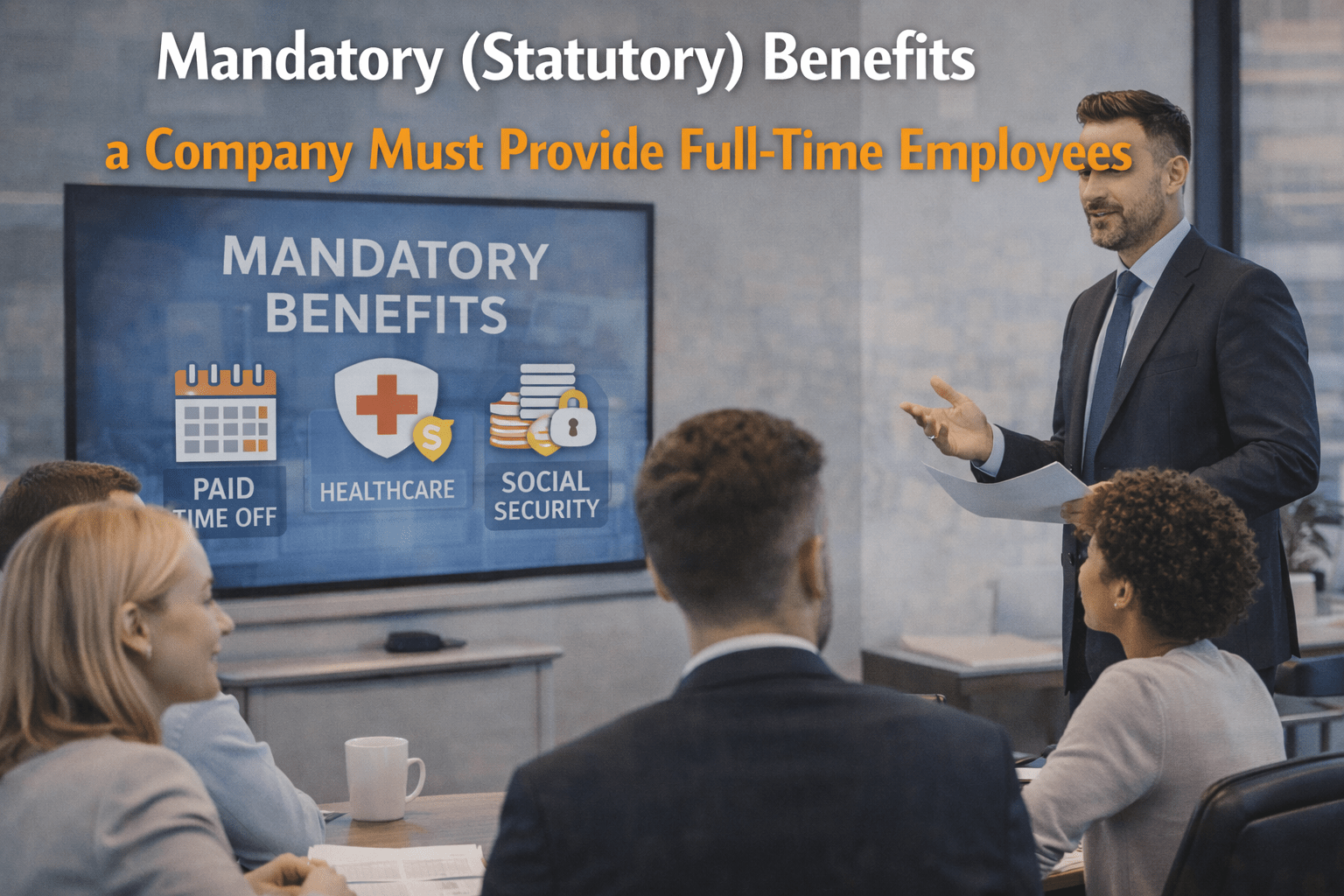
Employee benefits like paid vacation, dental and vision, life insurance, tuition reimbursement, and retirement plans can be powerful recruiting tools, but they’re usually optional. Separate from those “voluntary” perks are statutory (mandatory) benefits, which are required under federal and/or state law and often funded through payroll taxes, insurance coverage rules, or compliance obligations.
The tricky part: your obligations can change based on where you operate and how many employees you have. That’s why understanding mandatory
Everything to Know About Offering Benefits to Part-Time Employees in 2026

Part-time benefits used to be the exception — something reserved for full-time roles and larger employers. That’s changing quickly. Today, many small and midsize businesses are realizing that a thoughtful part-time employee benefits package can help attract reliable talent, build loyalty, and reduce turnover. Many people choose part-time work for reasons like school, caregiving responsibilities, health needs, or transitioning into semi-retirement — and despite working fewer hours, they often need the same types of support as
Read Full Article HereSmall Business & Startup Employee Benefits: Build a Competitive Package That Attracts Talent in 2026
For small businesses
Read Full Article HereBusiness Tax Write-Offs: What Are They and How Do They Work?
Every business must file and pay taxes, but understanding how the tax system works can significantly reduce how much you owe. One of the most effective ways to lower your tax burden is by taking advantage of business tax write-offs—expenses the IRS allows you to deduct when calculating taxable income.
With proper planning, accurate recordkeeping, and a clear understanding of what qualifies, tax write-offs can support better cash flow, smarter financial decisions, and long-term
Read Full Article HereHow Can Employee Perks and Benefits Become Powerful Morale Boosters
Employee perks often shape how we imagine modern workplaces. Think of flexible schedules, collaborative spaces, wellness offerings, or small conveniences that make the workday easier. While these extras may seem minor on the surface, when paired with strong core benefits, they can play a meaningful role in boosting employee morale, engagement, and loyalty.
In today’s competitive labor market, employers are increasingly realizing that morale isn’t driven by salary alone. A thoughtful mix of
IRS Increases 401(k) Contribution Limit for 2026 by $1,000

The Internal Revenue Service (IRS) has announced an increase to retirement plan contribution limits for 2026, giving employees a new opportunity to save more for retirement and offering employers a timely reason to revisit their retirement benefits strategy.
Beginning in 2026, employees participating in workplace-sponsored retirement plans will be able to contribute up to $24,500, an increase from $23,500 in 2025. While the adjustment may appear modest, it reflects a cost-of-living
Read Full Article HereTurn Your Unused Wellness Dollars into High-Value Incentives
Every year, employers
Read Full Article HereHow to Build a Smarter Year-Round Workplace Wellness Calendar
Every year, HR teams roll out wellness initiatives with the best intentions—step challenges, mindfulness sessions, nutrition webinars—only to see participation fade after a few months.
The problem usually isn’t employee interest.
It’s the lack of structure.
Without a clear, year-round plan, wellness programs become disconnected activities instead of a sustained strategy that supports employee health, engagement, and productivity. A thoughtfully designed workplace wellness calendar solves this by turning wellness into an ongoing
Read Full Article Here30 Types of Employee Benefits Your Company Should Offer in 2026

Employee benefits used to be a “nice-to-have” thing for businesses, but not anymore. As we move into 2026, they are a core driver of recruitment, retention, productivity, and culture. As labor markets remain competitive and employee expectations continue to evolve, the employee benefits your company offers can be just as influential as salary when candidates decide where to work, and whether they stay.
Today’s most effective employers take a strategic approach to benefits. They balance compliance
Read Full Article HereFeatured Testimonial

We just started working with Taylor Benefits and could not be happier. Todd gave us quite the education as well as some time saving tools to help us manage our HR and save money too. We are looking forward to a long relationship!”
-Carol, Accounting Manager, recruitment marketing company, Campbell, CA
Recent Post
- Benefits Benchmarking by Industry: Are You Competitive in Your Sector?
- How Employers Are Using Decision-Support Tools to Improve Plan Selection at Open Enrollment
- PEOs vs. Brokers for Small Business Health Insurance: What’s the Difference?
- PCORI Fee Update 2025–2026: What Self-Funded Employers Need to Budget
- The Actuarial Risk Behind Your Renewal: What Carriers Aren’t Telling You
Categories
Archives
- May 2026
- April 2026
- March 2026
- February 2026
- January 2026
- December 2025
- November 2025
- October 2025
- September 2025
- August 2025
- July 2025
- January 2025
- December 2024
- November 2024
- October 2024
- April 2024
- March 2024
- November 2023
- October 2023
- September 2023
- August 2023
- June 2023
- May 2023
- April 2023
- February 2023
- October 2022
- September 2022
- July 2022
- May 2022
We’re ready to help! Call today: 800-903-6066