


Employees expect health
Read Full Article HereSmall Business Health Insurance: Costs, Plans & Statistics (2026)
Small business health insurance plays a critical role in employee recruitment, retention, and financial security, yet it remains one of the most challenging benefits for employers with 1–50 employees to provide. Entering 2026, rising premium costs, workforce expectations, and regulatory complexity continue to shape how small businesses approach health coverage.
While large employers almost universally offer health insurance, small businesses face a more fragmented landscape in which cost
Read Full Article Here9 Employee Benefits Trends for 2026: Where Workplace Benefits Are Headed

As year-end approaches,
Read Full Article Here2026 Regulatory Issues: Top Compliance Issues Businesses Should Know
As businesses close out 2025, many leaders are hoping for a more predictable year ahead. The reality, however, is that 2026 introduces one of the most complex regulatory environments employers have faced in years. From sweeping tax changes and the lingering impact of a federal government shutdown to expanding state retirement mandates, paid leave laws, and fast-moving artificial intelligence regulation, compliance obligations are becoming broader—and more fragmented.
At the same time, limited federal legislative action has
Read Full Article HereWhat Employers Need to Know About New York Secure Choice Savings Program
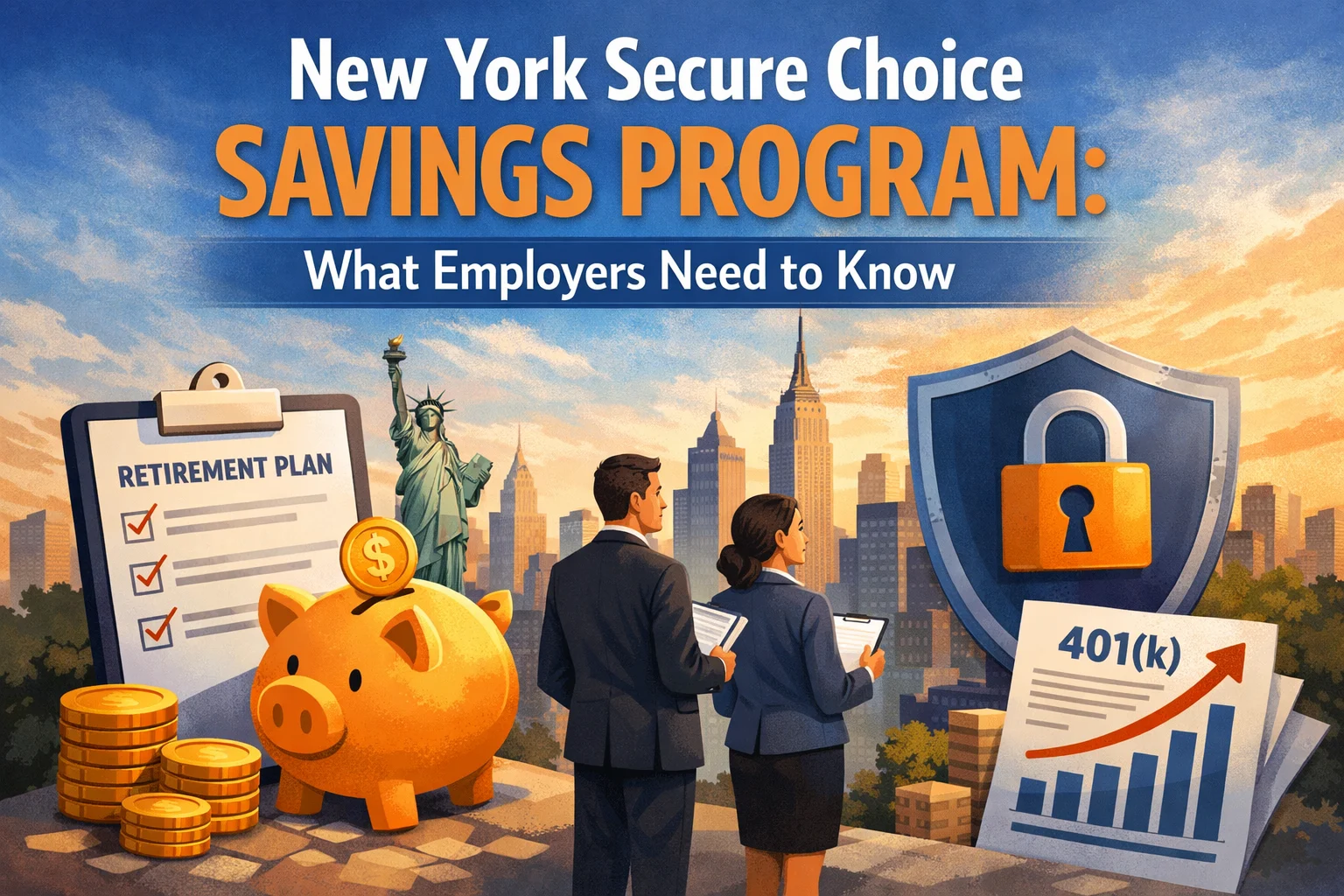
New York employers that do not currently offer a workplace retirement plan will soon face new compliance responsibilities. The New York Secure Choice Savings Program introduces mandatory retirement savings access for certain businesses, requiring eligible employers to facilitate payroll deductions into employee-owned retirement accounts.
While the program is designed to improve retirement readiness across the state, it also creates new administrative considerations for employers—particularly small and mid-sized organizations that have not previously sponsored retirement benefits.
Difference Between State-Administered Retirement Programs and Employer-Sponsored 401(k) Plans
Retirement readiness has become a growing concern for policymakers, employers, and workers alike. As of late 2023, 18 states have enacted legislation creating state-administered retirement programs, with nine fully implemented. These initiatives are designed to address a major gap in retirement access: millions of American workers—particularly those employed by small businesses—still lack access to an employer-sponsored retirement savings plan.
For employers, especially those without an existing retirement benefit, this raises an important strategic question: Is it
Read Full Article HereManaging Affordable Care Act Reporting Requirements Due in 2026
Affordable Care Act (ACA) reporting has never been a “last-minute” task—but heading into the 2026 reporting year, the stakes are even higher. Updated affordability thresholds, increasingly hybrid workforces, and tighter electronic filing rules mean employers must be more deliberate than ever in how they track, test, and report health coverage data.
For Applicable Large Employers (ALEs)—generally businesses with 50 or more full-time equivalent (FTE) employees—ACA compliance is not just about meeting deadlines. It’s about aligning payroll,
Read Full Article HereThe Interplay of Benefits and ESG Reporting

We just started working with Taylor Benefits and could not be happier. Todd gave us quite the education as well as some time saving tools to help us manage our HR and save money too. We are looking forward to a long relationship!” -Carol, Accounting Manager, recruitment marketing company, Campbell, CA We’re ready to help! Call today: 800-903-6066
How Your Health Plan Impacts Your Company’s Social
Read Full Article Here
Featured Testimonial

Recent Post
Categories
Archives