
- Providing world class service and value for employee benefit group plans since 1987

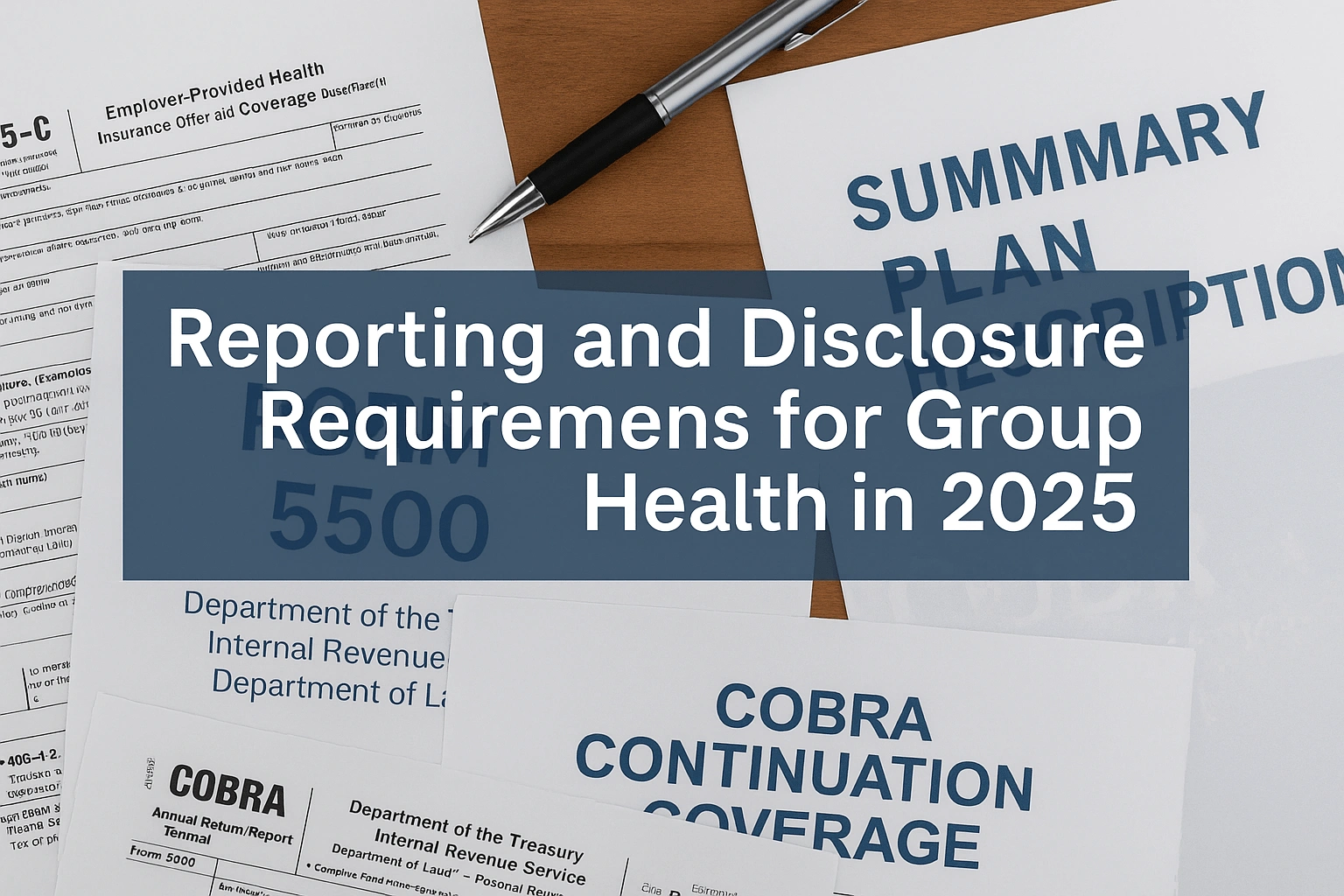
Compliance has always been a critical part of employer-sponsored group health plans, but in 2026, the landscape is more complex than ever. Between federal transparency rules, new reporting obligations, updated Affordable Care Act (ACA) requirements, and expanded state-level mandates, employers must navigate an increasingly detailed set of responsibilities, each one tied to strict penalties if missed.
For HR leaders, benefits managers, and business owners, the challenge isn’t just understanding what must be reported or
Read Full Article Here
In recent years, wearable technology has evolved from a niche fitness accessory into a core component of employee health strategy. Smartwatches, fitness trackers, continuous glucose monitors, biometric patches, sleep monitors, and even smart clothing have entered the mainstream — and now, they’re reshaping how group health plans are designed, delivered, and optimized.
As healthcare costs rise and employee expectations shift toward proactive, personalized care, employers are increasingly turning to wearables to improve health outcomes, reduce
Read Full Article Here
For decades, employee benefits were built almost entirely around healthcare. While medical coverage remains the cornerstone of any comprehensive benefits package, today’s workforce faces a far broader set of financial challenges, rising living costs, student loan debt, retirement insecurity, housing instability, and economic anxiety.
In 2025, financial stress is one of the biggest barriers to employee well-being and productivity. In fact, multiple studies show that financial stress impacts more employees today than physical health issues, leading
Read Full Article Here
For employers offering group health insurance and employee benefits, the possibility of a Department of Labor (DOL) audit is one of the most significant compliance risks they face. These audits are becoming more frequent, more detailed, and more data-driven — particularly as the DOL increases enforcement of ERISA, mental health parity, transparency rules, and new statutory requirements.
Many employers think a DOL audit is something that only happens after a complaint or obvious violation — but
Read Full Article Here
In 2025 and beyond, employee benefits are no longer a static HR function, they’re a dynamic strategy for growth, retention, and organizational resilience.
Between economic uncertainty, healthcare inflation, shifting workforce demographics, and evolving employee expectations, the benefits programs that worked five years ago may no longer meet the needs of today’s workforce — let alone tomorrow’s.
That’s why the most forward-thinking employers are asking a crucial question:
How do we future-proof our employee
When the original SECURE Act (Setting Every Community Up for Retirement Enhancement) was passed in 2019, it marked one of the most significant updates to U.S. retirement policy in decades. But the story didn’t end there.
In late 2022, Congress passed SECURE 2.0, an ambitious follow-up designed to further expand retirement savings opportunities, encourage employer participation, and modernize workplace retirement plans.
Now, as employers continue to navigate its phased rollouts through
Read Full Article Here
One of the most difficult situations HR leaders and business owners face is when employees ask for new or expanded benefits the company simply can’t afford.
Whether it’s fertility coverage, enhanced mental health support, paid family leave, or expanded dental and vision plans, these requests often come from a genuine place, employees want security, balance, and care. And employers, equally genuine in their desire to support their teams, can feel caught between compassion and financial constraints.

In today’s competitive labor market, employers are realizing that a paycheck alone isn’t enough to attract or retain top talent. Employees expect benefits that reflect their lifestyles, protect their families, and support their well-being, without necessarily inflating the employer’s budget.
This growing demand for personalization and choice has propelled one of the most important benefits trends of 2026: the rise of voluntary benefits.
Once seen as supplemental “nice-to-haves,” voluntary benefits have become a strategic cornerstone
Read Full Article Here
For many employers, health insurance costs feel like a runaway train, each renewal season bringing higher premiums and mounting claims. Yet, amid all the complexity of insurance pricing, one factor consistently determines whether costs rise or fall: employee engagement.
When employees are proactive about their health, scheduling preventive visits, managing chronic conditions, using telehealth, and following care plans, then claim frequency drops, outcomes improve, and both the employer and employee win.
But engagement doesn’t happen
Read Full Article Here
For decades, wellness programs have been promoted as the solution to rising healthcare costs. From gym memberships and smoking cessation classes to mindfulness apps and health screenings, the idea has always been simple: healthier employees cost less to insure.
But over time, reality proved more complex. Many organizations discovered that traditional wellness programs, while well-intentioned, often failed to deliver meaningful results. Participation was low, engagement was fleeting, and the financial impact was hard to measure.

We just started working with Taylor Benefits and could not be happier. Todd gave us quite the education as well as some time saving tools to help us manage our HR and save money too. We are looking forward to a long relationship!”
-Carol, Accounting Manager, recruitment marketing company, Campbell, CA
We’re ready to help! Call today: 800-903-6066