
- Providing world class service and value for employee benefit group plans since 1987

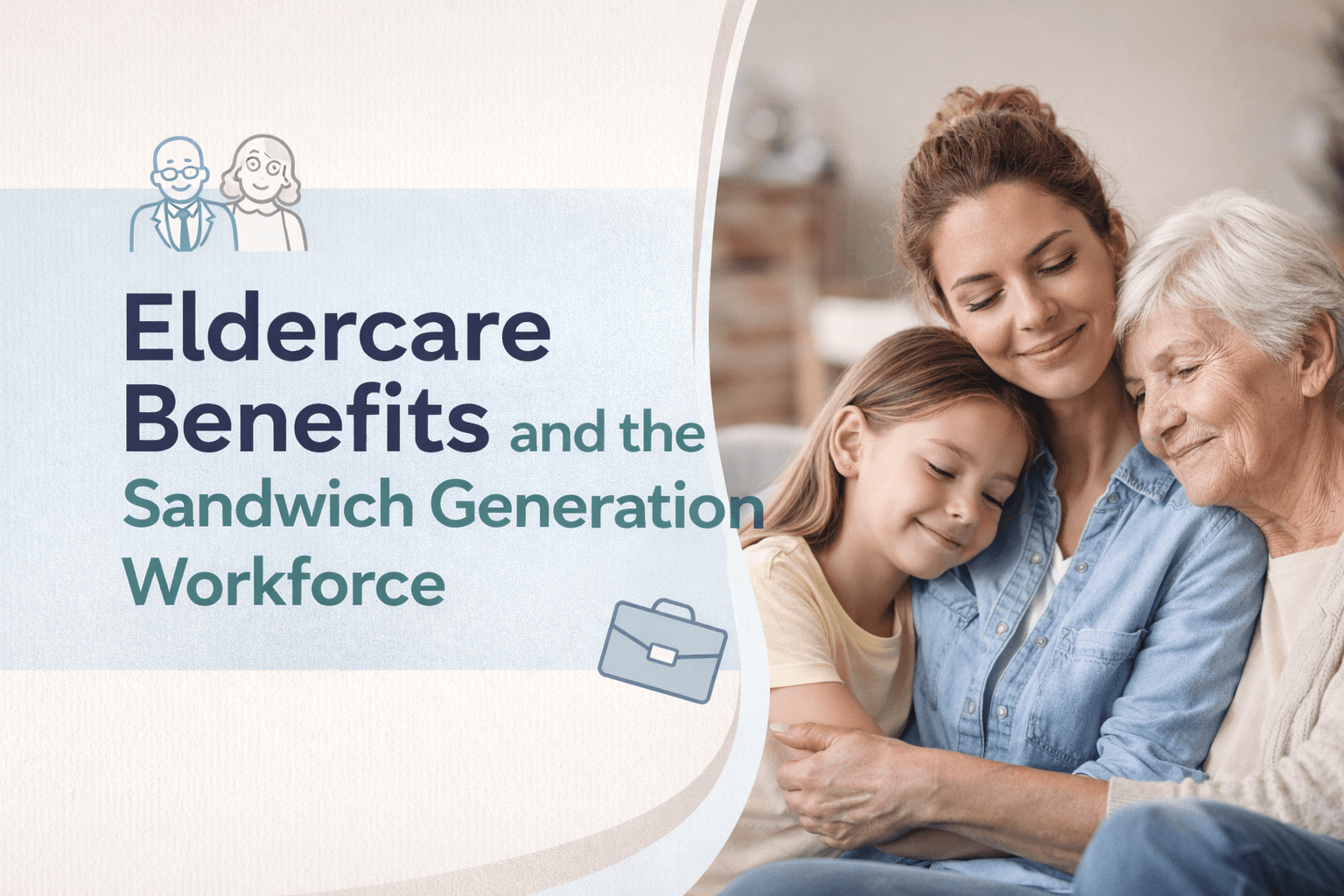
As the workforce ages and family structures evolve, a growing number of employees find themselves caring for both children and aging parents at the same time. This group, commonly referred to as the “sandwich generation”, is becoming one of the most influential demographics shaping employer benefits strategy in 2026.
Eldercare responsibilities are no longer a niche issue. They affect productivity, attendance, mental health, and long-term retention, particularly among mid-career employees who often hold leadership roles or specialized expertise. Employers that fail to recognize and support eldercare needs risk losing experienced talent at a time when replacing them is increasingly difficult and costly.
This article explores who the sandwich generation is, why eldercare benefits matter, and how employers are responding with benefits that reflect the realities of modern caregiving.
The sandwich generation typically includes employees in their 40s, 50s, and early 60s who are simultaneously supporting dependent children and aging parents or relatives. In many cases, these employees are navigating childcare costs, college tuition, and eldercare expenses all at once.
Advances in healthcare mean people are living longer, often with chronic conditions that require ongoing support. At the same time, delayed parenthood means children may still be financially or emotionally dependent well into an employee’s mid-career years.
This convergence of responsibilities places significant strain on employees’ time, finances, and emotional wellbeing.
Eldercare responsibilities often arise suddenly, following a health event or decline in an aging family member. Unlike childcare, which is more predictable, eldercare needs can be complex, urgent, and emotionally charged.
Employees may need to take time off for medical appointments, manage care coordination, or provide hands-on support. Without adequate workplace support, these demands can lead to absenteeism, reduced productivity, burnout, or even workforce exit.
For employers, the impact is measurable. Studies consistently show that caregiving responsibilities contribute to higher turnover, increased healthcare costs, and lower engagement among mid-career employees.

When eldercare needs are not addressed through benefits or workplace policies, the costs often surface elsewhere. Employees may use sick leave or unpaid time off, struggle to focus at work, or delay their own healthcare due to time constraints.
Burnout is a particular concern. The emotional toll of caregiving, combined with work and family obligations, can lead to chronic stress and mental health challenges. Over time, this affects both individual performance and team dynamics.
Employers that ignore eldercare needs may see higher disability claims, increased medical spend, and loss of institutional knowledge as experienced employees step back or leave entirely.
In response to these challenges, employers are expanding eldercare benefits as part of a broader caregiver support strategy. In 2026, eldercare benefits are no longer limited to basic employee assistance programs—they are becoming more comprehensive and proactive.
This evolution reflects a growing recognition that supporting caregivers is essential to workforce stability and resilience.
One of the most valuable eldercare benefits employers are offering is care navigation. Eldercare systems are complex, involving medical providers, insurance, legal considerations, and community resources.
Care navigation services help employees understand care options, coordinate services, and make informed decisions. This may include assistance with finding in-home care, evaluating assisted living facilities, or understanding Medicare and long-term care coverage.
By reducing the administrative burden on employees, care navigation allows them to focus on work and family rather than paperwork and crisis management.
Eldercare is often expensive, particularly when long-term or specialized care is required. While dependent care flexible spending accounts (FSAs) are commonly associated with childcare, they can also be used for qualifying adult dependents.
In 2026, with higher dependent care FSA limits, employers are increasingly educating employees about using these accounts for eldercare expenses. This provides meaningful tax savings and helps offset caregiving costs.
Clear communication is essential, as many employees are unaware that eldercare qualifies under dependent care FSAs.
Time is one of the most valuable resources for caregivers. Employers are expanding paid leave policies to account for eldercare needs, allowing employees to take time off for caregiving without financial penalty.
Some organizations are integrating eldercare into paid family and medical leave policies, while others are offering caregiver-specific leave or flexible time-off arrangements.
Even modest flexibility—such as the ability to work remotely or adjust schedules—can significantly reduce stress for sandwich generation employees.

Caring for aging parents can be emotionally taxing, particularly when dealing with chronic illness, cognitive decline, or end-of-life decisions. Mental health support is a critical component of effective eldercare benefits.
Employers are expanding access to counseling, therapy, and caregiver support groups. These resources help employees manage stress, grief, and anxiety while maintaining their professional responsibilities.
Supporting caregivers’ mental health is not only compassionate—it directly supports productivity and engagement.
Eldercare often involves complex legal and financial decisions, including power of attorney, advance directives, and estate planning. Employers are increasingly offering access to legal resources and financial planning support as part of eldercare benefits.
These services help employees navigate sensitive decisions with confidence and reduce the risk of costly mistakes. When employees feel supported in planning, they are better able to manage caregiving responsibilities alongside work.
While formal benefits are important, workplace culture plays an equally critical role. Employers that normalize conversations about caregiving and offer flexible work arrangements create an environment where employees feel safe seeking support.
Flexibility may include remote work options, adjusted schedules, or temporary workload modifications during caregiving crises. These accommodations often cost little but deliver significant value in retention and morale.
Leadership support and manager training are essential to ensure flexibility is applied consistently and fairly.
As eldercare benefits expand, employers must ensure compliance with applicable employment and benefits laws. Leave policies should be applied consistently, and accommodations should be handled in accordance with legal requirements.
Equity is also important. Eldercare responsibilities affect employees across genders, cultures, and income levels. Benefits should be designed to support diverse caregiving situations rather than assuming a single family model.
Inclusive design ensures eldercare benefits are accessible and effective for the entire workforce.
The value of eldercare benefits may not always be immediately visible in utilization data. Employers should also consider retention rates among mid-career employees, engagement survey feedback, absenteeism trends, and qualitative employee feedback.
Over time, organizations that invest in caregiver support often see stronger loyalty, reduced turnover, and improved productivity—outcomes that far outweigh the cost of benefits.

As demographic trends continue, eldercare will only become more prominent. Employers that proactively address the needs of the sandwich generation are better positioned to retain experienced talent and maintain operational continuity.
Eldercare benefits should be viewed as a strategic investment rather than a reactive accommodation. When integrated into a broader benefits strategy, they contribute to a more resilient and engaged workforce.
At Taylor Benefits Insurance Agency, we help employers design benefits strategies that reflect the realities of today’s workforce—including the growing needs of the sandwich generation.
Our team works with organizations to evaluate eldercare support options, integrate caregiver benefits into existing programs, and develop communication strategies that ensure employees understand and use available resources. We also help employers align benefits with compliance requirements and workforce goals.
As eldercare responsibilities continue to shape employee needs in 2026 and beyond, thoughtful planning is essential. If your organization is looking to better support caregivers and retain mid-career talent, our advisors are here to help you build a benefits strategy that delivers real, lasting impact.
Eldercare benefits are increasingly vital for employers as more employees, particularly those in the sandwich generation, juggle work and caregiving for aging parents. Providing support like flexible schedules and financial assistance alleviates stress, absenteeism, and burnout, while also enhancing retention, productivity, and workplace satisfaction.
Eldcare benefits help reduce stress for employees caring for aging relatives, which lowers burnout and turnover. When workers feel supported, they are more likely to stay loyal to their employer, stay engaged in their roles, and maintain consistent performance over time.
Caregiving responsibilities can begin earlier than many people expect. Employees in their thirties and forties may already be helping parents or grandparents while raising children of their own.
Todd Taylor oversees most of the marketing and client administration for the agency with help of an incredible team. Todd is a seasoned benefits insurance broker with over 35 years of industry experience. As the Founder and CEO of Taylor Benefits Insurance Agency, Inc., he provides strategic consultations and high-quality support to ensure his clients’ competitive position in the market.

We just started working with Taylor Benefits and could not be happier. Todd gave us quite the education as well as some time saving tools to help us manage our HR and save money too. We are looking forward to a long relationship!”
-Carol, Accounting Manager, recruitment marketing company, Campbell, CA
We’re ready to help! Call today: 800-903-6066