
- Providing world class service and value for employee benefit group plans since 1987

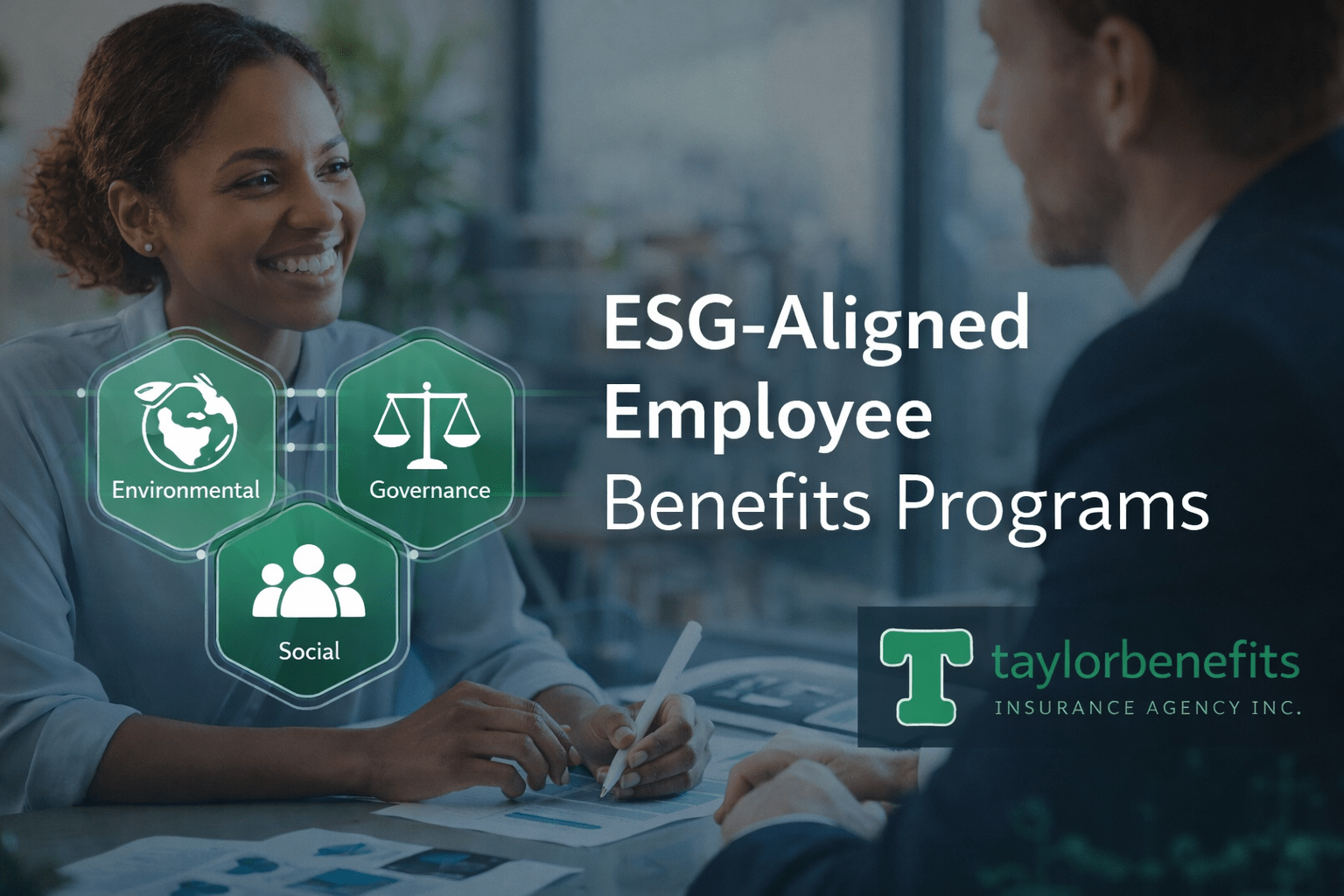
Environmental, Social, and Governance (ESG) priorities are no longer limited to corporate reporting—they are now central to how organizations attract, retain, and support talent. As companies look for meaningful ways to embed ESG into their operations, employee benefits programs have emerged as a powerful and often underutilized lever.
Benefits are more than perks; they reflect an organization’s values. From inclusive healthcare coverage to financial wellness and sustainable incentives, ESG-aligned benefits demonstrate a commitment to employee well-being, equity, and ethical governance.
This blog explores how employee benefits programs can actively support ESG goals and why forward-thinking employers are making them a strategic priority.
ESG frameworks evaluate how organizations perform across three key areas:
Employee benefits sit primarily within the “Social” pillar but also intersect with environmental and governance objectives. When designed thoughtfully, benefits programs can reinforce a company’s broader ESG commitments and help translate strategy into tangible employee experiences.

The “S” in ESG is where benefits programs have the most direct influence. Employers can use benefits to foster equity, inclusion, and overall well-being across their workforce.
Comprehensive health benefits play a foundational role in supporting employees’ physical and mental health. ESG-aligned programs often expand beyond traditional coverage to include:
These offerings not only improve health outcomes but also demonstrate a commitment to employee care.
Inclusive benefits are a critical component of social responsibility. Employers are increasingly evaluating whether their benefits meet the needs of a diverse workforce.
Examples include:
By addressing diverse needs, organizations create a more equitable workplace where all employees feel supported.
Financial stress can significantly impact employee productivity and well-being. ESG-aligned benefits often include programs designed to improve financial security, such as:
These initiatives help employees build stability while reinforcing the employer’s commitment to long-term well-being.
While benefits are often associated with social impact, they can also contribute to environmental sustainability goals.
Employers can design benefits that incentivize environmentally responsible choices, including:
Moving away from paper-based processes not only improves efficiency but also reduces environmental impact. Digital enrollment platforms, electronic communications, and paperless documentation all contribute to sustainability efforts.
Employers can align with benefits providers that prioritize sustainability in their operations. Vendor selection becomes an opportunity to extend ESG values across the supply chain.

Strong governance ensures that benefits programs are managed ethically, transparently, and in compliance with regulations.
Effective governance involves:
These practices help ensure consistency and accountability.
Handling employee benefits data responsibly is a key governance priority. Employers must implement safeguards to protect sensitive information and comply with relevant regulations.
Employees should have clear, accessible information about their benefits, including:
Transparency builds trust and supports informed decision-making.
To effectively integrate benefits into ESG initiatives, organizations need a deliberate and structured approach.
This alignment ensures that benefits are not just reactive but strategically designed to support long-term objectives.

Investing in ESG-focused benefits is not just about responsibility—it also delivers tangible business value.
Today’s workforce, particularly younger generations, prioritizes employers that demonstrate social responsibility and purpose.
Employees are more engaged when they feel their employer genuinely cares about their well-being and values.
Organizations with ESG-aligned benefits are better positioned to build a positive reputation among employees, customers, and stakeholders.
Proactive governance and inclusive practices reduce the risk of compliance issues, reputational damage, and workforce dissatisfaction.
While ESG-aligned benefits offer significant advantages, employers may face challenges such as:
Addressing these challenges requires careful planning, stakeholder alignment, and ongoing evaluation.

ESG-aligned employee benefits programs represent a powerful intersection of purpose and strategy. By integrating sustainability, social responsibility, and strong governance into benefits design, employers can create meaningful impact for their workforce and beyond.
As ESG expectations continue to evolve, benefits programs will play an increasingly important role in shaping how organizations deliver on their commitments.
At Taylor Benefits Insurance Agency, we help organizations design benefits programs that align with both business objectives and broader ESG goals. Whether you’re enhancing inclusivity, improving wellness offerings, or strengthening governance practices, our team can guide you in building a future-ready benefits strategy.
ESG-aligned benefits can significantly improve recruitment by making a company more attractive to purpose-driven candidates. Job seekers today often look beyond salary and focus on values, workplace culture, and sustainability. A strong ESG benefits package signals responsibility and care, helping organizations stand out in competitive hiring markets and attract higher quality applicants.
Employers can use surveys, focus groups, enrollment data, and employee discussions to understand preferences and identify improvement opportunities.

Todd Taylor oversees most of the marketing and client administration for the agency with help of an incredible team. Todd is a seasoned benefits insurance broker with over 35 years of industry experience. As the Founder and CEO of Taylor Benefits Insurance Agency, Inc., he provides strategic consultations and high-quality support to ensure his clients’ competitive position in the market.

We just started working with Taylor Benefits and could not be happier. Todd gave us quite the education as well as some time saving tools to help us manage our HR and save money too. We are looking forward to a long relationship!”
-Carol, Accounting Manager, recruitment marketing company, Campbell, CA
We’re ready to help! Call today: 800-903-6066