






The era of
Read Full Article HereEmergency Savings Accounts as an Employee Benefit
Financial emergencies are one of the most common—and most disruptive—sources of stress for employees. Unexpected medical bills, car repairs, family emergencies, or temporary
Read Full Article HereLifestyle Spending Accounts vs HSAs in 2026
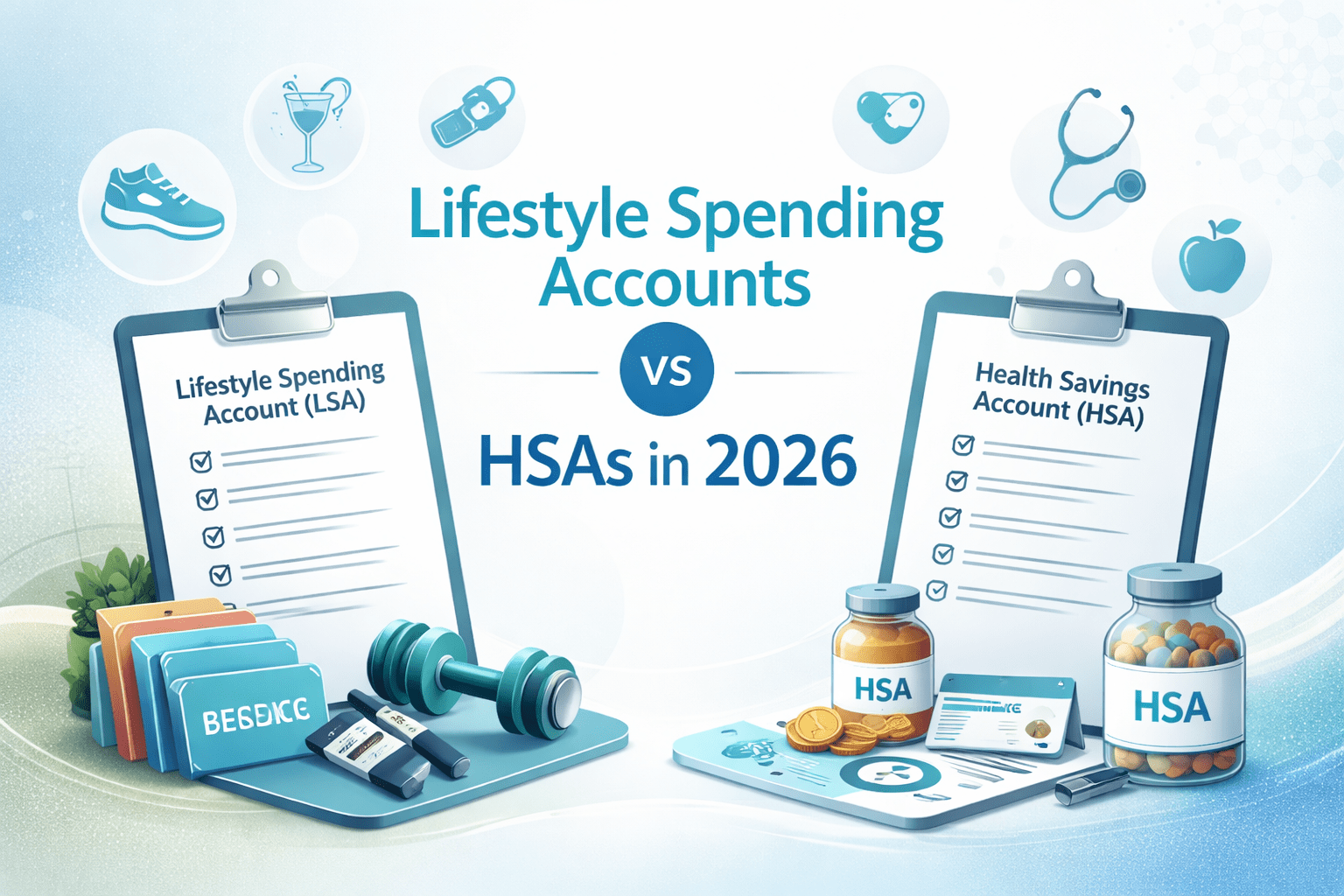
As employee expectations around benefits continue to evolve, employers are rethinking how they support wellbeing beyond traditional healthcare coverage. Two benefits frequently discussed in this context are Lifestyle Spending Accounts (LSAs) and Health Savings Accounts (HSAs). While both involve employer-funded accounts and employee choice, they serve very different purposes—and choosing the wrong one (or misunderstanding how they work together) can limit impact.
In 2026, the question for employers is no longer whether LSAs or HSAs are
Read Full Article HereStudent Loan Assistance Strategies for Employers

Student loan debt remains one of the most persistent financial stressors affecting today’s workforce. While headlines often focus on younger employees, education debt increasingly
Read Full Article HereFinancial Wellness Programs Beyond Healthcare

For years, employer-sponsored benefits strategies treated healthcare and financial wellbeing as separate issues. Health insurance, wellness programs, and EAPs lived in one lane,
Read Full Article HereFeatured Testimonial

We just started working with Taylor Benefits and could not be happier. Todd gave us quite the education as well as some time saving tools to help us manage our HR and save money too. We are looking forward to a long relationship!”
-Carol, Accounting Manager, recruitment marketing company, Campbell, CA
Recent Post
- Benefits Benchmarking by Industry: Are You Competitive in Your Sector?
- How Employers Are Using Decision-Support Tools to Improve Plan Selection at Open Enrollment
- PEOs vs. Brokers for Small Business Health Insurance: What’s the Difference?
- PCORI Fee Update 2025–2026: What Self-Funded Employers Need to Budget
- The Actuarial Risk Behind Your Renewal: What Carriers Aren’t Telling You
Categories
Archives
- May 2026
- April 2026
- March 2026
- February 2026
- January 2026
- December 2025
- November 2025
- October 2025
- September 2025
- August 2025
- July 2025
- January 2025
- December 2024
- November 2024
- October 2024
- April 2024
- March 2024
- November 2023
- October 2023
- September 2023
- August 2023
- June 2023
- May 2023
- April 2023
- February 2023
- October 2022
- September 2022
- July 2022
- May 2022
We’re ready to help! Call today: 800-903-6066