
- Providing world class service and value for employee benefit group plans since 1987

Employee benefits in the United States are undergoing rapid evolution in 2025, driven by rising healthcare costs, shifting workforce expectations, and competitive hiring markets. Employers are expanding beyond traditional offerings, such as health insurance and retirement plans, to include mental health resources, flexible work arrangements, and even niche perks like pet insurance. This data-driven report compiles the latest statistics from authoritative sources to show how benefits differ by company size, industry, emerging trends, and how they’re reshaping the American workplace.
Employer-sponsored health insurance is the backbone of U.S. employee benefits. Rising premiums and regulatory changes have kept this benefit in the spotlight, as companies balance costs while ensuring coverage for their workforce.
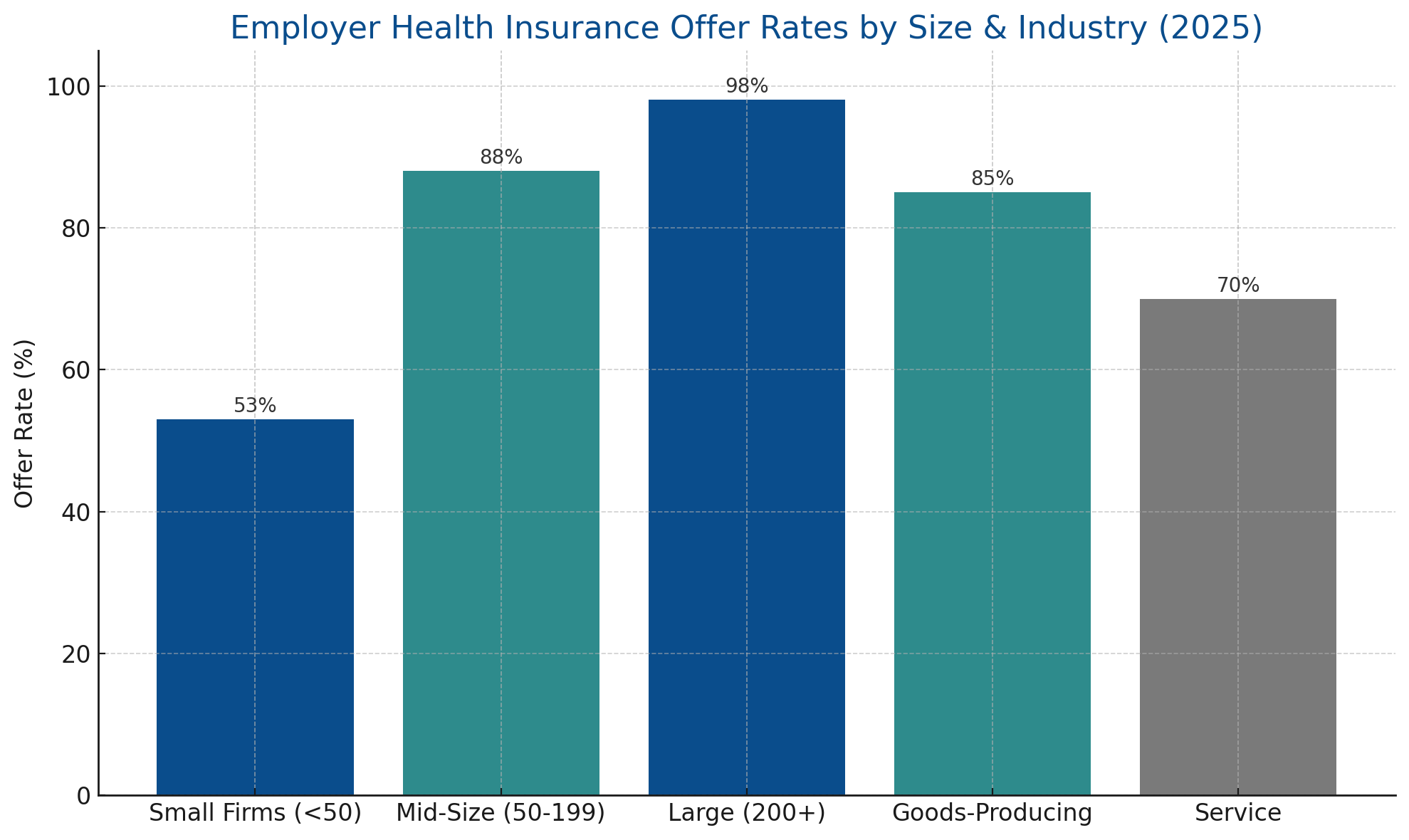
Offer Rates by Employer Size: Only 53% of all U.S. firms offer health benefits to at least some employees, but the figure increases to 94% for employers with 50 or more workers. Nearly all large employers (those with 200 or more employees) provide coverage, whereas many tiny businesses do not.
National Coverage & Premiums: Around 91% of U.S. workers are employed at a firm that offers health insurance. In 2023, the average annual premium for family coverage reached $23,968, with employees contributing approximately $6,575 of that amount. Single coverage averaged $8,435.
Industry Variations: Access to health plans differs by sector. 85% of private-sector workers in goods-producing industries (e.g., manufacturing) have access to employer health insurance, compared to 70% in service industries.
Dental and vision benefits are the most common “add-on” perks beyond medical coverage, and they play a significant role in overall employee satisfaction. While not universal like health insurance, they’ve become standard for larger employers seeking to enhance their benefits package.
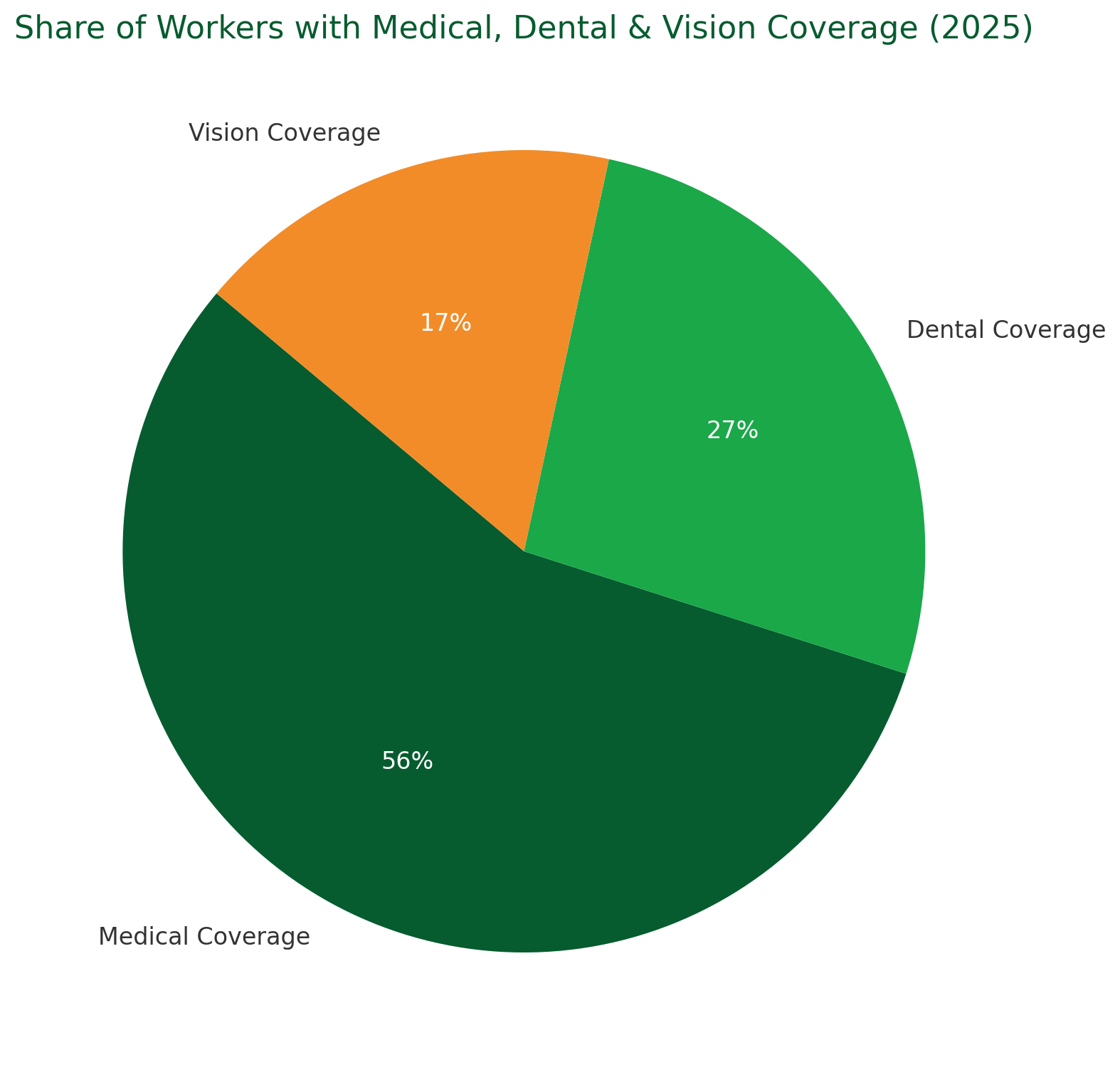
Overall Access Rates: In the private sector, 43% of workers have dental coverage, and 28% have vision coverage through their employer. Public-sector workers enjoy broader access, with 60% having dental and 39% having vision benefits.
Company Size Differences: Larger employers almost always include dental and vision plans, whereas many small businesses opt to skip them to save costs. In firms with 500 or more employees, dental coverage is nearly universal, whereas at companies with fewer than 50 employees, it’s far less common.
Trend in Demand: Vision benefits are experiencing rising interest due to the prevalence of screen-heavy jobs, and dental insurance remains a top-requested perk for families.
Retirement benefits, especially 401(k) plans, are among the most valued employee perks, enabling workers to save for the future while providing employers a competitive edge in hiring. In 2025, access to retirement benefits will still heavily depend on company size and sector, with large employers leading the way.
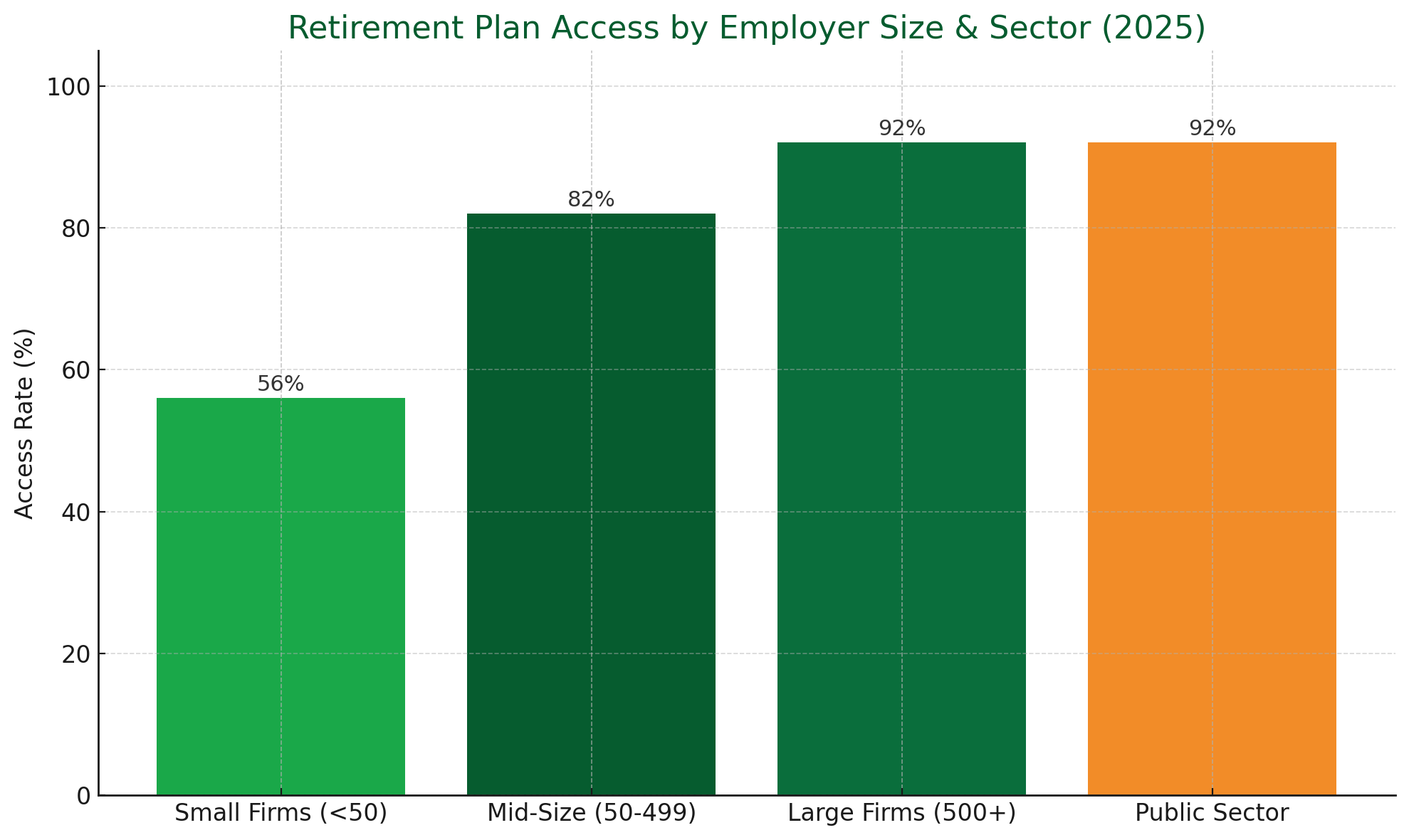
Access and Participation: Approximately 75% of U.S. civilian workers have access to an employer-sponsored retirement plan, but only 57% actively participate by contributing to it. In the private sector, 72% of workers have access to a retirement plan, compared to 92% of workers in state and local governments.
Small vs. Large Employers: Access to retirement benefits is dramatically higher at large firms—only 56% of workers at small firms (<50 employees) have a retirement plan, compared to 90%+ at large firms (500+ employees). Nearly all mid-sized and large companies offer some form of 401(k) or pension plan.
Matching Contributions & Features: Over 84% of employers offering a 401(k) provide a matching contribution, with the typical match up to about 6–7% of an employee’s salary. Automatic enrollment is standard for 50% of employers, while 27% use auto-escalation to gradually increase contributions.
Paid leave is one of the most universally appreciated employee benefits, enabling workers to recharge and manage their obligations. While nearly every large company offers vacation and sick leave, the amount of leave often varies depending on company size and employee tenure.
Prevalence of Paid Time Off: Nearly 99% of organizations offer paid vacation, and 95% offer paid sick leave. In the private sector, 79% of workers have access to paid sick leave, and 81% receive paid holidays.
Combined PTO Banks: Around 70% of employers now combine vacation and sick leave into a single PTO pool, giving workers more flexibility in how they use their time.
Small vs. Large Employers: Employees at large companies (500+ workers) earn an average of 14 vacation days after one year, compared to 10 days at small firms (<100 workers). After 10 years, that gap widens — 21 days at large companies vs. 16 days at small companies.

Mental health benefits have evolved from being a “nice-to-have” perk to an essential component of workplace well-being. More companies are expanding programs like Employee Assistance Programs (EAPs) and offering resources to support emotional health, wellness, and resilience.
Employee Assistance Programs (EAPs): Around 54% of private-sector workers have access to an EAP, up from 48% a decade ago. These programs provide confidential counseling, stress management, and referrals for mental health services.
Wellness Programs: 43% of employees now have access to workplace wellness initiatives (weight management, stress-reduction programs, smoking cessation, etc.), up from 35% a decade ago.
Mental Health Days: 1 in 5 employers (19%) provide designated paid mental health days beyond standard sick leave, a sign of how organizations are acknowledging mental health as part of overall wellness.

Flexible work arrangements have become a permanent expectation in many industries. Hybrid schedules, fully remote roles, and home office stipends now represent meaningful benefits that influence where employees choose to work.
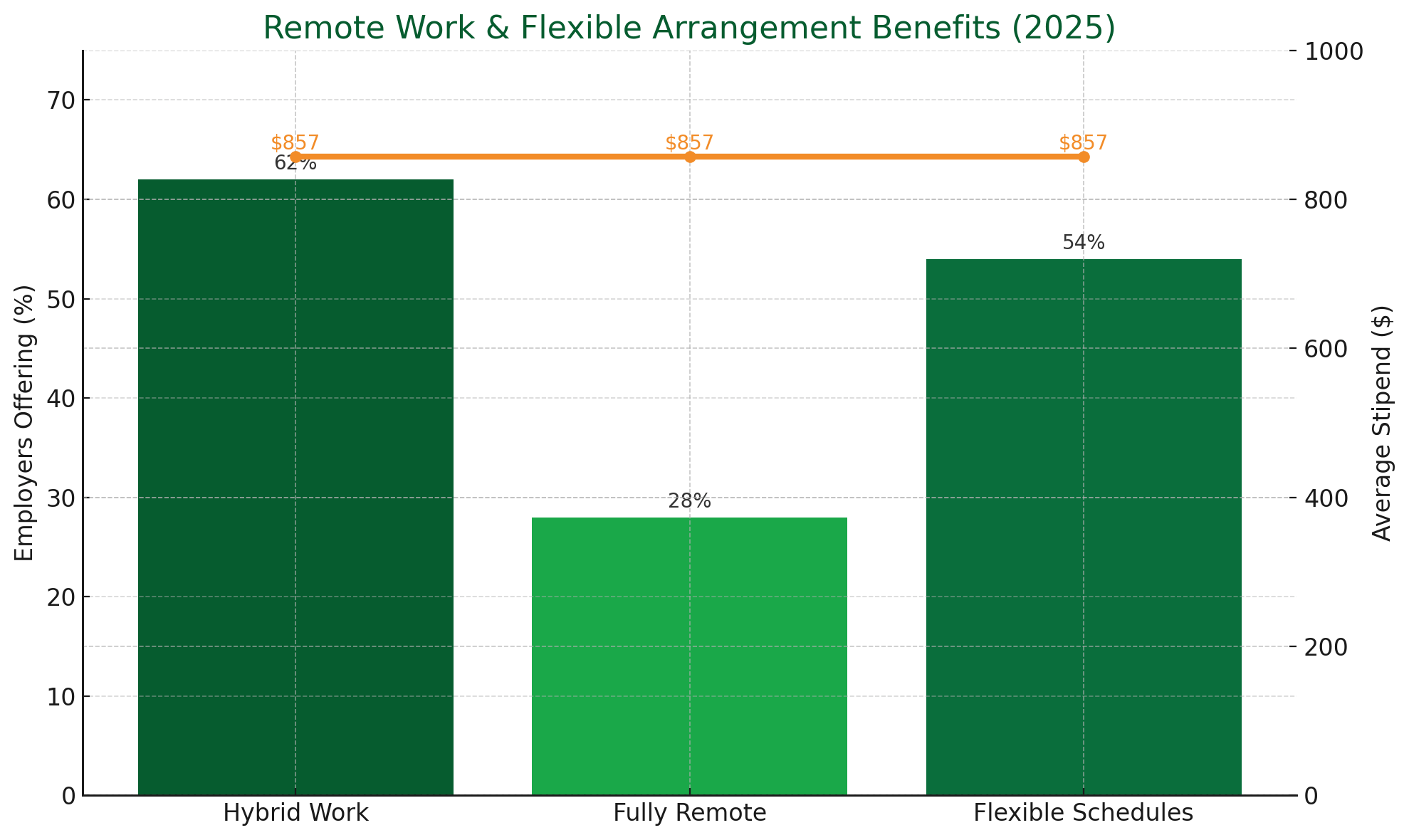
Hybrid & Remote Adoption: In 2025, 62% of employers offer a hybrid work model, while fully remote options remain less common, concentrated primarily in the tech and finance sectors.
Home Office Stipends: 59% of companies provide stipends or reimbursements for home office setups, averaging $857 per employee.
Flexible Scheduling: Beyond location flexibility, 54% of employers allow flexible start/end times, and 33% allow flexibility outside core hours.
Family-friendly benefits have expanded in recent years as employers respond to worker demand for better support during significant life events. Paid family leave, maternity and paternity policies, as well as leave for adoption or foster care, are becoming a standard expectation, especially at larger firms.
Paid Family Leave: About 33% of employers now offer paid family leave to care for an immediate family member, and 18% extend it to cover extended family members.
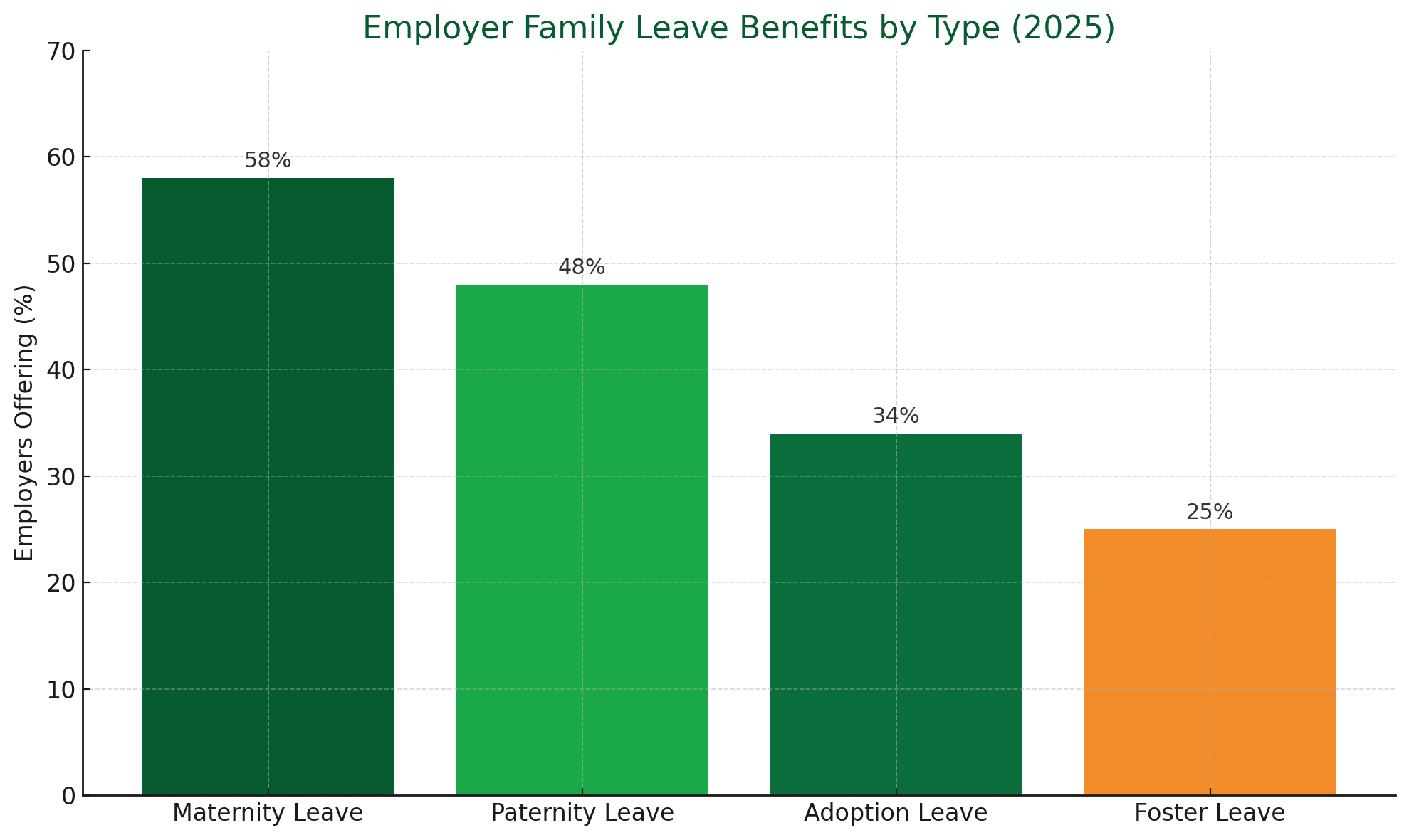
Parental Leave: Approximately 55–60% of employers offer some form of paid maternity leave, while 45–50% provide paternity leave.
Adoption & Foster Benefits: 34% of employers offer paid adoption leave, and 25% offer foster child placement leave.
Pet Benefits on the Rise: 19% of employers now offer pet insurance or “pawternity” leave, showing how broad the definition of family benefits has become.
Life and disability insurance provide critical financial protection for employees and their families. While these benefits are highly valued, access depends heavily on employer size, with large firms almost always offering them, while many small businesses often leave these protections out.
Life Insurance: Around 58% of private-sector workers receive employer-provided life insurance, while that figure jumps to 83% in the public sector.
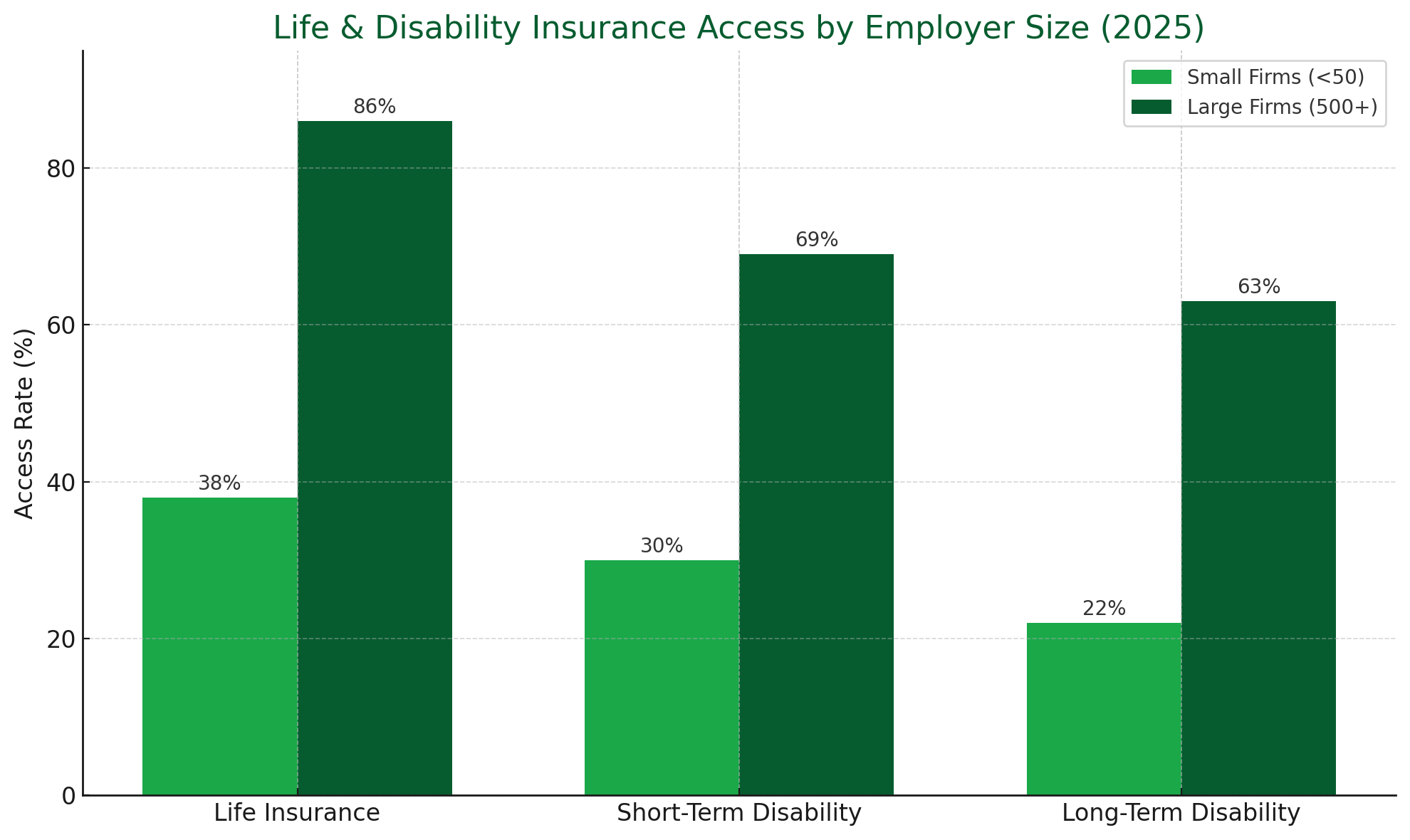
Short-Term Disability (STD): Available to about 30% of workers at small firms, compared to 69% at large firms.
Long-Term Disability (LTD): Offered by only 22% of small businesses, but 63% of large employers provide it.
Education-related benefits have become a powerful tool for retention and recruitment, helping employees enhance their skills while signaling an employer’s commitment to professional growth. These offerings range from on-the-job training to tuition reimbursement and even student loan support.
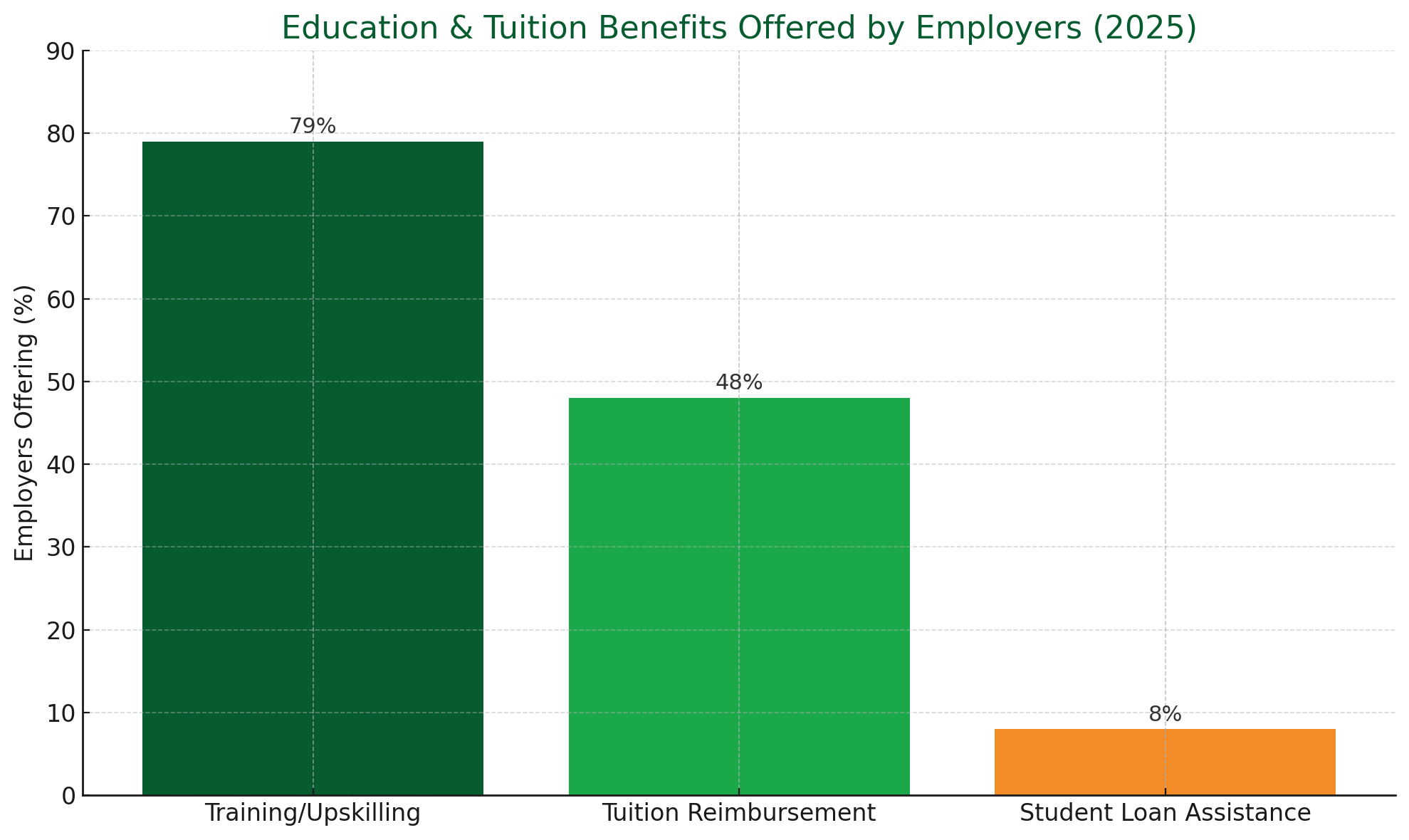
Training & Upskilling: About 79% of organizations offer formal training and upskilling programs to help employees build new skills.
Professional Development Costs: Roughly 87% cover professional memberships, 78% cover certifications, and 77% cover license fees — all at record highs.
Tuition & Student Loans: 48% of employers offer tuition reimbursement, but only 8% provide student loan repayment assistance, highlighting the rarity of this benefit.
Beyond the traditional benefits, many companies are now offering niche perks to stay competitive and appeal to changing workforce expectations. These benefits may not be as widespread yet, but they are rapidly gaining attention and shaping future benefit packages.
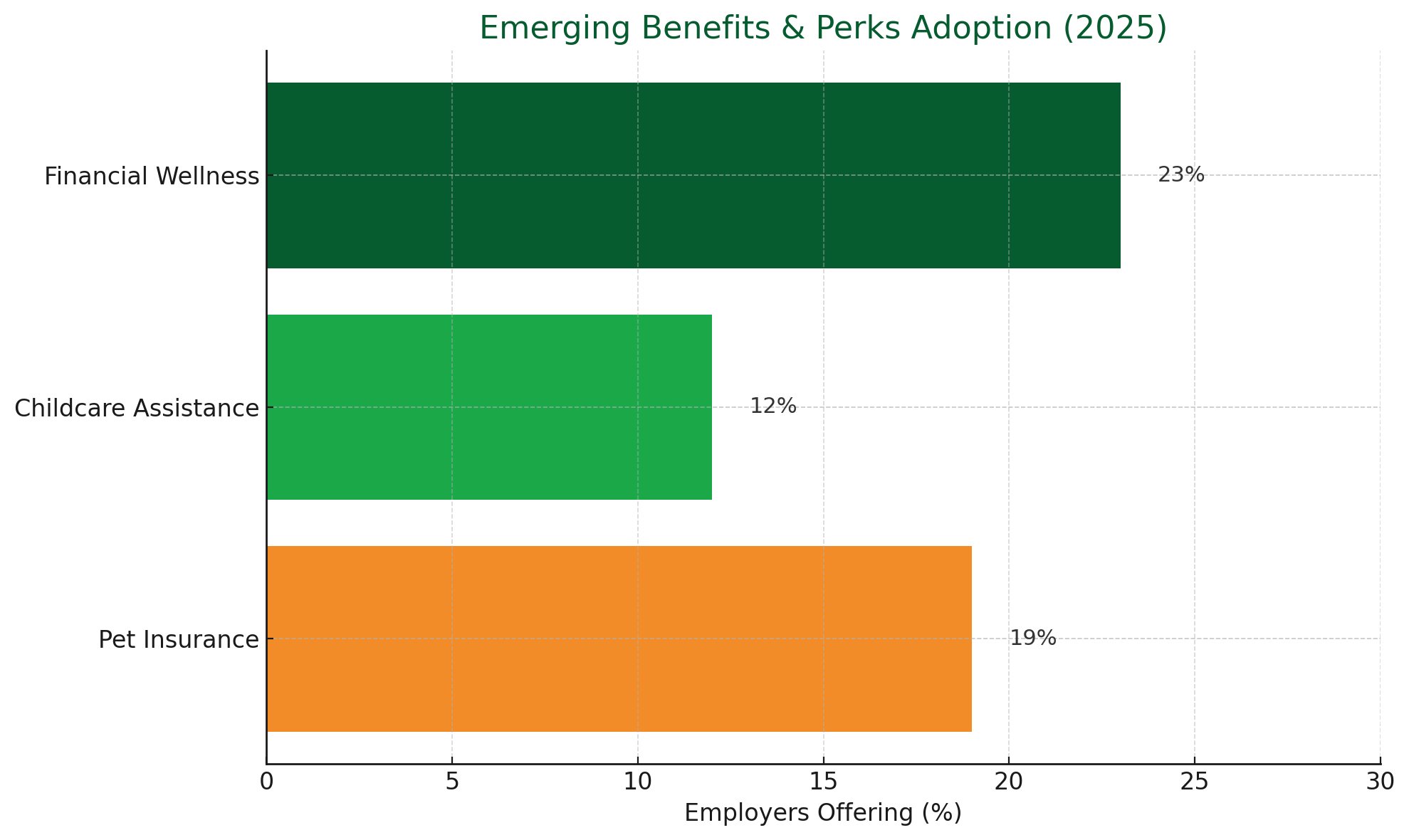
Childcare Assistance: Only 12% of U.S. workers have access to employer-provided childcare benefits; however, more companies (56%) report prioritizing childcare initiatives for retention and recruitment purposes.
Financial Wellness Programs: Approximately 23% of private-sector workers have access to financial planning benefits, such as seminars or emergency savings programs.
Pet Insurance: 19% of employers now offer pet insurance or “pawternity” leave, up from 14% in 2022, showing that pets are officially part of benefit planning.
Employee benefits in the U.S. are entering a more holistic era. Traditional staples, such as health insurance and retirement plans, remain the foundation, but in 2025, employers are expanding into areas like mental health, remote work support, and even pet insurance. Large companies continue to lead, offering nearly universal coverage for health, retirement, and life insurance, while smaller businesses struggle to match these benefits.
What’s clear is that benefits have become a major driver of talent decisions: job seekers weigh PTO policies, flexible scheduling, and wellness offerings as heavily as salary. Companies that invest in broad, meaningful benefits are winning in recruitment and retention; those that lag behind risk losing their competitive edge.
Remote work has become a key factor for many employees when choosing a job. Employers offering flexible work arrangements often see higher retention and stronger recruitment results. Key considerations include providing the right technology, maintaining clear communication, ensuring fairness in career opportunities, keeping team culture strong, and following legal requirements for remote employees. Clear policies and regular updates help make remote work successful for both employees and employers.
Remote and hybrid work arrangements have led employers to emphasize flexible benefits, such as mental health support, home office stipends, and virtual wellness programs, as part of their total compensation strategies.
When companies understand which benefits improve job satisfaction, they can invest in programs that support employee needs. Data often highlights areas like flexible work, wellness programs, and retirement plans, all of which can increase loyalty and reduce costly turnover.
Employees prioritize retirement plans because they provide long-term financial stability and security after working years. With concerns about social security reliability, employer-sponsored savings plans help workers feel more prepared for the future and encourage loyalty to their organization.
Employers often face challenges such as rising costs, changing regulations, employee communication gaps, and selecting benefits that meet diverse workforce needs. Managing enrollment, compliance requirements, and plan updates can also require significant time and resources. A well-organized benefits strategy helps companies address these issues while providing valuable support that employees can understand and use effectively.

Todd Taylor oversees most of the marketing and client administration for the agency with help of an incredible team. Todd is a seasoned benefits insurance broker with over 35 years of industry experience. As the Founder and CEO of Taylor Benefits Insurance Agency, Inc., he provides strategic consultations and high-quality support to ensure his clients’ competitive position in the market.

We just started working with Taylor Benefits and could not be happier. Todd gave us quite the education as well as some time saving tools to help us manage our HR and save money too. We are looking forward to a long relationship!”
-Carol, Accounting Manager, recruitment marketing company, Campbell, CA
We’re ready to help! Call today: 800-903-6066