
- Providing world class service and value for employee benefit group plans since 1987

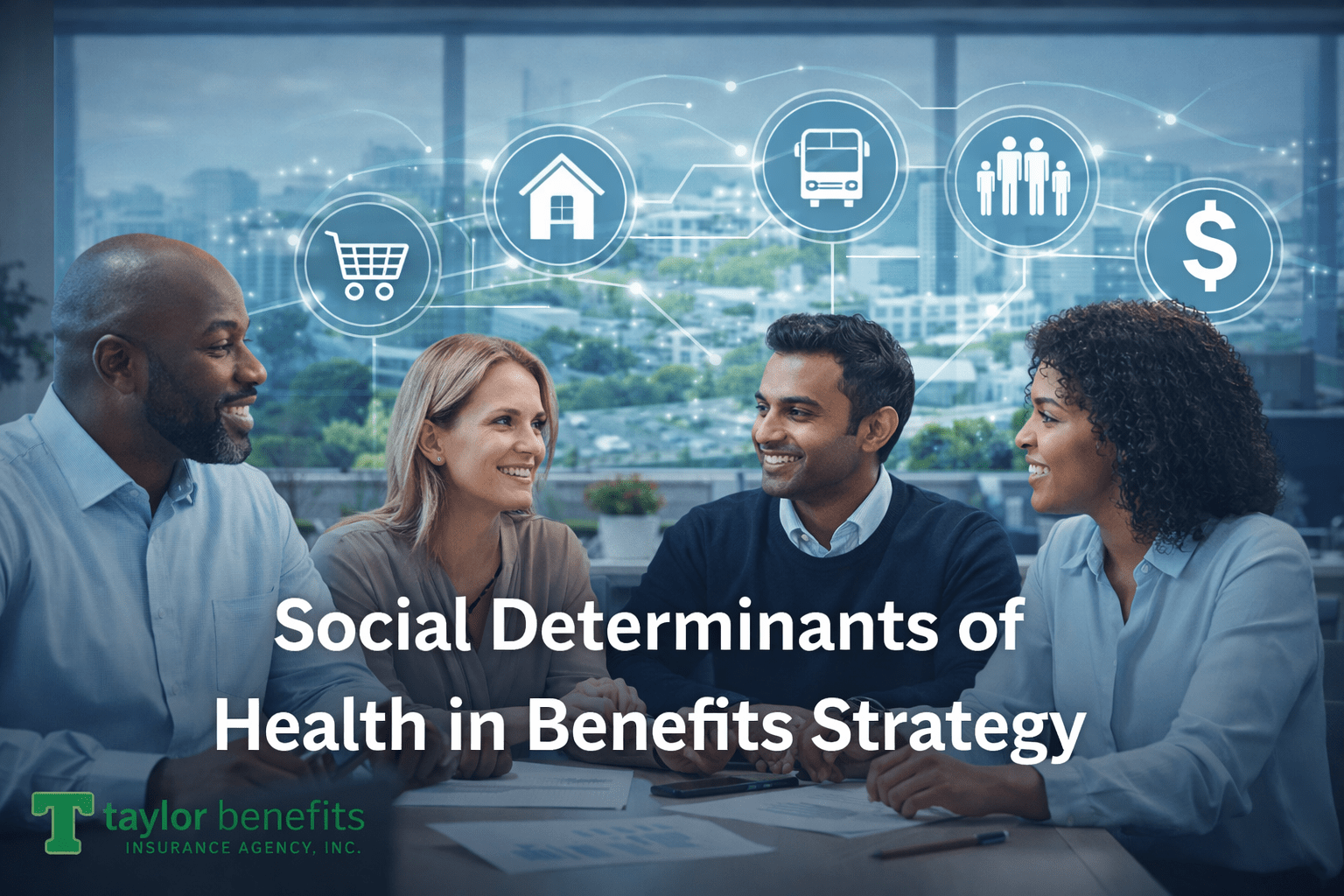
Employee benefits strategy is evolving. Employers are no longer looking only at premiums, deductibles, and network design. They are also paying closer attention to the non-medical factors that shape health outcomes every day. These factors, often grouped under the term social determinants of health, can have a major impact on how employees access care, manage chronic conditions, and maintain overall well-being.
For employers, this shift matters because health outcomes do not start and end in the doctor’s office. An employee may have health coverage but still struggle to stay healthy if they are dealing with food insecurity, unstable housing, transportation barriers, or limited access to care. When those issues go unaddressed, the effects can show up in higher claims costs, missed appointments, delayed treatment, absenteeism, and reduced productivity.
That is why more organizations are beginning to consider how benefits strategy can help address the broader conditions affecting employee health.
Social determinants of health are the everyday conditions that influence a person’s health status and ability to access care. In the workplace, these may include:
food security
housing stability
transportation access
financial strain
caregiving responsibilities
geographic access to providers
language and digital access barriers
These issues are not always visible in traditional benefits reporting, but they often shape whether employees can fully use the benefits they already have. A strong health plan has limited value if an employee cannot afford healthy meals, lacks stable housing, or cannot get to an in-network provider.
For HR leaders and employers, this creates a strategic challenge. Benefits cannot solve every social issue, but they can be designed in ways that reduce barriers and make support more accessible.

Employers have a practical reason to pay attention to these factors. Social and economic barriers can drive higher healthcare spending over time by contributing to delayed care, poor condition management, preventable emergency room use, and lower treatment adherence.
There is also a workforce experience issue. Employees are more likely to value benefits when those benefits reflect the realities of their daily lives. A plan that looks comprehensive on paper may still fall short if employees cannot navigate it or use it effectively.
Addressing social determinants of health can help employers:
improve access to care
support better health outcomes
strengthen equity in benefits delivery
improve employee trust and engagement
This does not mean employers need to build a social services system. It means they can make smarter decisions about plan design, vendor partnerships, and support programs that reduce common barriers.
Food insecurity is one of the clearest examples of how daily life affects health. Employees who do not have reliable access to nutritious food may be more likely to struggle with chronic condition management, energy levels, mental well-being, and overall health stability.
For employers, this can connect directly to conditions such as diabetes, hypertension, and cardiovascular risk.
Benefits strategy can help address this issue in several ways. Some employers expand access to nutrition support through wellness programs, chronic condition management vendors, or health plan partnerships that include nutrition coaching. Others offer flexible spending support, emergency assistance programs, or employee hardship funds that can ease short-term pressure.
Employers may also look at cafeteria subsidies, healthy meal support during demanding work periods, or partnerships with local resources that help employees find food assistance in their communities.
The key is not to overpromise what a benefits package can do. Rather, it is to recognize that nutrition support can be an important part of employee well-being and chronic care strategy.

Housing is another factor that can strongly influence health. Employees dealing with unstable housing, unsafe living conditions, or frequent moves may face higher stress, worse sleep, and greater difficulty managing both physical and mental health needs.
Housing insecurity can also affect benefit utilization in less obvious ways. Employees may miss mail-based plan communications, struggle to maintain prescriptions, postpone care, or deprioritize preventive visits when immediate life needs take over.
While employers are not housing providers, benefits strategy can still play a role. For example, employee assistance programs may help connect workers to local support resources. Financial wellness programs can help employees build budgeting skills and emergency savings. Leave policies, hardship programs, and payroll flexibility may also reduce pressure during times of personal instability.
In some organizations, housing support may intersect with relocation policies, travel benefits, mental health services, or community-based referral programs. Even when direct housing assistance is not feasible, employers can design benefits that are easier to access during periods of instability.
Access to care is one of the most important areas where social determinants intersect with benefits strategy. Having health insurance does not automatically mean employees can get timely, affordable, and practical care.
Common barriers may include:
limited provider availability
long wait times
transportation issues
rural access challenges
lack of childcare during appointments
language barriers
out-of-pocket cost concerns
difficulty navigating the healthcare system
Employers can respond in practical ways. Telehealth can improve access for employees who have transportation or scheduling limitations. Broader primary care support, second-opinion services, and navigation tools can help employees find appropriate providers more efficiently. Mental health access can also improve when virtual options, expanded networks, or care navigation are included.
Plan design matters here as well. High cost-sharing may discourage employees from seeking care early. Complicated networks and unclear communications can create friction that leads to delayed treatment. Employers that want to improve access should look not only at what is covered, but also at how easy the benefit is to use.
Employers often want to better understand where social barriers may be affecting their workforce, but this should be approached carefully. Claims data may show patterns such as missed follow-up care, preventable ER use, low preventive screening rates, or poor chronic condition control. Employee surveys, utilization trends, and vendor reporting can also provide useful insight.
Still, this is a sensitive area. Employers should avoid intrusive practices and be thoughtful about privacy, trust, and communication. The goal is not to monitor employees’ personal lives. It is to identify broad patterns and design benefits that remove barriers where possible.
In many cases, the best approach is population-level strategy rather than individual-level assumptions.

Employers interested in addressing social determinants of health through benefits strategy should start with realism. Not every organization has the same budget, workforce structure, or level of vendor support. Progress often comes from targeted improvements rather than large-scale overhauls.
A practical approach includes:
A multi-location hourly workforce may face different barriers than a corporate office population. Employers should consider geography, income variation, shift schedules, and workforce demographics when evaluating needs.
A benefit that exists but is hard to use will not have the intended impact. Navigation, communication, and affordability are just as important as the plan itself.
Health plans, EAPs, digital navigation vendors, and wellness partners may already offer support related to nutrition, care access, or community referrals. Employers should understand what is already available before adding new programs.
Employees are more likely to use support programs when communication feels practical, respectful, and easy to understand. Messaging should focus on access and support rather than judgment.
Success may include more than claims savings alone. Employers may also look at engagement, preventive care use, employee feedback, reduced care delays, and better participation in support programs.
Social determinants of health are becoming a bigger part of benefits conversations because employers are recognizing a simple truth: healthcare strategy is only partly about healthcare. Employees bring real-life challenges into every benefits decision they make, from whether to fill a prescription to whether to attend a follow-up appointment.
As benefits leaders work to improve outcomes and control costs, they are increasingly looking at the barriers that stand between employees and effective care. Food insecurity, housing instability, and access challenges are not separate from benefits strategy anymore. In many workplaces, they are becoming part of the discussion.

A modern benefits strategy should do more than offer coverage. It should help employees use that coverage in ways that are realistic, accessible, and supportive of their actual needs.
That is where social determinants of health come into focus. Employers that account for food insecurity, housing-related challenges, and access-to-care barriers can build benefits programs that are more responsive and more effective. The goal is not to solve every social issue through benefits. It is to remove avoidable obstacles that make it harder for employees to stay healthy and get care.
Taylor Benefits Insurance Agency helps employers evaluate benefits strategies with both cost management and employee needs in mind. As organizations rethink how benefits can support the whole employee, a more practical and inclusive approach can create stronger outcomes for the workforce and the business.
Small employers can begin by reviewing basic employee needs such as transportation, food access, and housing stability. Even without large budgets, they can adjust benefits like flexible scheduling or referral support. Partnering with community programs also helps address real-life barriers that affect health and work performance.
Housing, transportation, food access, and financial stability can influence employee health. Addressing these factors through benefits strategies may improve well-being, reduce absenteeism, and support better healthcare outcomes.

Todd Taylor oversees most of the marketing and client administration for the agency with help of an incredible team. Todd is a seasoned benefits insurance broker with over 35 years of industry experience. As the Founder and CEO of Taylor Benefits Insurance Agency, Inc., he provides strategic consultations and high-quality support to ensure his clients’ competitive position in the market.

We just started working with Taylor Benefits and could not be happier. Todd gave us quite the education as well as some time saving tools to help us manage our HR and save money too. We are looking forward to a long relationship!”
-Carol, Accounting Manager, recruitment marketing company, Campbell, CA
We’re ready to help! Call today: 800-903-6066