
- Providing world class service and value for employee benefit group plans since 1987

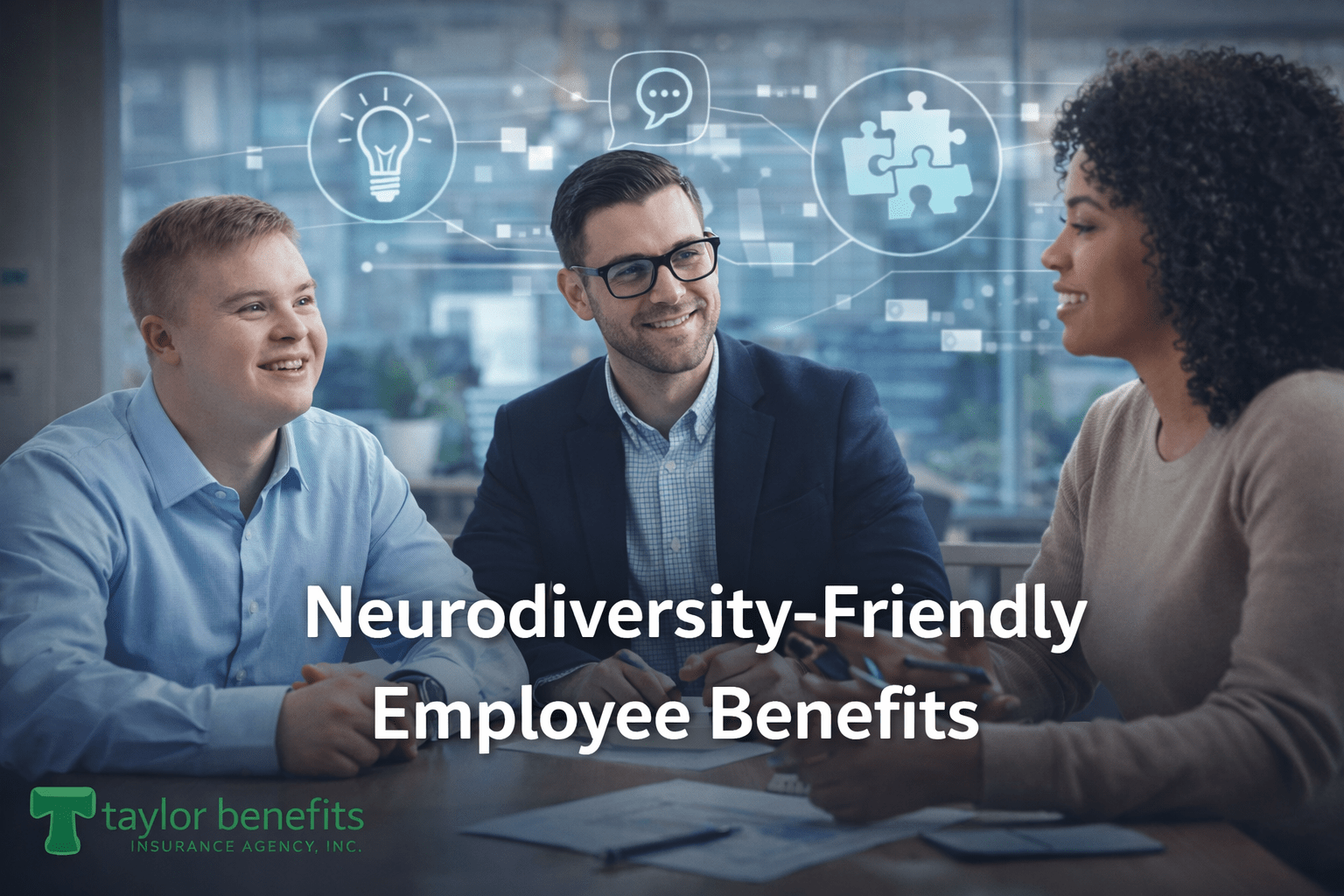
Neurodiversity is becoming a more important part of workplace conversations, and for good reason. Many employers are rethinking how benefits, policies, and accommodations can better support employees with autism, ADHD, dyslexia, Tourette syndrome, and other neurological differences. The goal is not to create a one-size-fits-all program. It is to build a workplace where employees can access support in ways that help them do their jobs and navigate work more effectively.
For employers, this matters well beyond culture. A neurodiversity-friendly benefits strategy can improve retention, strengthen inclusion, reduce unnecessary barriers, and help employees perform at their best. It can also support compliance, since some neurodivergent employees may qualify for protections and reasonable accommodations under the ADA, depending on their circumstances. The EEOC and Job Accommodation Network both emphasize that accommodation needs are case-specific rather than diagnosis-based.
Neurodiversity refers to natural differences in how people think, process information, communicate, focus, and experience the world. In practical terms, that means two employees in the same role may have very different support needs, work styles, and communication preferences.
Not every neurodivergent employee will need an accommodation or identify as having a disability. But some will, and employers should be prepared to respond appropriately. JAN notes that some neurodivergent employees who meet the ADA definition of disability may need accommodations, while others may not, and those decisions should be made individually.
That distinction matters for benefits strategy. Neurodiversity-friendly support is broader than ADA compliance alone. It includes formal accommodations, but it also includes benefit design, communication style, manager practices, and access to supportive resources.

A more inclusive benefits strategy can help employers address issues that often affect the employee experience, including sensory overload, executive functioning challenges, communication barriers, difficulty navigating complex benefit systems, and stress related to workplace expectations.
Employers are also recognizing that many helpful changes are practical rather than dramatic. JAN reports that more than half of employers in its accommodation data said the accommodation cost them nothing, and among accommodations with a one-time cost, the median was $300. JAN also reports that a majority of employers rated accommodations as very or extremely effective.
In other words, supportive practices are often more achievable than employers assume.
Workplace accommodations should always be tailored to the individual and the job. Still, several common categories appear frequently in neurodiversity-related accommodation discussions.
For employees with ADHD, JAN highlights options such as a quiet workspace, noise-canceling or white-noise tools, uninterrupted work time, flexible breaks, and remote work where effective accommodations are not available in-office.
For employees on the autism spectrum, JAN identifies accommodation ideas such as checklists, calendars and planners, extra time, modified schedules, job restructuring, reduced sensory distractions, and support with communication or transitions.
Broadly, neurodiversity-friendly accommodations may include:
quieter workspaces or sensory-friendly adjustments
written instructions and checklists
predictable scheduling and advance notice of changes
meeting agendas and follow-up notes
modified break schedules
flexible work arrangements where appropriate
assistive technology and organizational tools
coaching or structured onboarding support
The most effective employers do not treat these as special favors. They treat them as tools that help employees succeed.

Accommodations are only part of the picture. Employers should also think about how their benefits package works for neurodivergent employees and their families.
Mental health benefits are often central. Neurodivergent employees may benefit from access to therapy, psychiatric care, coaching, and employee assistance programs, especially when providers are experienced in autism, ADHD, anxiety, or co-occurring conditions. A broad provider network and good navigation support can make these benefits much more usable.
Benefits are more accessible when employees have multiple ways to get care. Telehealth, digital scheduling, care navigation, and simplified claims support can reduce friction for employees who may find complex systems overwhelming.
Some neurodivergent employees are also caregivers, and some employees may be seeking support for neurodivergent dependents. Benefits such as dependent care support, flexible scheduling, family-focused EAP resources, and robust behavioral health coverage can be especially valuable.
A benefit can exist on paper and still be hard to access. Dense plan materials, vague instructions, and inconsistent messaging create extra barriers. Employers can improve the experience by using plain language, multiple formats, clear deadlines, and straightforward enrollment instructions. The Department of Labor’s disability-employment resources also stress accessibility and barrier reduction as part of a welcoming workplace.
A neurodiversity-friendly benefits strategy depends heavily on implementation. Managers and HR teams should understand that accommodation requests may not always be phrased in legal or technical language. Employees may raise concerns about noise, focus, communication, scheduling, or sensory issues without labeling them as disability-related.
That is why internal training matters. Employers should help managers respond appropriately, know when to involve HR, and avoid making assumptions based on diagnosis or stereotypes. EEOC guidance on reasonable accommodation procedures underscores the importance of clear processes and consistent handling.
One common mistake is assuming all neurodivergent employees need the same support. They do not.
Another is focusing only on recruitment without improving retention. A company may make an effort to hire neurodivergent talent but still lose employees if benefits are difficult to use, managers are not trained, or accommodation processes are unclear.
Employers should also avoid making support overly medicalized. Some of the most helpful improvements involve communication clarity, flexibility, predictability, and accessible processes.

For many organizations, the best first step is to review whether current benefits and accommodation processes are easy to navigate. That means asking practical questions:
Are accommodation procedures clear?
Are benefit materials accessible and understandable?
Do managers know how to escalate requests?
Are mental health and care-navigation resources strong enough?
Are employees offered options rather than rigid formats?
Small changes in these areas can have a meaningful impact.
Neurodiversity-friendly employee benefits are not about creating a separate benefits package for one group. They are about making the workplace more usable, flexible, and supportive for employees with different cognitive and neurological profiles.
When employers combine thoughtful accommodations with accessible benefits, clear communication, and manager education, they create a stronger employee experience for neurodivergent workers and often a better workplace overall.
Taylor Benefits Insurance Agency helps employers evaluate benefits strategies that support a wider range of employee needs, including inclusive plan design, mental health resources, and practical approaches to workplace support.
Managers can focus on universal workplace improvements that support everyone, such as flexible work arrangements, better communication systems, and improved focus-friendly environments. Instead of targeting individuals, they can offer options to all staff and encourage private conversations for specific needs. This approach reduces stigma while still allowing neurodivergent employees to access the support that works best for them without feeling exposed or different.
Inclusive benefits may offer flexible care options, accessible mental health resources, and personalized support services. These improvements help create a workplace where neurodivergent employees can thrive and feel valued.

Todd Taylor oversees most of the marketing and client administration for the agency with help of an incredible team. Todd is a seasoned benefits insurance broker with over 35 years of industry experience. As the Founder and CEO of Taylor Benefits Insurance Agency, Inc., he provides strategic consultations and high-quality support to ensure his clients’ competitive position in the market.

We just started working with Taylor Benefits and could not be happier. Todd gave us quite the education as well as some time saving tools to help us manage our HR and save money too. We are looking forward to a long relationship!”
-Carol, Accounting Manager, recruitment marketing company, Campbell, CA
We’re ready to help! Call today: 800-903-6066