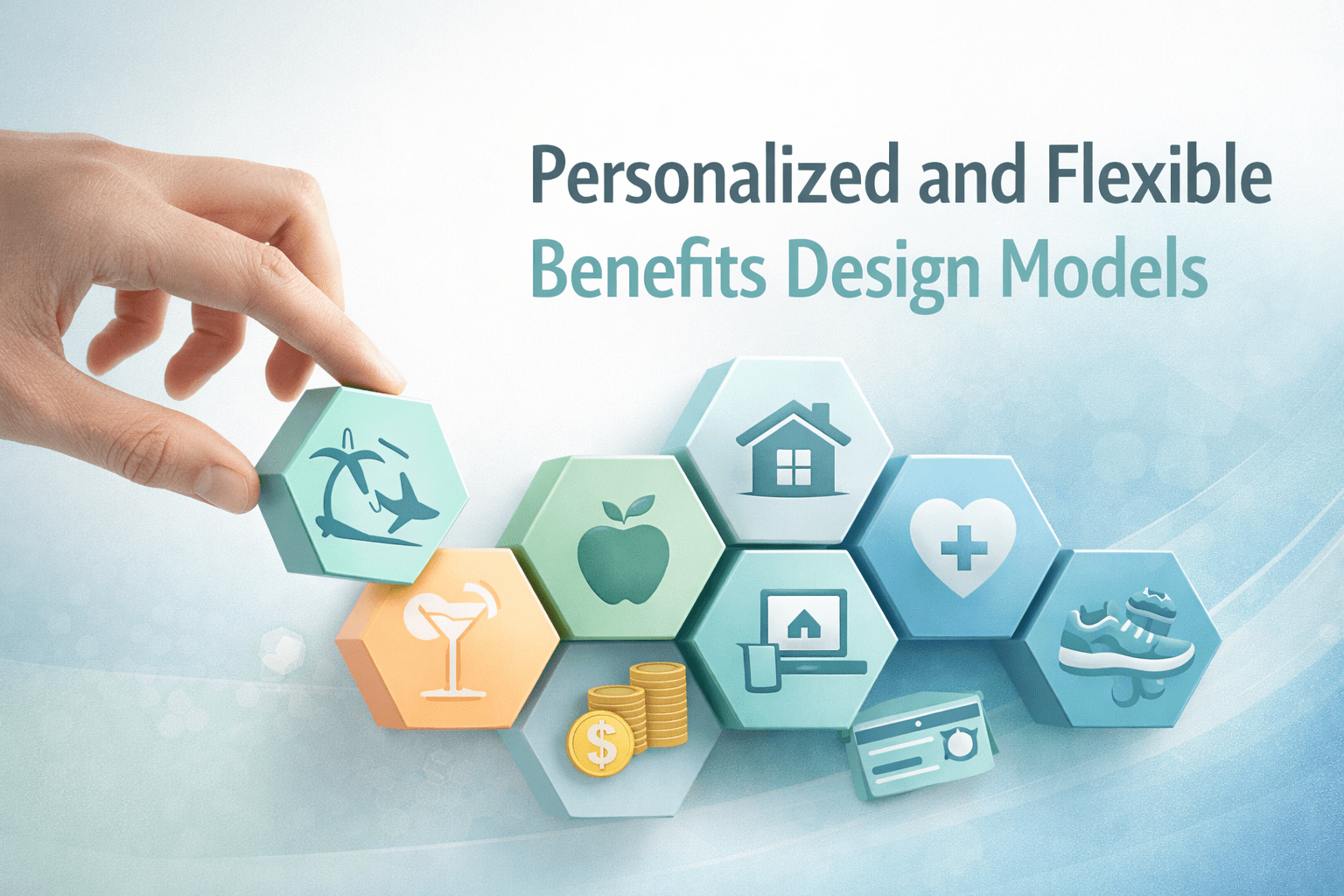
The era of one-size-fits-all employee benefits is coming to an end. In 2026, employers are facing a workforce that is more diverse in age, family structure, work style, and financial need than ever before. Traditional benefits models—built around a narrow set of assumptions—are struggling to keep up with these realities.
In response, employers are adopting personalized and flexible benefits design models that allow employees to choose benefits aligned with their individual needs while giving employers greater control over cost and complexity. These models are not about offering more benefits indiscriminately; they are about offering smarter benefits.
This article explores what personalized and flexible benefits design really means, why employers are moving in this direction, and how organizations can implement these models effectively without sacrificing compliance or financial discipline.
Why Traditional Benefits Models Are Losing Effectiveness
Historically, benefits were designed for a relatively homogeneous workforce. Full-time, on-site employees with similar life stages and expectations were the norm. Benefits plans reflected this simplicity.
Today’s workforce looks very different. Employers manage multiple generations, remote and hybrid workers, caregivers, single employees, parents, and employees at vastly different financial stages. A single benefits package cannot meet all these needs equally well.
When benefits feel irrelevant, utilization drops—and so does perceived value. Employers may spend heavily on benefits that large segments of the workforce never use.

What Personalized and Flexible Benefits Really Mean
Personalized benefits allow employees to tailor their benefits experience to their own priorities. Flexible benefits give employees choices within defined parameters set by the employer.
Importantly, personalization does not mean unlimited choice. Employers define the structure, budget, and guardrails. Employees choose how to allocate resources within that framework.
In 2026, personalization is less about complexity and more about intentional design that balances choice with control.
The Drivers Behind Flexible Benefits Design
Several forces are accelerating the shift toward flexible benefits. Talent competition is a major driver, particularly in industries where employees expect benefits to reflect their lifestyle and values.
Cost pressure is another factor. Employers are seeking ways to allocate benefits dollars more efficiently by focusing spending where it delivers the most value.
Finally, technology has made personalization more feasible. Modern benefits platforms can support complex choices while maintaining a user-friendly experience.
Core Models of Personalized Benefits Design
There is no single model for flexible benefits, but several approaches are gaining traction in 2026. One common model is the “core plus choice” framework.
Under this approach, employers provide a foundational set of core benefits—such as health insurance and basic protections—while allowing employees to choose additional benefits using a defined allowance or credits.
This ensures baseline coverage while enabling customization.
Defined Contribution Benefits Models
Another increasingly popular approach is the defined contribution model. Rather than offering a fixed set of benefits, employers provide a set contribution amount that employees use to select benefits that matter most to them.
Defined contribution models offer cost predictability for employers while giving employees autonomy. They are particularly effective in organizations with diverse workforces or multiple employment arrangements.
However, these models require clear communication and thoughtful design to avoid confusion or inequity.
Modular and Tiered Benefits Structures
Some employers use modular or tiered structures that group benefits into categories or levels. Employees select modules or tiers based on their needs and life stage.
For example, a caregiver-focused module might emphasize family support and flexibility, while a wellness-focused module might emphasize fitness and mental health resources.
This approach simplifies decision-making while still offering personalization.
The Role of Lifestyle Spending Accounts and Flexible Allowances
Lifestyle Spending Accounts (LSAs) play a significant role in flexible benefits design. By providing a discretionary allowance, employers enable employees to choose benefits that are meaningful to them.
LSAs are often used to support wellness, caregiving, financial education, or remote work needs. While they lack the tax advantages of some traditional benefits, they offer unmatched flexibility and engagement.
In 2026, LSAs are often integrated into broader personalization strategies rather than offered as standalone perks.

Balancing Choice With Decision Fatigue
One of the biggest risks of flexible benefits design is overwhelming employees with too many choices. Decision fatigue can reduce satisfaction and lead to poor selections.
Effective personalization requires thoughtful curation. Employers should limit options, provide guidance, and use default selections to support employees who prefer simplicity.
Choice should feel empowering—not burdensome.
Technology as an Enabler of Personalization
Modern benefits platforms are critical to delivering personalized experiences at scale. These platforms can guide employees through decision-making, provide recommendations, and integrate multiple benefits into a single interface.
Technology also supports data-driven insights, helping employers understand which benefits are most valued and where adjustments are needed.
However, technology is only as effective as the strategy behind it. Platforms should support—not dictate—benefits design.
Compliance and Risk Management in Flexible Benefits
Personalized benefits must still comply with applicable laws and regulations. Employers must ensure that flexibility does not result in discrimination, inequitable access, or compliance failures.
Clear eligibility rules, consistent administration, and careful documentation are essential. Employers should also consider how flexible benefits interact with tax rules, ERISA requirements, and reporting obligations.
In 2026, compliance is a design constraint—not an afterthought.
Equity Considerations in Personalized Benefits
Flexibility should enhance equity, not undermine it. Employers must ensure that all employees have meaningful access to benefits, regardless of income, role, or location.
For example, benefits that require employee contributions should be structured to avoid disadvantaging lower-income workers. Communication should be inclusive and accessible.
Equitable design strengthens trust and engagement across the workforce.
Measuring Success Beyond Utilization
The success of personalized benefits should be measured holistically. Utilization data is useful, but it does not capture the full picture.
Employers should also track engagement, retention, employee satisfaction, and feedback. Over time, flexible benefits often improve perceived value and loyalty—even if utilization varies.
Measurement enables continuous improvement and alignment with business goals.
Common Pitfalls Employers Should Avoid
One common mistake is introducing personalization without clear strategy. Flexibility for its own sake can increase complexity without delivering value.
Another pitfall is under-communicating. Employees need to understand not just what choices are available, but why the model exists and how to use it effectively.
Finally, employers should avoid assuming personalization replaces the need for strong core benefits. Flexibility enhances—not substitutes for—foundational coverage.

The Strategic Value of Personalized Benefits in 2026
Personalized and flexible benefits design is not a passing trend. It reflects a fundamental shift in how employees experience work and benefits.
Organizations that embrace this shift thoughtfully are better positioned to attract talent, manage costs, and adapt to changing workforce needs. Those that cling to rigid models risk falling behind.
In 2026, flexibility is becoming a marker of benefits maturity.
Designing a Personalized Benefits Strategy That Works
Successful personalized benefits strategies start with understanding the workforce. Employers should analyze demographics, preferences, and pain points before selecting a model.
Pilot programs, employee feedback, and phased rollouts help manage risk and refine design. Flexibility should evolve over time as workforce needs change.
Intentional design is the key to sustainable personalization.
How Taylor Benefits Helps Employers Build Flexible Benefits Models
At Taylor Benefits Insurance Agency, we help employers design personalized and flexible benefits strategies that balance employee choice with organizational control.
Our team works with organizations to evaluate workforce needs, select appropriate design models, and ensure compliance across benefit offerings. We help integrate flexible benefits into broader health and financial wellness strategies while maintaining cost predictability.
As personalized benefits become the norm in 2026 and beyond, thoughtful planning is essential. If your organization is ready to move beyond one-size-fits-all benefits, our advisors are here to help you build a flexible benefits model that delivers real, lasting value.