
- Providing world class service and value for employee benefit group plans since 1987

Yes, you can cancel COBRA coverage at any time. While COBRA allows employees to continue their previous group health insurance after losing their job, it also comes with significant costs, as individuals must pay the entire premium, sometimes up to 102% of the original cost. This can be challenging for those facing financial difficulties. Cancellation has been a viable option when more affordable alternatives become available.
To cancel COBRA, you need to notify your plan administrator or previous employer in writing. It is crucial to keep a copy of your cancellation request and ask for written confirmation of the termination. You should also check your final billing statements to ensure no further premiums are charged once your coverage ends. Additionally, it’s a good practice to request a certificate of credible coverage, which can be useful when securing new insurance.


Canceling COBRA coverage is often driven by specific circumstances that make the continuation of this coverage less desirable or feasible. Below are some detailed explanations behind the most common reasons people choose to terminate COBRA.
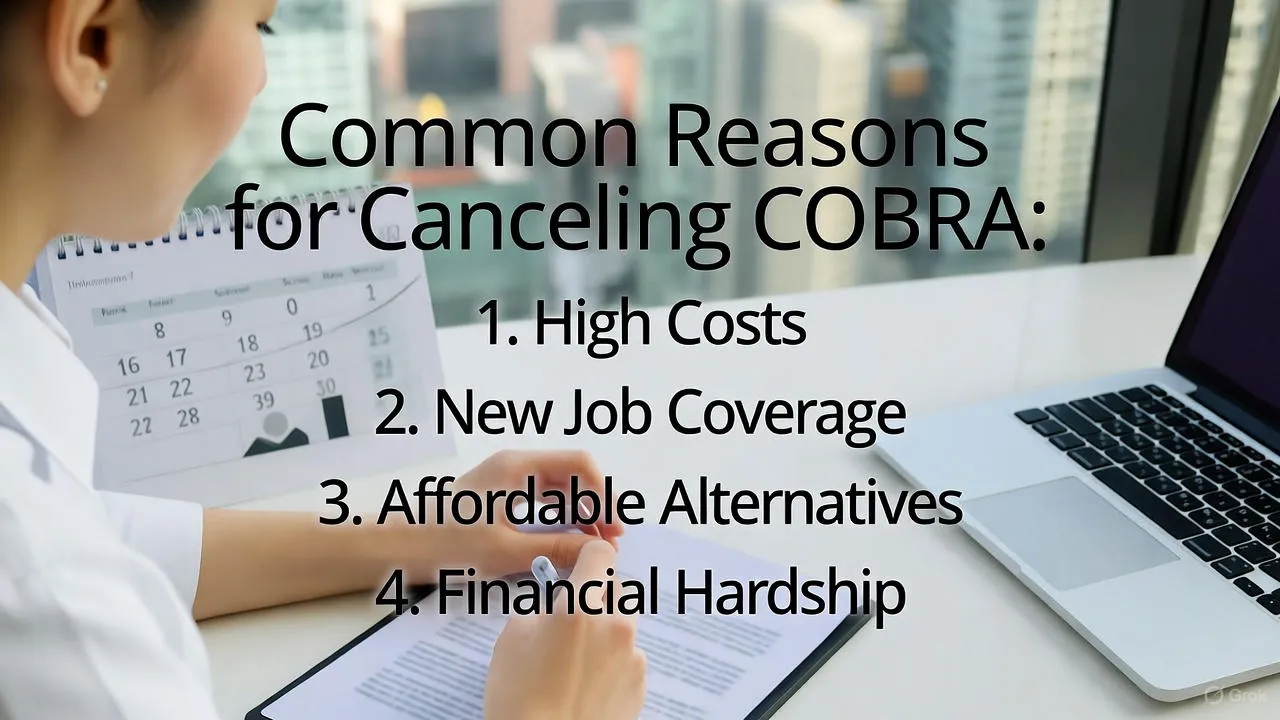
One of the primary motivations for canceling COBRA is finding a new job that provides group health insurance. Employer-sponsored health plans typically cover a significant portion of the premiums, making them much more affordable compared to paying the full cost of COBRA coverage. Employees often prefer to switch to their new employer’s plan to take advantage of these lower costs and sometimes better coverage options. Moreover, new coverage through an employer often allows for automatic payroll deductions, which can make managing premiums more convenient. Transitioning to a new employer-sponsored plan also ensures that you remain protected without facing any coverage gaps.
COBRA coverage can be prohibitively expensive because individuals must cover both the employee and employer portions of the health insurance premium, along with an additional 2% administrative fee. This can be particularly burdensome for those who have lost their job and are already struggling with reduced income. When evaluating their options, many find that marketplace plans, short-term health insurance, or enrolling in a spouse’s health plan offer much more affordable premiums. This cost disparity is often a decisive factor in the decision to cancel COBRA coverage and switch to a more budget-friendly alternative.
During the annual open enrollment period for ACA marketplace plans, many individuals opt to cancel their COBRA coverage and switch to marketplace insurance. This switch can provide significant savings, especially for those who qualify for premium subsidies based on their income. Marketplace plans offer a variety of options tailored to different budgets and healthcare needs, allowing individuals to find coverage that better aligns with their financial situation. However, it’s important to note that switching outside of open enrollment might not always be possible unless a qualifying life event occurs, such as losing other coverage or changes in household circumstances. For those facing high COBRA costs, taking advantage of the open enrollment period becomes a priority to avoid ongoing financial strain
For those who are married or have access to a partner’s health benefits, canceling COBRA to join a spouse’s health insurance plan is a common route. This choice can simplify family coverage under a single plan and potentially reduce overall costs, as many employer-sponsored plans offer lower premiums for dependent coverage. Additionally, spouses’ plans often come with more comprehensive networks or additional perks that make switching more attractive.

Some people may find that their health situation has changed or that their healthcare needs have decreased, making COBRA’s extensive (and costly) coverage unnecessary. For instance, if ongoing treatments conclude or a person’s medical requirements become less frequent, switching to a plan with lower premiums and fewer benefits may be a more practical and financially sound decision. Likewise, if someone has found a temporary health insurance plan that covers their current needs adequately, canceling COBRA might be the best course of action.
If you stop paying COBRA premiums, coverage ends automatically. However, simply forgetting to notify the plan administrator could lead to complications. It is better to formally terminate the coverage to avoid misunderstandings.
To cancel COBRA effectively and transition smoothly to new coverage, it’s crucial to plan carefully and ensure continuity of care to avoid medical or financial pitfalls. For those exploring cancellation options, considering timing, alternative coverage, and costs is key to making an informed decision.
Once you cancel your COBRA coverage, you cannot simply re‑enroll at a later date as if nothing had changed. COBRA termination ends your continuation rights under that plan. If you later become eligible for other group coverage through a new employer or a spouse’s plan, or you qualify for a special enrollment period under the Marketplace, you may obtain new coverage. In any other case you may have to wait until the next open enrollment period. Always review your particular plan’s rules and timing carefully before making a decision.
COBRA coverage ends automatically if premiums are not paid within the required grace period, which is typically 30 days. Once terminated for nonpayment, coverage cannot be reinstated, even if the missed payment is later submitted.
COBRA may end early if you become covered under another group health plan after electing continuation coverage. Your plan administrator may require proof of the new coverage before terminating the COBRA plan.
Written notice is usually the safest option. It creates a paper trail and helps prevent billing disputes or confusion about your requested end date.
The effective date depends on your plan's rules and the timing of your request. Some cancellations take effect immediately, while others are processed at the end of the billing cycle.

Todd Taylor oversees most of the marketing and client administration for the agency with help of an incredible team. Todd is a seasoned benefits insurance broker with over 35 years of industry experience. As the Founder and CEO of Taylor Benefits Insurance Agency, Inc., he provides strategic consultations and high-quality support to ensure his clients’ competitive position in the market.

We just started working with Taylor Benefits and could not be happier. Todd gave us quite the education as well as some time saving tools to help us manage our HR and save money too. We are looking forward to a long relationship!”
-Carol, Accounting Manager, recruitment marketing company, Campbell, CA
We’re ready to help! Call today: 800-903-6066