
- Providing world class service and value for employee benefit group plans since 1987


Many people in the present day strategically invest in their health insurance, so in case of any mishap, they don’t need to panic about expenses. But it is also important to understand that not all their medical expenses are covered by their primary health insurance. This is where the supplemental health insurance steps in to close the gaps created by the regular plans by providing additional coverage.
It provide you with the freedom of mind and financial assurance to pay any out-of-pocket fees, specialized care, or, in the case of medical emergencies.

Basically, it is an additional coverage that, in addition to your primary health insurance, covers other medical expenses. Normal health insurance consists of basic needs such as medical appointments and hospitalization. Supplemental health insurance, in turn, is focused on specific needs such as critical illness, hospitalization, or disability. The plans could help cover expenses that your primary insurance has not covered, including deductibles, copayments, or non-medical expenses like transportation to the medical facilities.
Supplemental insurance is not a special policy; it just supplements your existing policy. It is very popular among individuals of advanced ages, individuals having chronic conditions, and individuals seeking additional economic security. Simply stated, supplemental health is utilized to pay for what your mainstream health insurance does not cover, such as co-pay or coinsurance.
In the majority of cases, these plans benefit you, but not the healthcare provider. This will make you free in the way you spend the money. For Example, in case you are in the hospital, a supplemental plan will provide you with daily expenses that will use up your income, day care, or other expenses.
This is how it usually works:
The average cost for the elderly is between $20 and $200 on a monthly basis, depending on the kind of plan, the coverage level, as well as the age and health of the individual.

Supplemental Health Insurance Plus
The plans provide more coverage or an increased amount of benefits compared to the regular supplemental plans.
| Feature | Supplemental Health Insurance | Supplemental Health Insurance Plus |
| Coverage Scope | Relates to particular events (e.g., hospital stay, accidents) | Adds other forms of benefits, such as wellness programs or mental care. |
| Payout Amounts | Standard benefit amounts | Better compensation for covered events. |
| Premium Cost | Lower premiums | Increased premiums because of increased coverage. |
| Additional Benefits | Limited or none | May any longer include mental health preventive care or supplemental insurance. |
A regular plan may include hospital visits, whereas a Plus plan may include therapy visits or checkups. This is one of the supplemental insurances for mental health.
Several reasons can be considered why it would be good to purchase supplemental insurance:
The best plans among the seniors are the ones that take care of their particular medical needs, like covering their long-term care or the costs of prescribed drugs not covered by primary healthcare.
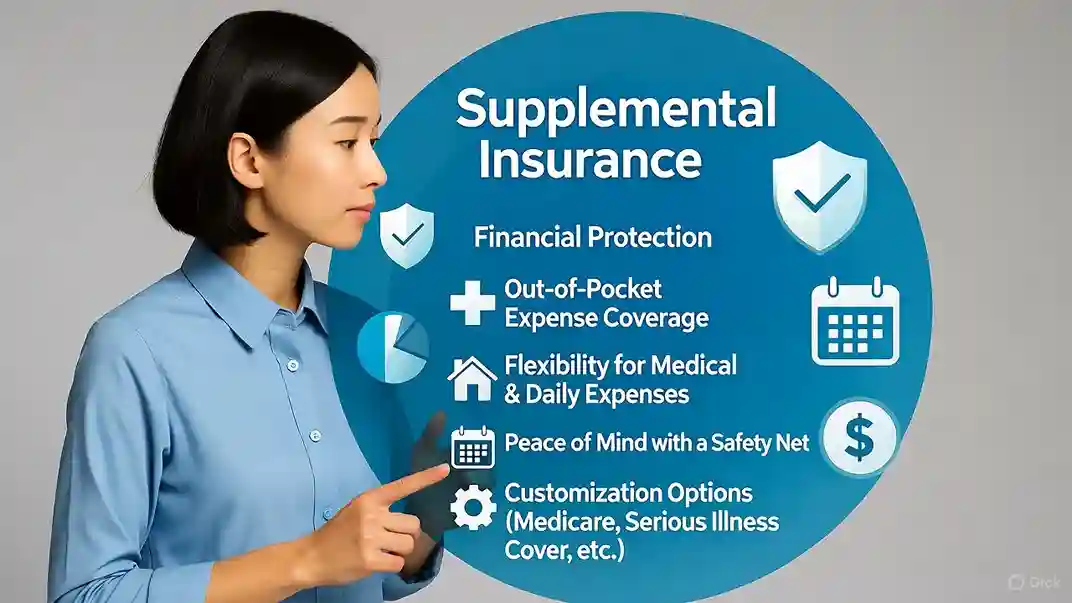
There are arious types to cover specific areas of coverage:
The insurance also covers treatment of injuries related to accidents, like broken bones or an emergency room visit.
In case you have a severe medical disorder like cancer or a heart attack, the policy will also compensate for the medical expenses in such cases.
It provides cash payments on a daily basis while in the hospital.
It is the insurance that provides you with money in case you are unable to work due to a sickness or an injury.
It is also known as Medigap, and covers deductibles and copayments for individuals who are on Medicare.
It is a kind of insurance that covers activities such as chemotherapy and radiation, which are connected with cancer therapy.
It is a form of insurance that covers treatment, counseling, or psychiatric treatment that the primary policies do not fully cover.
It is the amount of money that is provided for covered events. Depending on the plan, there are benefits which may include:

What Are the Benefits with Supplemental Health Insurance Plus?
It has following benefits:
The plans are excellent as they attract people who have more than basic supplemental plans.
In order to learn about the highest amount of supplemental health insurance in your locality:
You are able to purchase additional health insurance cover through:
This additional health insurance may provide you with complete coverage when you take a variety of plans.
Such an approach provides you with the greatest financial coverage and the least number of lapses in coverage.
The majority of the supplemental health policies have a waiting period for certain diseases, particularly in the cases of already existing diseases. Depending on the plan and the condition, waiting times often range between 30 days and 12 months. For instance:
The supplemental health insurance plays a significant role in completing the missing portions of the primary health insurance and providing you with peace of mind and financial security. These plans give you the option of the kind of coverage you need, whether you are a senior seeking supplemental health insurance for Medicare, supplemental insurance for mental health, or whether you are considering the Supplemental Health Insurance Plus.
Even with good employer coverage, supplemental insurance can help cover costs your main plan may not, such as copays, deductibles, or hospital stay expenses. It can also provide cash benefits you can use for everyday needs or lost income during recovery. Supplemental coverage gives extra financial protection and peace of mind.
In the majority of cases, premiums are constant, inexpensive, and billed monthly or annually. It will depend on what you pay based on your age, health, and the extent of coverage.
It basically depends on the plan and coverage; however, it can be as low as $20-$200 a month.
Yes, even some plans have an additional mental health insurance, such as therapy or counseling. One of these plans is the Supplemental Health Insurance Plus.
Compare the plans according to your needs and check whether they are offered in your state, and discuss them with the insurers or agents.
Supplemental health insurance premiums are generally lower than comprehensive medical plans because they cover specific events or services rather than full medical care, making them a cost-effective option for targeted protection.
Most insurers design the claims process to be simple. Policyholders usually submit basic medical documentation or proof of treatment, and once approved, the insurer issues the benefit payment according to the policy terms.
Supplemental payouts are flexible and can cover medical bills, travel costs, household needs, or income gaps during recovery. Payments go directly to the policyholder, allowing them to manage everyday expenses without restrictions from the insurer.
In many cases, yes, but availability depends on the insurer and the type of policy. Some supplemental health insurance plans allow enrollment throughout the year, while others may require you to apply during specific enrollment periods or after a qualifying life event. Reviewing eligibility requirements and enrollment deadlines can help you choose coverage without unnecessary delays.

Todd Taylor oversees most of the marketing and client administration for the agency with help of an incredible team. Todd is a seasoned benefits insurance broker with over 35 years of industry experience. As the Founder and CEO of Taylor Benefits Insurance Agency, Inc., he provides strategic consultations and high-quality support to ensure his clients’ competitive position in the market.

We just started working with Taylor Benefits and could not be happier. Todd gave us quite the education as well as some time saving tools to help us manage our HR and save money too. We are looking forward to a long relationship!”
-Carol, Accounting Manager, recruitment marketing company, Campbell, CA
We’re ready to help! Call today: 800-903-6066