
- Providing world class service and value for employee benefit group plans since 1987

As employer healthcare costs keep rising, more organizations are looking beyond the traditional fully insured versus self-funded choice. Hybrid funding models sit in the middle. They are designed to give employers more control than a fully insured plan, while limiting some of the volatility that can come with taking on claims risk directly. That is why interest has grown around level funding, captive arrangements, and other blended risk models. KFF reports that 67% of covered workers are now in self-funded plans, and among firms with 10 to 199 workers, 37% of covered workers are in a level-funded plan in 2025.
For employers, the appeal is straightforward. Hybrid models may offer better claims visibility, more plan design flexibility, and potential savings if claims perform well. But they also require stronger governance, closer vendor review, and a realistic understanding of where risk actually sits. A “middle-ground” funding model is not the same as a no-risk model.
A hybrid funding model is any arrangement that blends elements of insurance and self-funding rather than relying fully on one or the other. The U.S. Department of Labor’s reporting on employer health plans uses the term “mixed-funded” for plans funded through a mixture of insurance and self-insurance, which is a useful way to think about the category. In practice, these arrangements may include self-funded claims with stop-loss insurance, level-funded plans with fixed monthly payments, or captive structures that spread risk across participating employers or a parent organization.
The reason these models matter now is cost pressure. KFF’s 2025 survey shows average family premiums reaching $26,993, while Reuters’ coverage of that survey notes premiums are up 26% over five years and employers increasingly cite prescription drug costs as a major driver. That environment makes alternative funding more attractive to employers looking for leverage beyond annual carrier renewals.

Level funding is often the easiest hybrid model for smaller and midsize employers to understand. KFF describes level-funded arrangements as nominally self-funded plans that package a self-funded plan with extensive stop-loss coverage that significantly reduces the employer’s retained risk. Instead of paying fluctuating monthly claims, the employer typically pays a set monthly amount that covers estimated claims funding, administrative fees, and stop-loss premiums.
That fixed-payment structure is a big part of the appeal. Employers get more budget predictability than in a pure self-funded model, but they may still gain access to claims data and sometimes receive a refund if claims run favorably, depending on the arrangement. At the same time, level-funded plans are still self-funded at their core, which means employers need to understand stop-loss terms, runout obligations, eligibility rules, and compliance responsibilities rather than assuming the carrier has absorbed everything.
Level funding has moved into the mainstream for smaller employers. KFF found that 37% of covered workers in firms with 10 to 199 workers are in a level-funded plan in 2025, similar to 2024. That is a strong signal that many smaller employers are using hybrid funding as an alternative to traditional small-group insurance.
Captives are more complex. In a health benefits context, a captive generally allows an employer or group of employers to finance part of their health plan risk through a captive insurance structure rather than relying only on the commercial market. The International Foundation of Employee Benefit Plans explains that captive insurance can offer greater transparency, more data reporting, customization, and potential cost efficiencies, though it also notes that not every employer is well suited for this strategy.
For large employers, captives can be a way to gain more control over stop-loss or other benefit financing. For midsize employers, a group captive may create access to purchasing power and risk-sharing that would be difficult to achieve alone. But captives are not a simple cost-cutting device. They require capital commitment, governance, careful underwriting, and a longer time horizon. The strategy tends to work best when employers are prepared to manage risk actively rather than just shop for a cheaper premium.
Not every hybrid arrangement fits neatly into one label. Many employers use a blended model that combines self-funded medical claims, stop-loss coverage, carved-out pharmacy or specialty programs, and selected insured benefits such as dental, life, or disability. The DOL’s mixed-funded category reflects this broader reality: many plans are not purely one thing or the other.
In practical terms, a blended risk model often means the employer keeps the risks it believes it can manage and transfers the risks it does not want to absorb. That could include using specific and aggregate stop-loss, layering vendor contracts differently, or moving gradually from fully insured to level-funded and then to a more customized self-funded structure over time. Sun Life’s stop-loss education materials describe self-funding with stop-loss as an arrangement where the employer keeps the claims risk but purchases protection against larger losses.

The growth of hybrid funding is tied to both cost and control. Rising premiums push employers to seek alternatives, but so does frustration with limited transparency in fully insured models. Self-funding and hybrid arrangements can provide more detailed claims information and more flexibility in plan design. KFF’s 2025 survey shows self-funding remains especially common among larger firms, with 80% of covered workers at firms with 200 or more workers in self-funded plans.
There is also a market infrastructure reason. The stop-loss market has expanded substantially. Amwins’ 2025 stop-loss market report, citing Milliman, says the U.S. stop-loss market reached $35.4 billion in annual premiums, up from $31 billion in 2023. That growth supports broader employer access to funding models that rely on stop-loss as a core stabilizer.
Hybrid funding can create real advantages, but it does not eliminate exposure. A level-funded plan can still produce renewal pressure after a bad claims year. A captive can still require disciplined governance and tolerance for risk. And any self-funded or partially self-funded arrangement can bring additional compliance and administrative complexity. KFF notes that self-funded private employer plans are generally exempt from many state insurance laws under ERISA, but that does not mean they are exempt from ERISA, ACA, HIPAA, COBRA, mental health parity, or reporting obligations.
Captive-related structures can add another layer if multiple employers are involved. The DOL’s MEWA guide is a reminder that arrangements covering employees of more than one employer can trigger federal and state regulatory considerations that employers should not overlook. Not every group funding arrangement is a MEWA, but the regulatory analysis matters when risk is shared across employers.
The right question is not whether hybrid funding is better than traditional insurance in the abstract. It is whether the employer has the size, cash-flow tolerance, claims profile, data discipline, and advisory support to manage the model responsibly. Level funding may fit an employer that wants a gradual step toward self-funding. A captive may fit a larger or more sophisticated organization willing to commit to long-term risk strategy. A blended approach may work best for employers that want selective control without taking on every risk directly.
Employers should also review stop-loss contract terms carefully, including lasers, exclusions, aggregating features, and renewal volatility. Those details often determine whether a hybrid strategy performs the way it looked on paper.

Hybrid funding models are becoming a more important part of employer health plan strategy because they offer a middle path between fixed-premium insurance and full claims exposure. Level funding can help smaller employers move toward self-funding with guardrails. Captives can give larger employers more strategic control over risk financing. Blended models can let employers customize where risk is retained and where it is transferred.
The opportunity is real, but so is the complexity. Employers evaluating captives, level funding, or other blended risk models should approach them as financing strategies, not just pricing alternatives. The strongest results usually come when funding decisions are tied to long-term benefits goals, strong vendor oversight, and a clear understanding of how much risk the employer is truly taking on.
Taylor Benefits Insurance Agency helps employers evaluate health plan funding options, risk tolerance, and plan design strategies to build benefits programs that are both competitive and sustainable.
Hybrid funding models reduce risk by combining fixed monthly payments with stop-loss protection. Employers get predictable budgeting while limiting exposure to large or unexpected claims. Instead of absorbing full volatility, part of the risk is transferred to insurers or shared structures. This balance allows companies to maintain financial stability while still benefiting from potential savings when claims are lower than projected levels.
Hybrid funding models can benefit employers seeking more control over healthcare spending. They combine predictable costs with flexible funding options, making them suitable for organizations wanting customized benefits strategies.
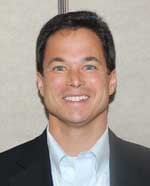
Todd Taylor oversees most of the marketing and client administration for the agency with help of an incredible team. Todd is a seasoned benefits insurance broker with over 35 years of industry experience. As the Founder and CEO of Taylor Benefits Insurance Agency, Inc., he provides strategic consultations and high-quality support to ensure his clients’ competitive position in the market.

We just started working with Taylor Benefits and could not be happier. Todd gave us quite the education as well as some time saving tools to help us manage our HR and save money too. We are looking forward to a long relationship!”
-Carol, Accounting Manager, recruitment marketing company, Campbell, CA
We’re ready to help! Call today: 800-903-6066