
- Providing world class service and value for employee benefit group plans since 1987
There is a complex healthcare system nowadays, and you have to understand what sort of insurance to get to make good decisions that keep you healthy and cost you less. PPO health insurance is a good balance between coverage and flexibility. This comprehensive guide will go through all, starting with the simplest and moving on to more advanced matters, either as a person seeking individual coverage or as a company seeking group coverage. We will discuss PPO insurance, its meaning, and how such plans can benefit you in 2025 and in the future.
It would be easy to work with knowledgeable brokers such as Taylor Benefits Insurance in order to obtain group health insurance. They have been one of the leading independent insurance agencies since 1987 specializing in designing employee benefit plans, including the PPO options to suit the requirements of businesses nationwide.
PPO is an abbreviation of Preferred Provider Organization. This term is a type of health insurance that operates with a group of doctors, hospitals, and other experts to provide services to the plan members at reduced prices. The “preferred” section refers to the reasons to select in-network providers, which would help to keep costs minimal and, at the same time, provide you with a choice.
The PPOs are more flexible when compared to other plans. They allow you to select your own care without passing by a primary care physician or any other gatekeepers.
Individuals who ask, “What is PPO in health insurance? We are discussing a managed care design that places a list of preferred providers at the forefront in order to save money on services. In essence, the insurance company negotiates with such providers to reduce their prices when they refer such members. This implies that the services in-network attract lower out-of-pocket payments, but out-of-network treatment is present, though at a higher price.
This feature makes PPOs an excellent choice for the population that wants to have a certain amount of flexibility but is not willing to spend a lot of money, which is particularly significant at a time when the cost of healthcare is increasing.
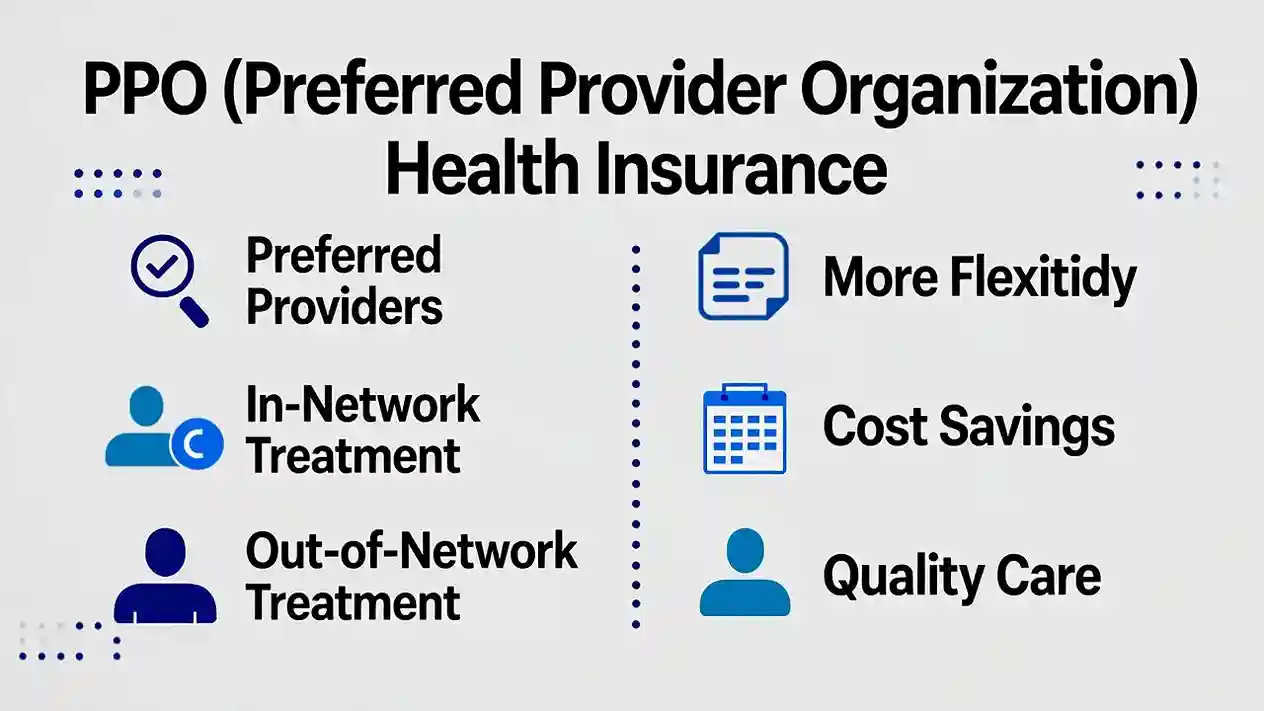
PPO represents a model that attempts to strike a balance between selection and savings. Insurance companies establish a system of preferred physicians and facilities, which will keep their prices down. This benefits the plan as well as the members. This is unlike the former models, where referrals and prior authorizations are needed for most services.
It denotes that you can have direct communication with specialists, which is also a good idea when individuals are in need of ongoing medical treatment or travel frequently.
It is a health plan of insurance that comes with a network of preferred healthcare providers, which provide services at subsistence cost. It is cheaper to remain in-network, and the members may also visit out-of-network with more choices. You do not require a primary care physician, and in most cases, you do not require a referral to obtain a specialist.
PPOs are quite popular in employer-sponsored plans since they offer a balance between narrow networks and indemnity plans that accord massive freedom.
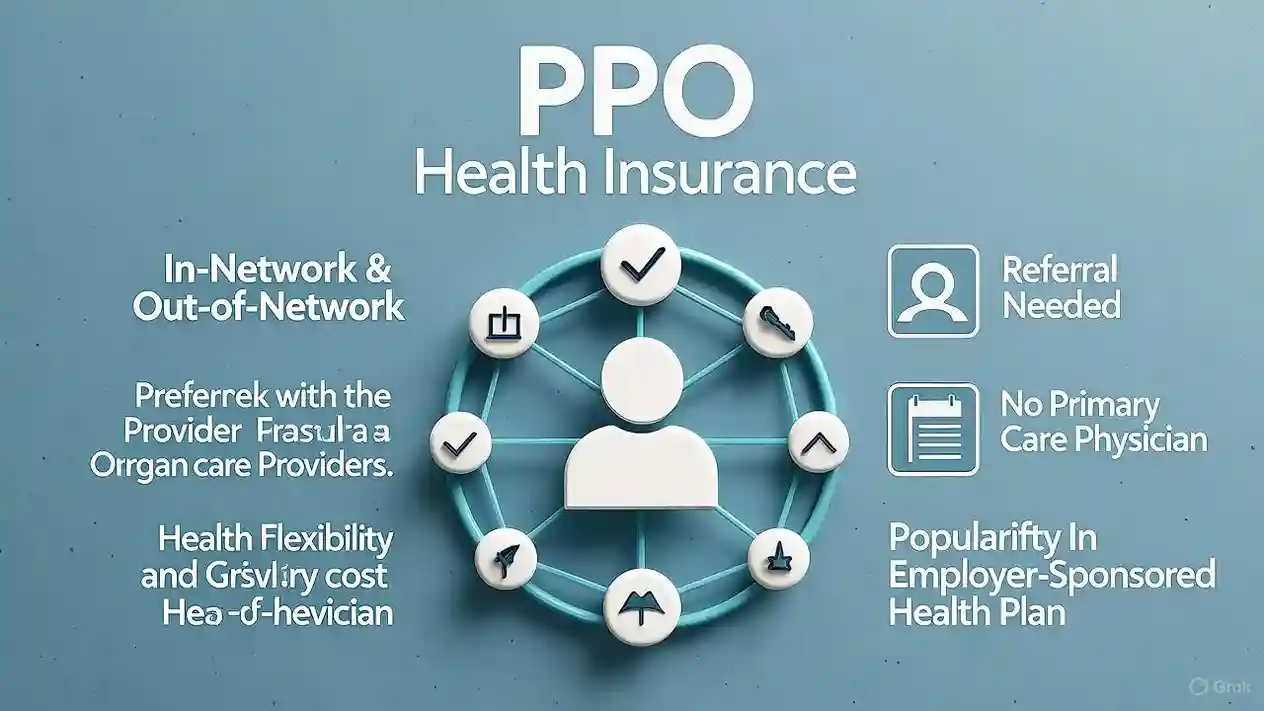
In order to maximize your PPO health insurance, you must understand how it works. Here’s a step-by-step guide:
The strategy also assists individuals to be in control of their health whilst maintaining a balance on the costs.
What does PPO insurance mean? It is a type of health insurance that provides access to an extensive network of physicians at reduced prices. There is also an option of providers who are not a part of the network. PPO plans are popular both in individual and group markets. They usually include such items as prescription medication, mental health therapies, and wellness.
PPOs are a favored option in 2025 with healthcare inflation because of their flexibility to competency with any increase in costs and alternative requirements.
Getting deeper into the meaning of PPO insurance, it is a plan that makes the use of the network cheaper, but not limited to that network. This hybrid model can be used to maintain the cost of health care at a minimum and leave the selection of the providers to the individuals who have access to that choice, depending on quality or convenience, or skill.
Companies can make their staff happier by providing PPO plans to them via various brokers such as Taylor Benefits Insurance. They are plans based on the size and budget of the firm and would include all the employees’ health requirements.

A PPO insurance plan is a form of managed care plan that allows the members to pay low costs for services offered by the preferred providers but higher costs for services offered by other providers. The most significant ones are that there are no referral requirements, one can go to a specialist, and the plan covers a broad scope of treatments, including preventive care and hospital care.
These strategies have typically tiered networks, and the so-called preferred tiers that provide additional discounts.
PPO plans both have good and bad sides. Here’s a closer look:
Considering them can help you determine whether a PPO is suitable for your lifestyle.
It is a comprehensive insurance plan that specializes in a network of reliable providers to provide you with the maximum number of discounts and flexibility. These plans include the basic necessities such as doctor visits, hospitalization, and prescriptions. They usually carry along additional advantages such as telemedicine.
PPO options (such as Medicare Advantage PPOs) provide seniors with comparable advantages in Medicare.
In order to place PPOs in perspective, consider this analysis comparison:
| Feature | PPO (Preferred Provider Organization) | HMO (Health Maintenance Organization) | EPO (Exclusive Provider Organization) | POS (Point of Service) |
| Network Flexibility | High: Network coverage in and out of network. | Low: Within network (except in case of emergency) | Medium: In-network and no out-of-network. | Medium: Preferred in network, allowed out-of-network with more charges. |
| Need for Referrals | No | Yes, from PCP | No | Yes for out-of-network |
| Premium Costs | Higher (avg. $662/mo in 2025) | Lower | Moderate | Moderate |
| Out-of-Pocket Expenses | Varies; higher out-of-network | Lower in-network | Lower in-network | Higher out-of-network |
| Primary Care Physician | Not required | Required | Not required | Required |
| Out-of-Network Coverage | Yes, at reduced benefits | No (except emergencies) | No | Yes, with referral |
| Best For | Individuals who appreciate options and experts. | Cost-conscious and local suppliers. | Ability to make referrals without making calls. | Balance of HMO/PPO |
This is the reason why PPOs are good for individuals who attach importance to freedom.
PPO involves premiums, deductibles, and others. The mean of a single PPO plan in the US is $662 per month. For a family plan, it’s $2,131. Deductibles could be as little as $1,500 to $5,000 during a year, depending on the grade of the plan (Bronze to Platinum).
Things that affect costs:
Individuals might need to call Taylor Benefits Insurance, where they would be given free consultations and access to various carriers to have the best PPO coverage.
PPOs are appropriate for
HMOs would be more suitable for you in case you desire coordinated care at a cost.
The majority of the time, you may register during open hours (November to January re marketplaces) or via your company. Steps:

Taylor Benefits Insurance is the most doing this because they assist with the group enrollments with professional advice on how to make sure that nothing goes wrong.
PPO health insurance provides the greatest freedom in an ever-evolving healthcare market, and thus, it is one of the best to cover everything. The way to ensure your health is safe is to understand what the plan covers, how much the insurance is and how this plan is relative to others. People can find the right PPO and get assistance in Taylor Benefits Insurance. They will provide you with customized, no obligation quotes to ensure that you will maximize your benefits package.
If you change jobs, you can usually join a new PPO plan right away through a special enrollment period. Contact your new employer’s benefits team to confirm your start date and make sure your coverage begins without gaps. Check your previous plan for any ongoing claims to avoid extra costs.
A PPO assurance is a plan of health that collaborates with a network of contracted providers to provide care at reduced prices. It is also possible to go out of network, but it will be more expensive. This structure provides more health practitioner choices to the members compared to those plans that have severe restrictions.
A PPO health plan is a kind of managed care insurance that concentrates on the network of preferred providers in order to provide low-cost services. Referrals to specialists are not needed. It balances between being cheap and allowing you to obtain care available outside of the network in case it is necessary.
Individual PPO insurance is projected to cost an average of $662 monthly in 2025. This, however, may be different in terms of age, region, family size, and plan tier. More often than not, family plans are over $2,000 a month. The deductibles mostly range between $1500 and $5000 per annum, and any additional sums are spent on any treatment outside the network.
In case of a service that is not covered, the entire amount is paid, even when the service provider is in-network. You should consider a summary of the benefits of your plan or call customer service in advance to eliminate unexpected issues.
PPOs do not entail the choice of a primary care physician (PCP). Without a PCP, you can take charge of being in charge of your own care and visit specialists when you feel it is necessary.
In-network providers are less expensive in terms of out-of-pocket payments, no documentation (providers send their bill directly), and quality treatment. Such plans usually have preauthorization support and an increased level of benefits.
Sign up in open enrollment (November-January to marketplaces or with your employer) or in special qualifying events. Find alternatives on either healthcare.gov or by brokers to fit individually.
Key considerations include provider flexibility, monthly premiums, out-of-pocket costs, prescription coverage, and whether your preferred doctors and specialists are in-network.
Employees should confirm whether a doctor or facility is part of the PPO network before scheduling a visit. Using in network providers usually results in lower copayments and deductibles, while out of network visits may involve higher out of pocket costs.
Choosing the right PPO plan depends on your budget, medical needs, and preferred doctors. Compare premiums, deductibles, and out-of-pocket limits carefully. Also review network size and specialist access to make sure the plan fits your healthcare needs and lifestyle.
Enrollment timelines vary based on the employer's benefits schedule and the insurance carrier. Employees often enroll during open enrollment or after a qualifying life event, while new businesses establishing coverage may complete the process in a matter of weeks once plan selections and paperwork are finalized.

Todd Taylor oversees most of the marketing and client administration for the agency with help of an incredible team. Todd is a seasoned benefits insurance broker with over 35 years of industry experience. As the Founder and CEO of Taylor Benefits Insurance Agency, Inc., he provides strategic consultations and high-quality support to ensure his clients’ competitive position in the market.

We just started working with Taylor Benefits and could not be happier. Todd gave us quite the education as well as some time saving tools to help us manage our HR and save money too. We are looking forward to a long relationship!”
-Carol, Accounting Manager, recruitment marketing company, Campbell, CA
We’re ready to help! Call today: 800-903-6066