
- Providing world class service and value for employee benefit group plans since 1987

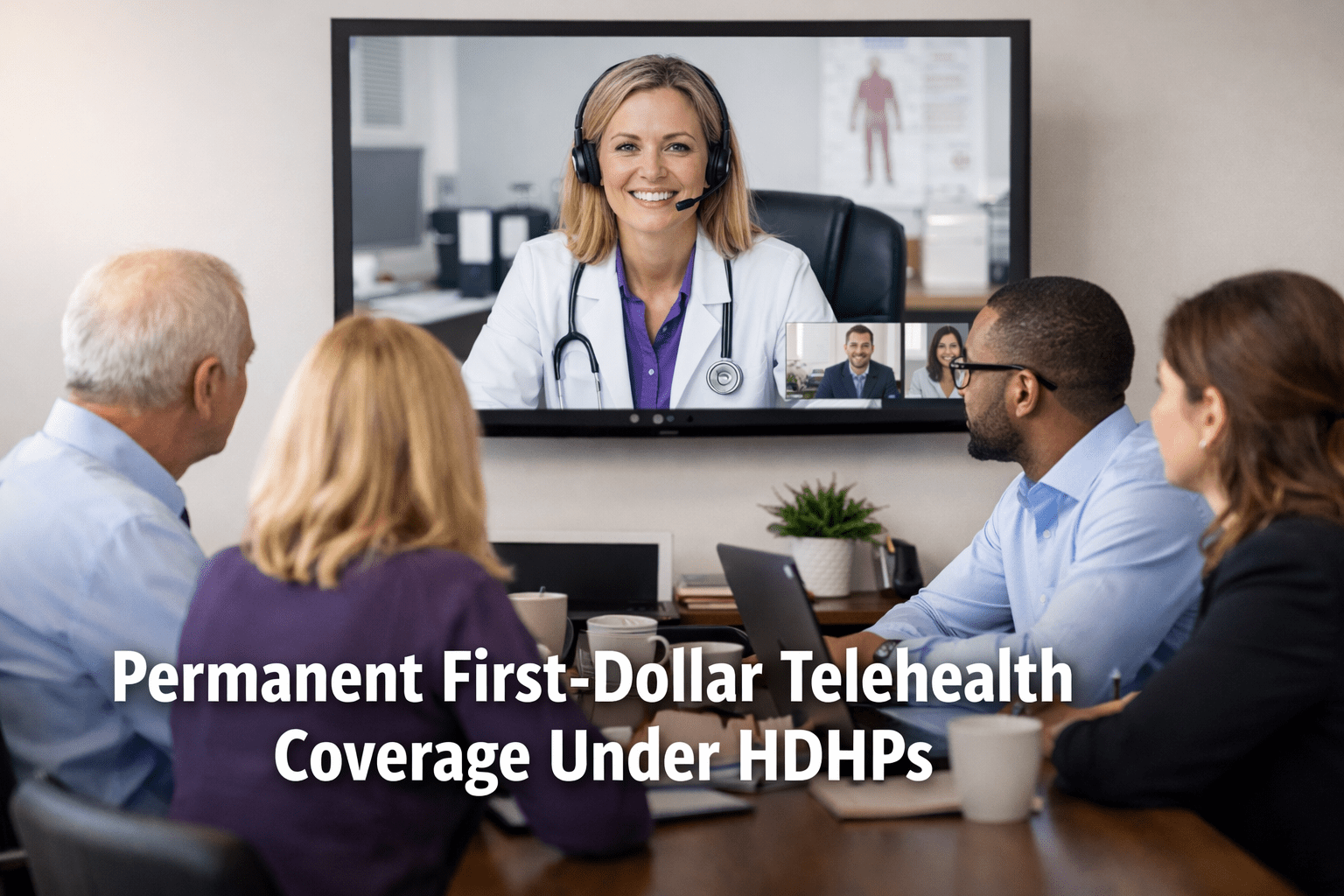
Telehealth has become a core component of modern healthcare delivery, but for years, employers offering high-deductible health plans (HDHPs) faced a difficult tradeoff. Providing first-dollar telehealth coverage often meant jeopardizing employees’ eligibility to contribute to health savings accounts (HSAs).
In 2026, that tradeoff is gone. Permanent regulatory changes now allow employers to offer telehealth services before the deductible without affecting HSA eligibility. This shift has significant implications for plan design, employee access, and long-term healthcare costs.
For employers, understanding how to leverage this flexibility is essential.
Historically, HDHPs were required to impose the deductible before most non-preventive services could be covered. Telehealth visits, even for routine care, were generally treated as non-preventive, meaning employees had to pay the full cost until their deductible was met.
Temporary relief allowed employers to waive the deductible for telehealth during the public health emergency, but those provisions were time-limited. Employers faced uncertainty about whether continued telehealth coverage would remain compliant.
This uncertainty led many organizations to scale back telehealth offerings or maintain confusing, inconsistent benefit structures.
Under the new rules effective in 2026, employers may permanently cover telehealth services at no cost—or at reduced cost—before the HDHP deductible is met, without disqualifying the plan from HSA eligibility.
This change aligns regulatory policy with how employees actually access care today. Telehealth is no longer treated as an exception or emergency measure, but as a standard access point within employer-sponsored healthcare.
For employers, this creates new opportunities to improve care access while maintaining the tax advantages of HDHPs and HSAs.

Permanent first-dollar telehealth coverage addresses several long-standing challenges. Employees are more likely to seek care early when cost barriers are removed, particularly for minor illnesses, behavioral health concerns, and follow-up consultations.
Early access to care can prevent small issues from escalating into more expensive medical events. For employers, this can translate into lower emergency room utilization, fewer urgent care visits, and improved chronic condition management over time.
Telehealth also supports workforce productivity by reducing time away from work for medical appointments.
From an employee perspective, the ability to access telehealth without meeting a deductible is a meaningful enhancement. It reduces financial friction, improves convenience, and increases confidence in using benefits.
Employees enrolled in HDHPs often delay care due to out-of-pocket costs. First-dollar telehealth coverage removes one of the most common barriers, particularly for lower-wage employees or those managing ongoing health concerns.
When employees perceive benefits as accessible and supportive, overall engagement with healthcare tends to improve.
Permanent telehealth flexibility allows employers to rethink how care is delivered across their health plans. Telehealth can be positioned as the first step in care navigation, guiding employees to the appropriate level of care before in-person visits are needed.
This integration is especially effective when combined with strong primary care, behavioral health access, and care coordination tools. Telehealth should not exist in isolation, but as part of a cohesive care strategy.
Employers that align telehealth with broader plan design goals often see better utilization and stronger outcomes.
While telehealth coverage no longer threatens HSA eligibility, employers should still ensure that plan documents, summary plan descriptions, and employee communications accurately reflect how telehealth services are covered.
Clear messaging is critical. Employees should understand which services are available at no cost, when in-person care may trigger the deductible, and how telehealth fits into their overall healthcare journey.
Proper alignment between plan design and communication helps avoid confusion and compliance risk.
As telehealth becomes more embedded in health plans, employer focus should shift from access alone to quality and outcomes. Not all telehealth vendors offer the same clinical capabilities, provider standards, or integration with medical plans.
Employers should evaluate whether telehealth providers support continuity of care, data sharing, and appropriate referrals. High-quality telehealth programs complement—not replace—in-person care when needed.

The benefits of telehealth extend beyond immediate cost savings. Employers should track utilization trends, emergency room avoidance, employee satisfaction, and downstream medical costs to understand the full impact.
Over time, well-integrated telehealth programs often demonstrate value through reduced high-cost claims and improved employee health engagement.
At Taylor Benefits Insurance Agency, we help employers evaluate how permanent first-dollar telehealth coverage fits into their overall benefits strategy.
Our team works with organizations to align telehealth offerings with HDHP design, HSA strategy, and workforce needs—ensuring compliance while maximizing value. We also support vendor evaluation and employee communication to help telehealth programs succeed.
As telehealth becomes a permanent fixture of employer-sponsored healthcare, thoughtful implementation can make the difference between a benefit that exists on paper and one that truly delivers results. If your organization is reviewing telehealth coverage for 2026, we’re here to help guide the process.
Plans often include primary care visits, urgent care consultations, behavioral health therapy, and preventive care. Some plans may also cover minor dermatology or chronic condition management virtually.
It generally applies to routine medical, urgent care, and behavioral health telehealth visits. Employers can structure coverage, but it must remain within HDHP rules. Specialty services or non-covered virtual programs may still follow standard cost-sharing rules depending on the plan design.
Employers recognize that convenient access to healthcare can improve employee satisfaction, encourage timely treatment, reduce unnecessary healthcare expenses, and support a healthier, more productive workforce.

Todd Taylor oversees most of the marketing and client administration for the agency with help of an incredible team. Todd is a seasoned benefits insurance broker with over 35 years of industry experience. As the Founder and CEO of Taylor Benefits Insurance Agency, Inc., he provides strategic consultations and high-quality support to ensure his clients’ competitive position in the market.

We just started working with Taylor Benefits and could not be happier. Todd gave us quite the education as well as some time saving tools to help us manage our HR and save money too. We are looking forward to a long relationship!”
-Carol, Accounting Manager, recruitment marketing company, Campbell, CA
We’re ready to help! Call today: 800-903-6066