
- Providing world class service and value for employee benefit group plans since 1987

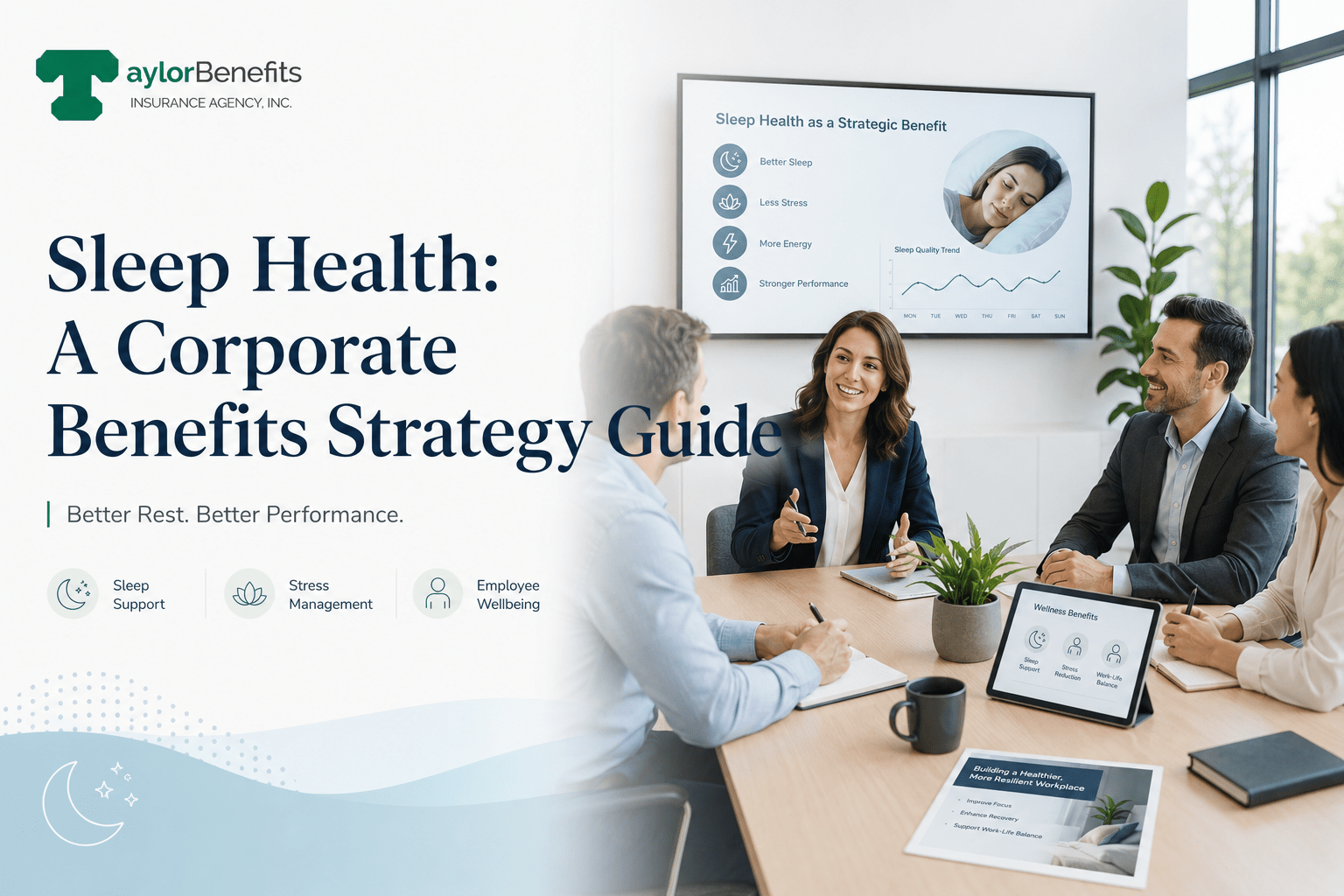
Sleep is the corporate wellness topic most employers have not yet seriously addressed, and the data suggests it should be moving up the priority list. The Centers for Disease Control estimates that more than one in three U.S. adults regularly fails to get adequate sleep. Major research on workplace impact has consistently shown that sleep-deprived workforces experience measurably worse productivity, higher accident rates, more mental health issues, and meaningfully higher healthcare claims costs than well-rested workforces. The economic
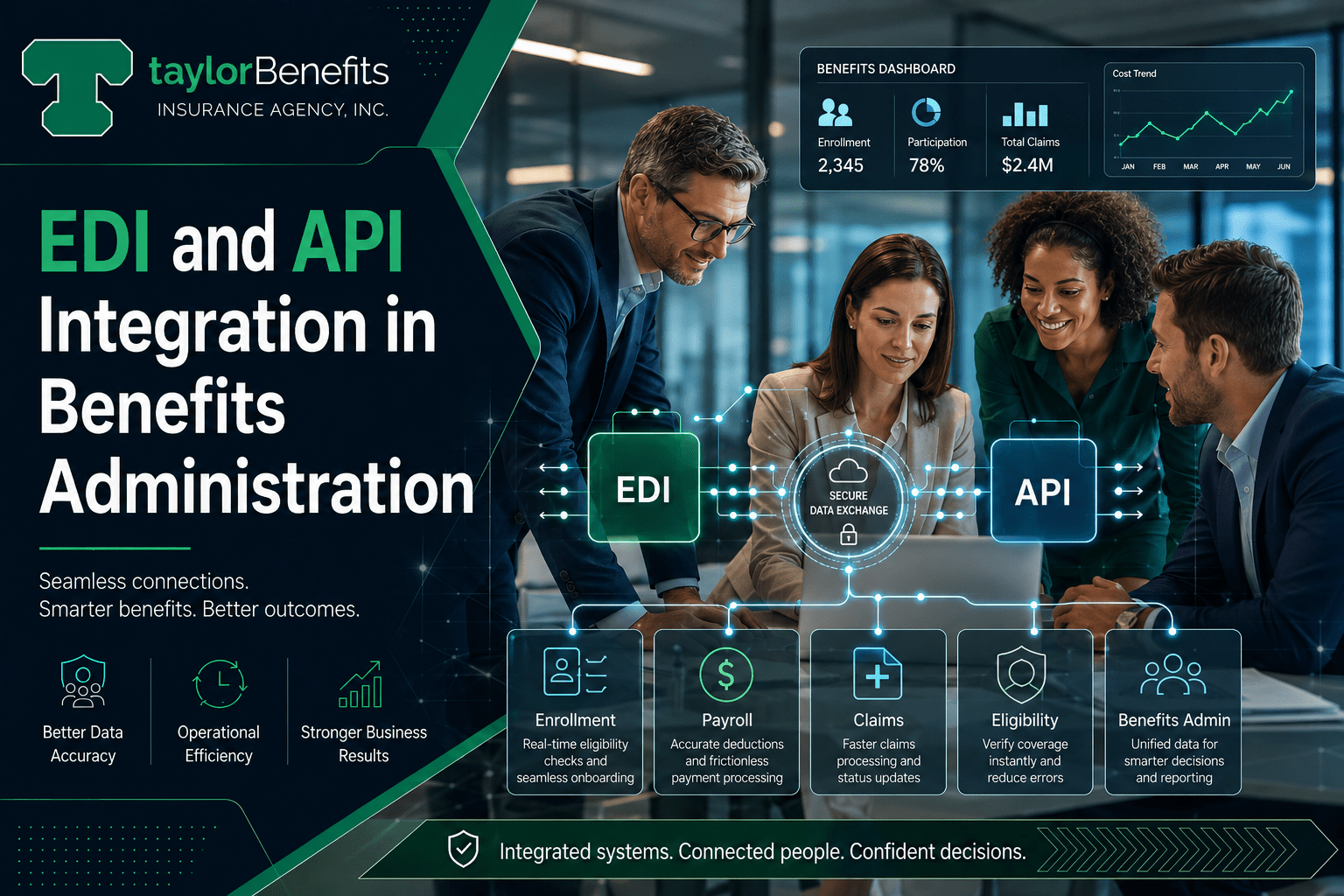
The most common source of employee benefits problems in 2026 is not poor plan design or inadequate communication — it is broken data integration between the systems that administer those benefits. When an employee's enrollment doesn't reach the carrier on time, when a dependent is dropped from coverage because a termination wasn't transmitted correctly, when an employee continues to be billed for coverage they elected to drop, or when carrier and benefits administration platform records don't match — the
Read Full Article Here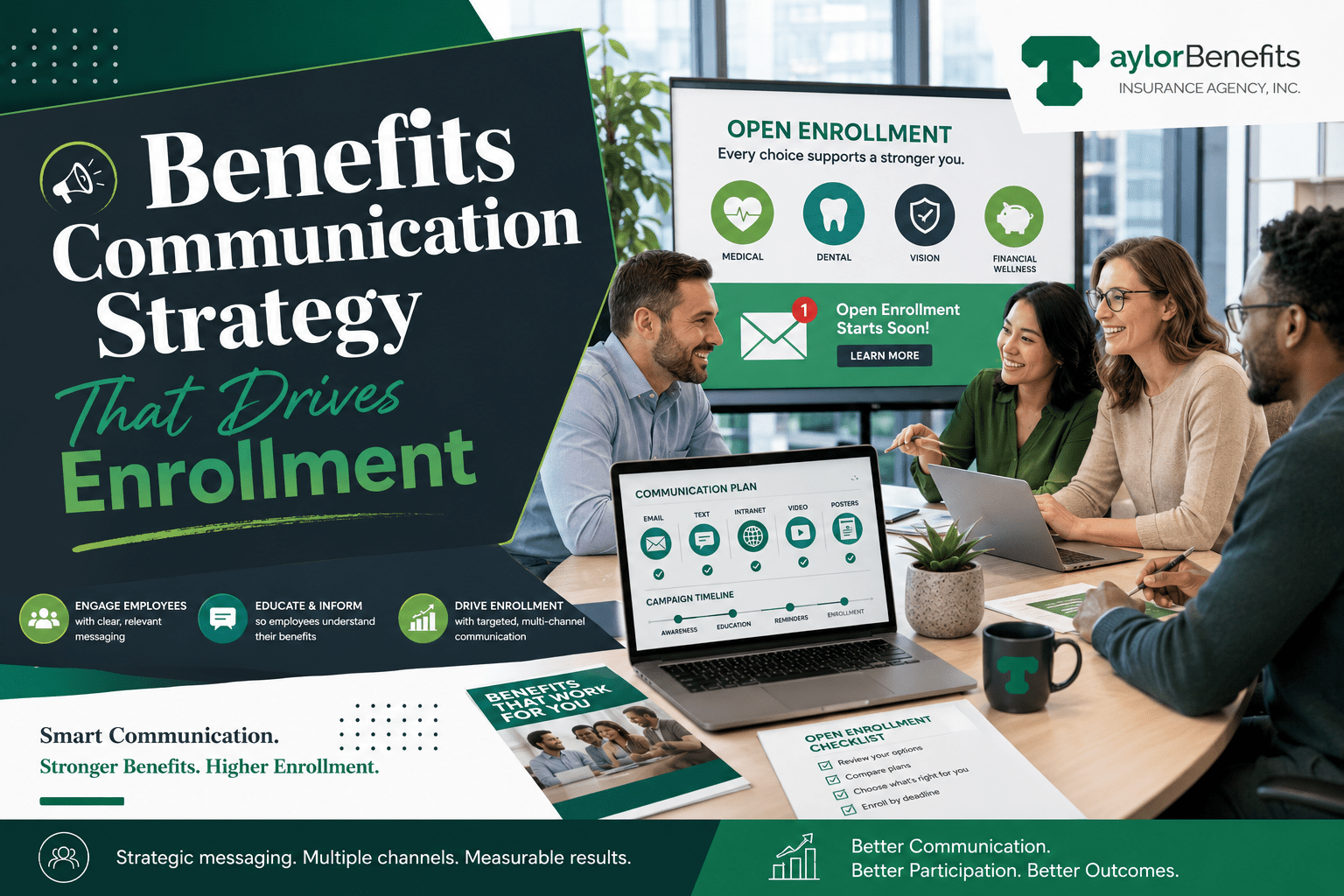
Most open enrollment communication strategies are built on a flawed assumption: that distributing benefits information is the same as communicating benefits value. The two are not equivalent, and the gap between them produces the most common failure modes in employer benefits programs — passive default elections, low voluntary benefits participation, employees who don't understand their plan choices, and HR teams overwhelmed with questions the communication itself should have answered. The employers who consistently achieve high enrollment quality — measured in
Read Full Article Here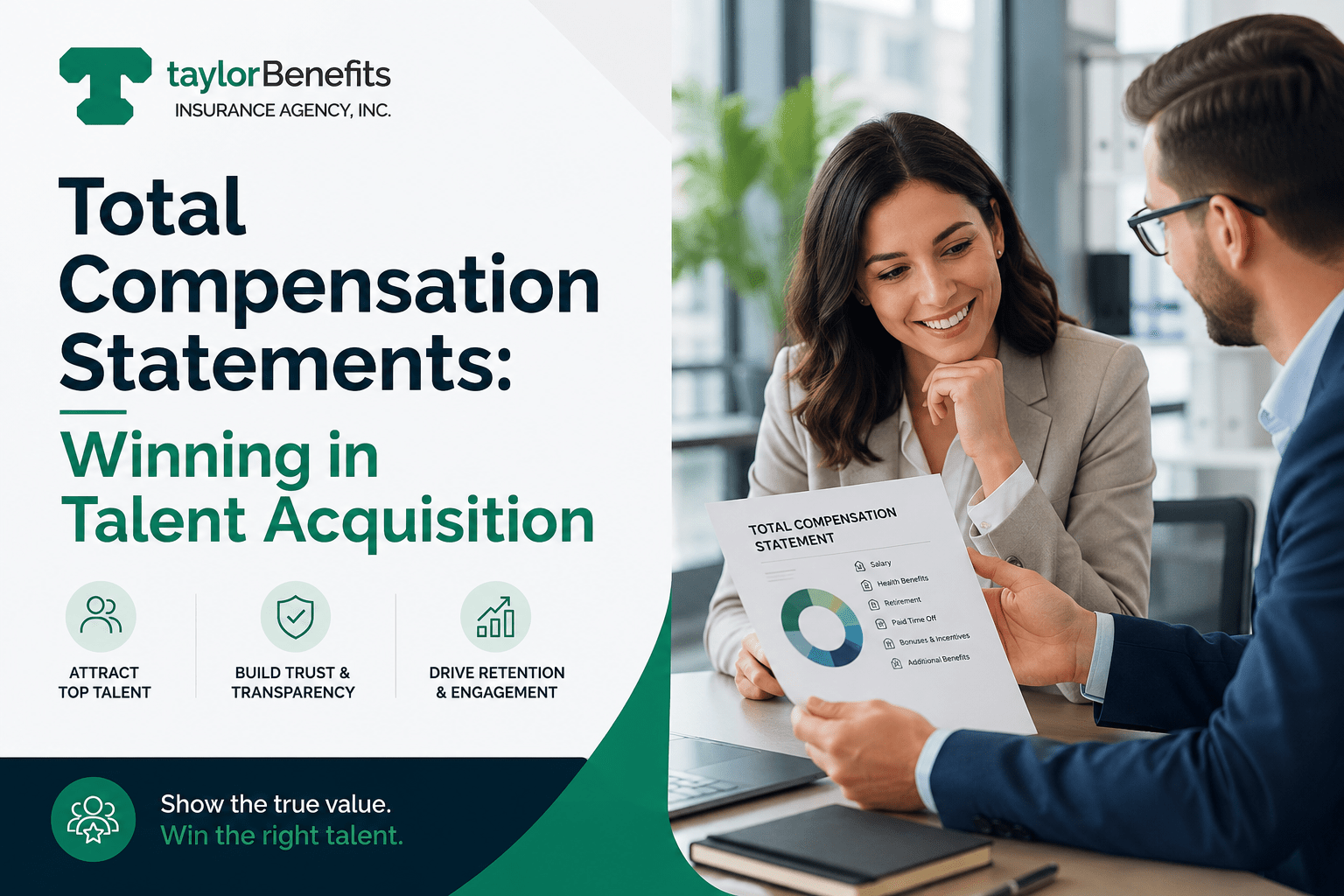
The benefits package most employers provide is worth substantially more than their employees realize. For a typical employee earning $85,000 in base salary, the employer often spends an additional $20,000 to $30,000 on health insurance, retirement matching, payroll taxes, paid time off, and other benefits — bringing the true cost of employment to $105,000 or more. Yet when that employee compares their job to an outside offer, they almost always compare base salary to base salary. The full
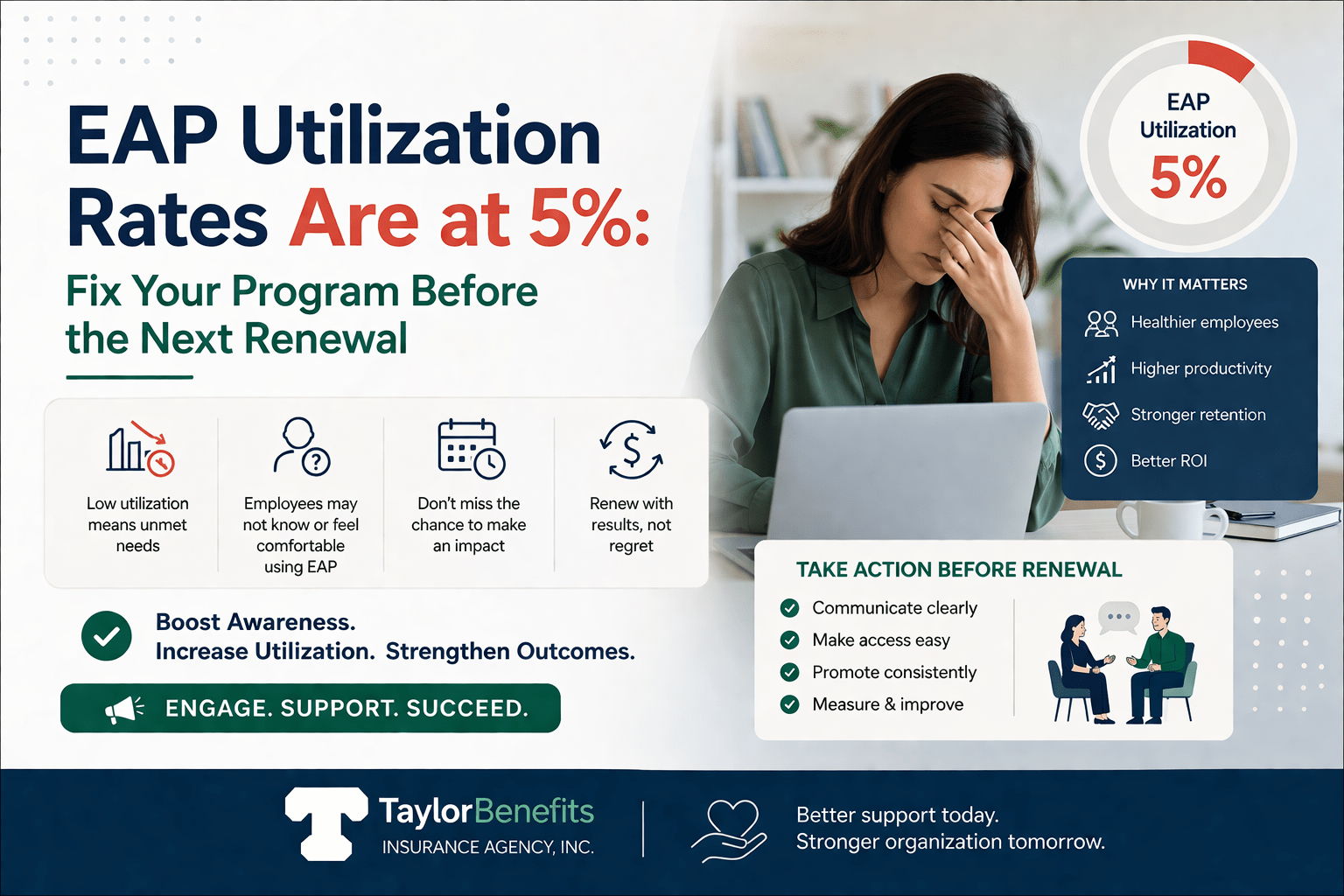
The Employee Assistance Program is one of the most consistently disappointing benefits in the employer-sponsored landscape. Industry-wide utilization data has held remarkably steady for years: most traditional EAPs report engagement rates between 3 and 8 percent of the eligible employee population, with the median sitting at approximately 5 percent. For a benefit specifically designed to address mental health, family stress, financial difficulty, substance abuse, and life crises — needs that affect a substantially larger percentage of any workforce —
Read Full Article Here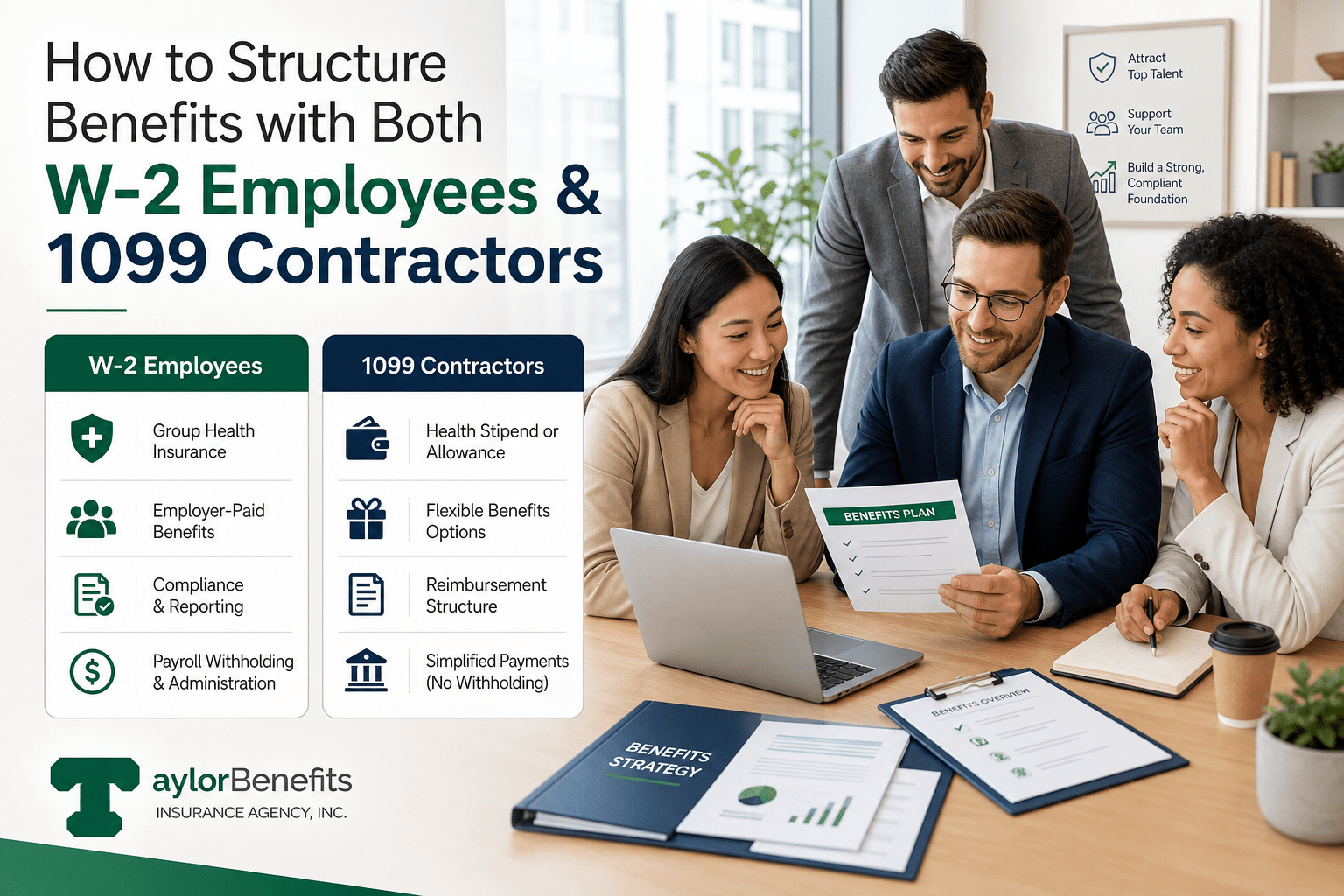
A growing number of U.S. employers operate with workforces that include both W-2 employees and 1099 independent contractors. A consulting firm with a core team of full-time staff and a roster of independent specialists they engage on project work. A creative agency with employed designers and freelance contractors. A technology company with engineers on payroll and developers on contract. A manufacturing company with permanent operations staff and contracted technicians for specialized maintenance. The mixed-workforce model has become standard practice
Read Full Article Here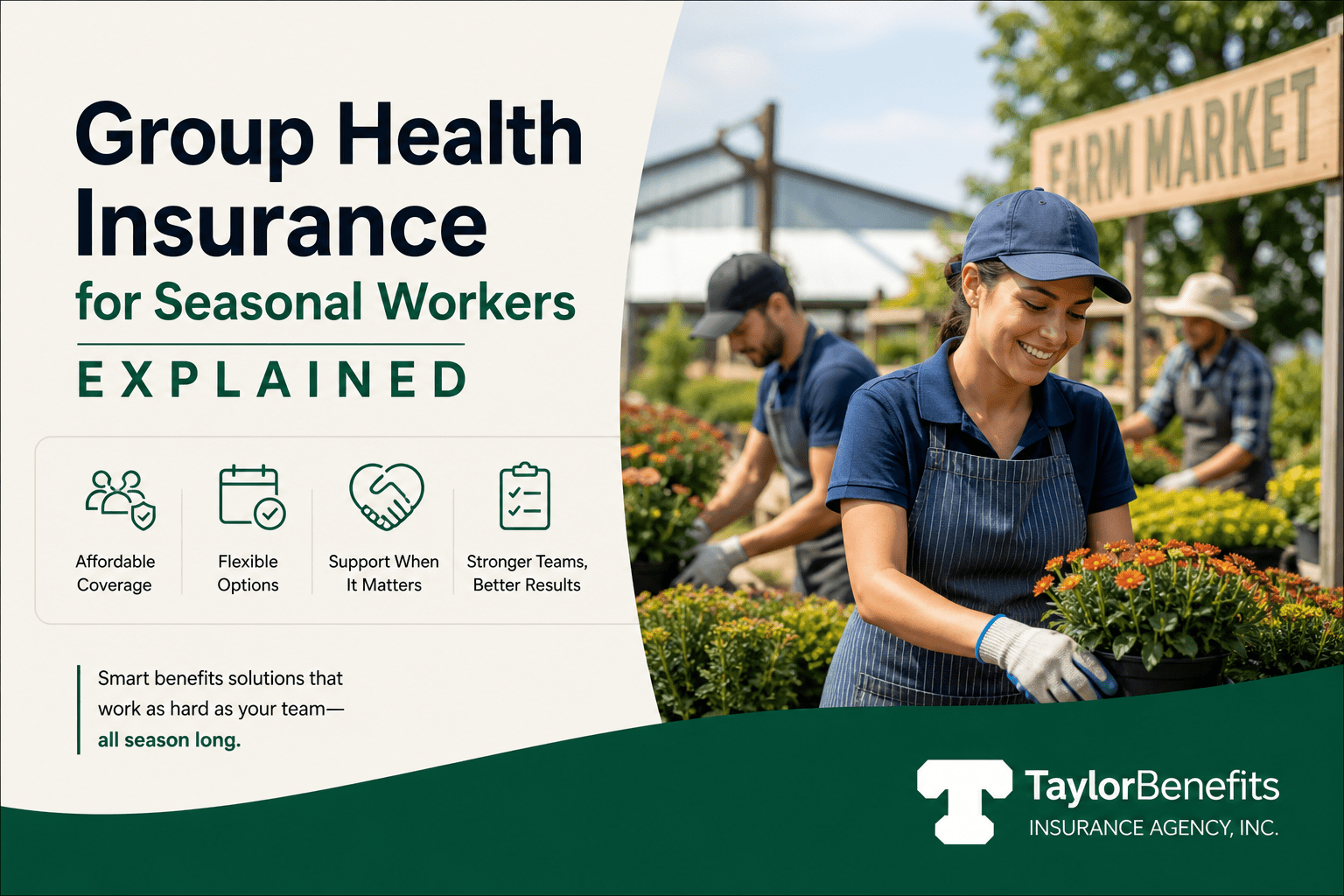
A landscaping company that staffs up from 35 employees in winter to 90 employees in peak summer. A ski resort that runs at 200 employees from December through March and 40 employees the rest of the year. A specialty retailer that brings on 75 seasonal staff for the holiday peak. A fruit grower that hires 150 workers for harvest season every fall. None of these employers fit cleanly into the standard frameworks that govern Read Full Article Here
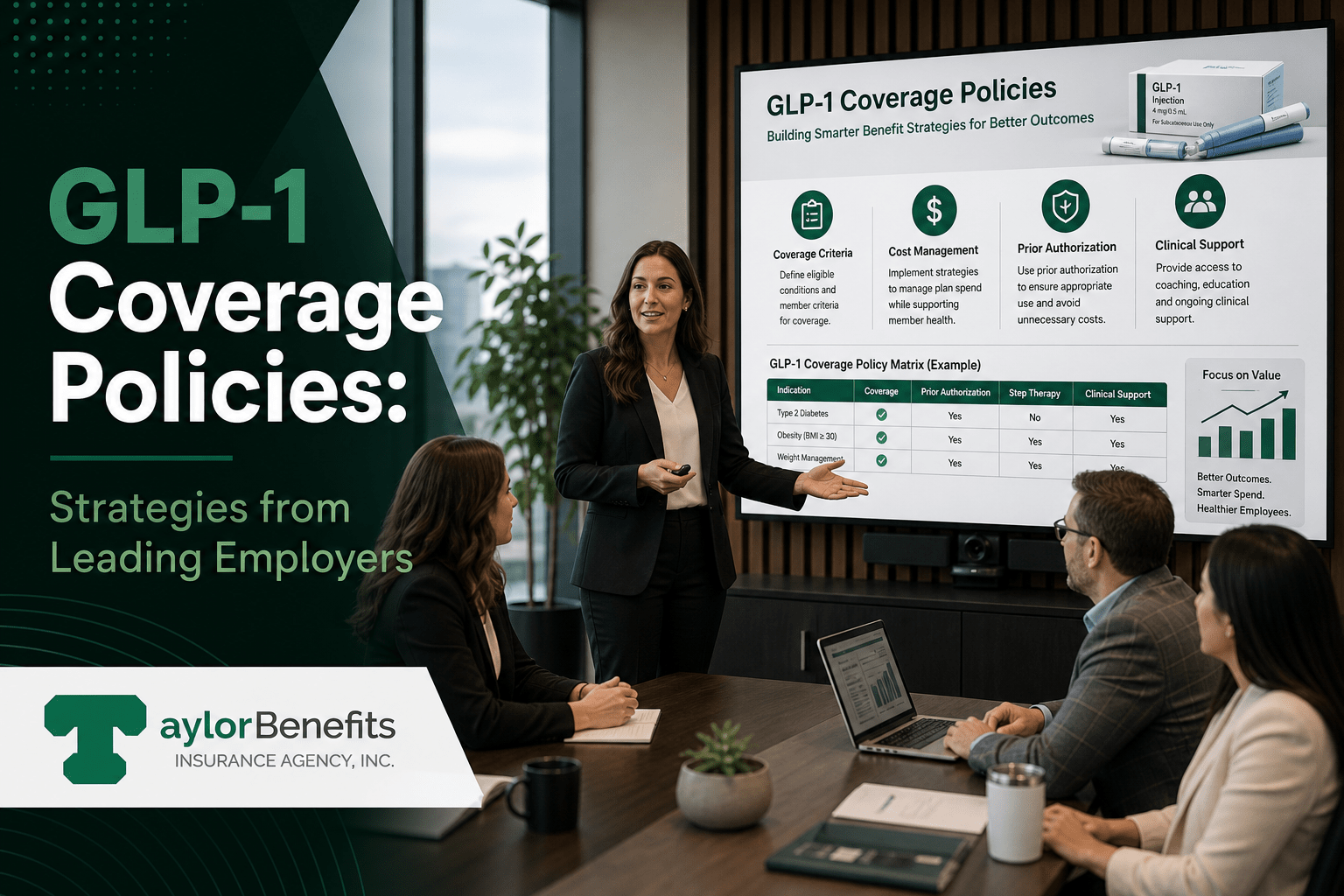
Three years into the GLP-1 era, the conversation among benefits leaders has shifted from "should we cover these drugs" to "how do we structure coverage policies that work — clinically, financially, and for the employees who need access." The shift reflects a market reality: GLP-1 medications for weight loss and diabetes are no longer a hypothetical pharmacy consideration. They are the single fastest-growing line item in employer pharmacy spend for most plans, with annual per-member costs frequently exceeding $10,000
Read Full Article Here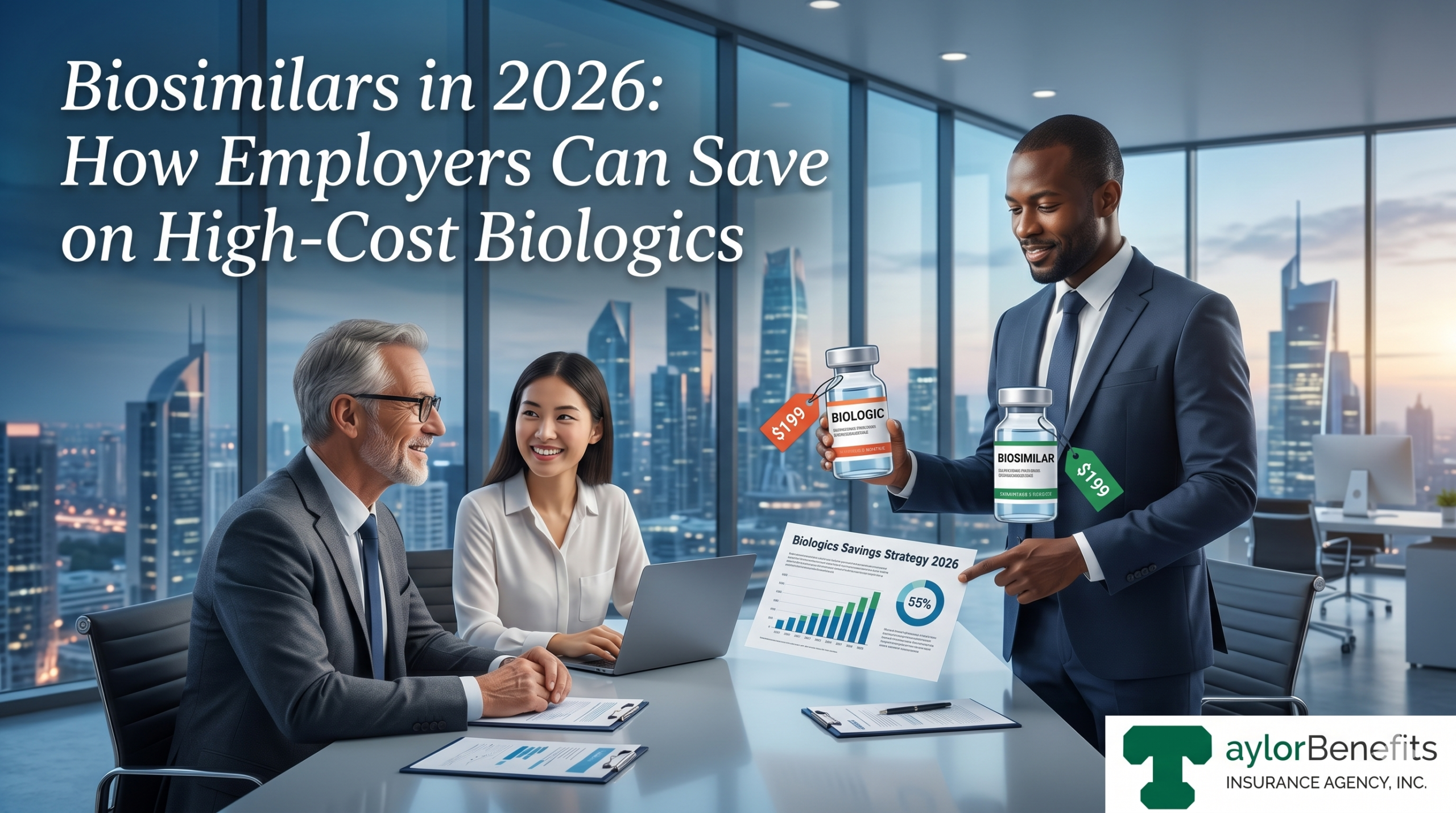
For most of the past two decades, biologic drugs have been the fastest-growing line item in employer pharmacy spend — and the most resistant to traditional cost-management interventions. Biologics now account for over 50 percent of total pharmacy spend in many employer plans despite representing a small fraction of total prescriptions filled. The blockbusters in this category — Humira, Enbrel, Stelara, Eylea, Remicade, and others — have collectively cost employer plans tens of billions of dollars annually, with year-over-year
Read Full Article Here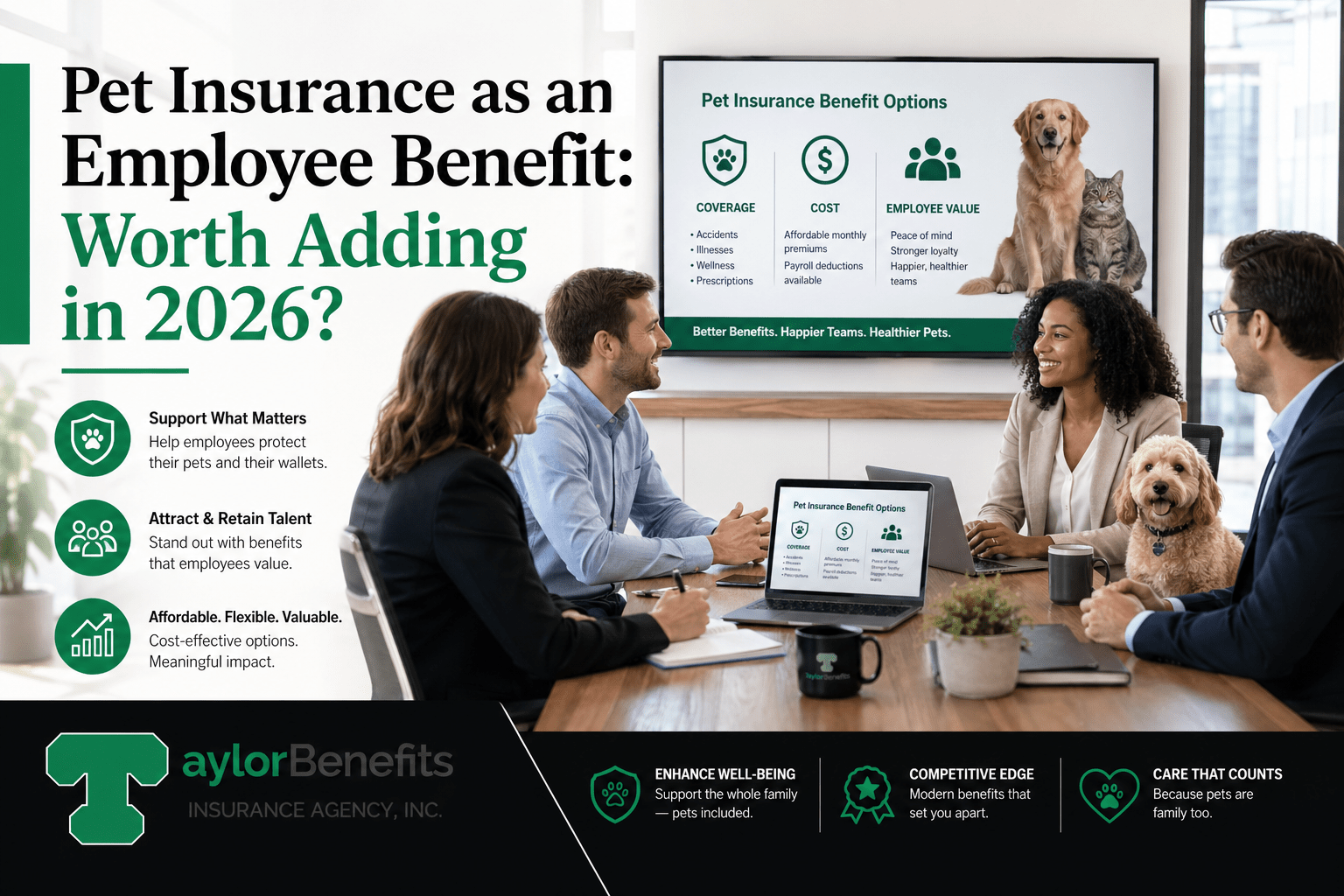
Five years ago, pet insurance as an employee benefit was a curiosity — a perk offered by a small number of pet-friendly employers and largely absent from mainstream benefits packages. In 2026, it is one of the fastest-growing voluntary benefits in the U.S. employer market, offered by a meaningful percentage of large employers and increasingly common in mid-market benefits packages as well. The growth isn't accidental. American pet ownership has expanded substantially, with roughly two-thirds of U.S. households now owning
Read Full Article Here
We just started working with Taylor Benefits and could not be happier. Todd gave us quite the education as well as some time saving tools to help us manage our HR and save money too. We are looking forward to a long relationship!”
-Carol, Accounting Manager, recruitment marketing company, Campbell, CA
We’re ready to help! Call today: 800-903-6066